
From 1961 to 1971, rock ‘n’ roll had turned the volume and intensity to 11, as they say. In just ten short years, rock had transformed from teeny-bopper rockabilly to powerful, ear-splitting, thunderous heavy metal. Other rock subgenres existed, certainly, but this particular offshoot was growing in popularity at a rapid pace. And with goosebump-inducing heavy metal songs like these from 1971, it’s easy to see why the public was demanding their rock ‘n’ roll to be loud.
“Lord Of This World” by Black Sabbath
Full disclosure: Master Of Reality is my all-time favorite Black Sabbath album. So, it’s practically a no-brainer that at least one cut from this album would make its way onto my list of goosebump-inducing songs. “Lord Of This World” got the final go-ahead because every time the opening riff falls back into that shuffling halftime feel, I get chills. Just pure, nasty metal that makes me contort my face and want to crank my amp as loud as it will go.
Videos by American Songwriter
“When The Levee Breaks” by Led Zeppelin
Led Zeppelin had no shortage of incredible, goosebump-inducing heavy metal songs to choose from in 1971. But I would argue that “When The Levee Breaks” is one of the most chilling. The guitar riff is so intensely ominous, you can practically see the water levels around you rising as the levee gives way to the oncoming flood. The fact that Led Zeppelin reimagined this distinctive track from the 1930s original that sounds nothing like it makes the whole thing more extraordinary.
“Baba O’Riley” by The Who
The Who was at the front lines of heavy metal’s development, constantly pushing themselves—and, in turn, other bands—to push the boundaries on just how loud a band could be. Songs like “Baba O’Riley” do such an effective job of building tension before releasing it in an explosive climax, leaving me with goosebumps no matter how many times I listen to this 1971 heavy metal classic.
“Locomotive Breath” by Jethro Tull
Lastly, who says a flute can’t be heavy metal? Certainly not Jethro Tull. The band released what would become their best-selling album in March 1971, and “Locomotive Breath” served as the lead single. Everything about this track gives me goosebumps every time I hear it, from the chord progression to the airtight arrangements to the sheer weight of it all. It’s an enduring listen that hits hard every single time.
Photo by Chris Walter/WireImage
More The List
-

Photo by Pete Still/Redferns -
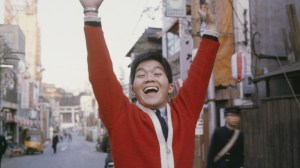
Kyu Sakamoto. (1941-1985) Japanese singer, best known outside Japan for his international hit song "Ue o Muite Aruko" (known as "Sukiyaki" in English-speaking markets), which was sung in Japanese and sold over 13 million copies. It reached number one in the United States Billboard Hot 100 in June 1963, making Sakamoto the first Asian recording artist to have a number one song on the chart. (Photo by Sjöberg Bildbyrå/ullstein bild via Getty Images) -

Canadian singer-songwriter and musician Neil Young performs on stage with Crazy Horse at Hammersmith Odeon, London, 28th March 1976. (Photo by Michael Putland/Getty Images) -
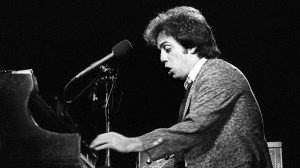
Photo by Rob Verhorst/Redferns -
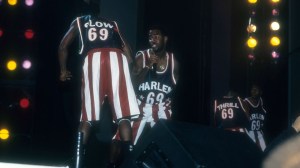
(Photo by Al Pereira/Michael Ochs Archives/Getty Images) -
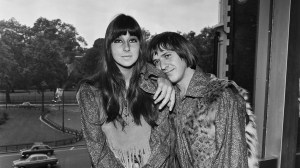
American rock duo Sonny and Cher (husband and wife team Sonny Bono and Cher) at their hotel on Hyde Park, London, UK, 3rd August 1965. (Photo by R. McPhedran/Express/Hulton Archive/Getty Images) -
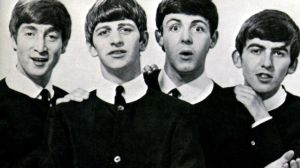
Postcard '900. The Beatles. (Photo by Fireshot/Universal Images Group via Getty Images) -

Photo by Hulton Archive/Getty Images