On this day (November 7) in 1970, Merle Haggard reigned atop the Billboard Top Country Albums chart with his live album The Fightin’ Side of Me. The album’s popularity was bolstered by the success of its title track, which spent three weeks at No. 1 on the U.S. country singles chart following its January 1970 release. “The Fightin’ Side of Me” helped flesh out Haggard’s staunch working-man persona that had begun to develop with the 1969 release of his No. 1 patriotic anthem “Okie From Muskogee”. While Haggard later expressed ambivalence toward both songs, there’s no doubt that the pair of hits helped cement the singer’s reputation with his blue-collar audience.
The Album Reflected the Views of Merle Haggard’s Audience
At a time of growing anti-Vietnam War sentiment in the U.S., “The Fightin’ Side of Me” sees Merle Haggard place the protestors squarely in his crosshairs. If you don’t love it, leave it / Let this song that I’m singing be a warning / When you’re running down our country / You’re walking on the fighting side of me.
Videos by American Songwriter
Those lyrics struck a chord with those who found themselves on the other side of the Vietnam War opposition. Decades later, Toby Keith would declare it “the original ‘Angry American’ song” in reference to his own 2002 hit.
Speaking to Rolling Stone about his view of the countercultural movement, Haggard said, “I don’t like their views on life, their filth, their visible self-disrespect, y’know. They don’t give a s— what they look like or what they smell like… What do they have to offer humanity?”
The success of “The Fightin’ Side of Me” prompted the six-time CMA Award winner to hastily record a live album of the same name at the Civic Center Hall in Philadelphia on Valentine’s Day 1970.
In addition to covering songs by Jimmie Rodgers and Woody Guthrie, Haggard also included a medley of impersonations of fellow country stars Marty Robbins, Hank Snow, Johnny Cash, and Buck Owens.
He Originally Wanted to Record This Single Instead
Ironically, Merle Haggard was looking to distance himself from the staunchly right-wing image he’d cultivated with “Okie From Muskogee”. He had wanted to follow the song with “Irma Jackson”, a catchy, up-tempo tale of an interracial love affair.
However, Capitol Records shot that down, afraid the song would mar Haggard’s image as a conservative hero. In a 2001 interview, Haggard recalled a conversation with Ken Nelson, then the head of the country music division of Capitol Records.
“He came out and said, ‘Merle, I don’t believe the world is ready for this yet,” the country legend said.
Featured image by Lynn Pelham/Getty Images
-
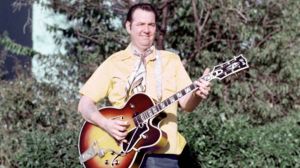
CIRCA 1960: Country singer Hank Thompson poses for a portrait by a tree with his Gibson hollow body electric guitar in circa 1960. (Photo by Michael Ochs Archives/Getty Images) -
TORONTO, ONTARIO – Bryan Adams performs during the FIFA World Cup 2026 Countdown Concert at Fort York and the Bentway on June 10, 2026 in Toronto, Ontario. (Photo by Sonia Recchia – FIFA/FIFA via Getty Images) -
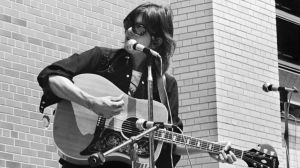
NEW YORK CITY – Gram Parsons performs with The Flying Burrito Brothers during a concert at Queens College in New York. (Photo by Harvey L. Silver/Corbis via Getty Images) -
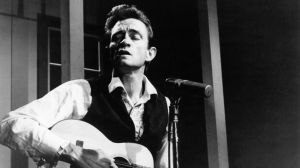
Johnny Cash sings as he plays guitar in scene from The Road To Nashville 1966. (Photo by Screen Archives/Getty Images)