John Lennon’s “Imagine” is one of the most popular songs of all time. However, popularity typically comes with a price, and Lennon is no stranger to that paradigm. Released in 1971, Lennon’s subversively inspiring song became an anthem for the dreamers, for the rebels, and for really anyone and everyone who had a bone to pick with the systemic issues of society. Though, evidently, that entailed a lot of trouble. A lot of trouble that lasted for quite a long time.
The lyrics of Lennon’s “Imagine” will likely remain relevant for as long as anyone can guess. That is how he designed it, as the themes the lyrics articulate are not specific to a time or place. Rather, they are specific to the human, spiritual, and governmental phenomena that have transpired throughout history. That being so, the contents of the song are timeless and will seemingly always remain relevant.
Videos by American Songwriter
While John Lennon strives for peace, understanding, and mutuality in the song, he does so in a fairly divisive way. In the song, he denounces religion, government, and personal possession. Thus, it comes as no surprise that people and companies took issue with the song. Though surprisingly, these parties took issue with the song far after it was released.
The Two Major Radio Stations That Banned John Lennon’s “Imagine”
Of course, John Lennon’s song was polarizing upon its release. However, it was so idealistically potent that people and companies took issue with it more than 20 years after its release as well. Specifically, the two major radio stations that banned the song from the airwaves were Clear Channel Communications (now iHeart Media) and the BBC.
Clear Channel Communications banned the song after 9/11. The company included the song on their “do not play” list along with several other politically subversive singles. Given the political climate of the United States post 9/11, the CCC banned this song due to the fact that it contrasted the national ideals of the United States during wartime. In essence, it was seemingly viewed as anti-American.
As a matter of fact, the BBC banned the song for the exact same reason, as they banned the song in 1991 during England’s participation in the Persian Gulf War. Like the CCC, the BBC banned the song given that it juxtaposed the patriotic ideals the country was trying to uphold during the time of war.
In all, leave it to John Lennon to stir up some trouble from beyond the grave. After all, that is why he is one of the best to ever do it.
Photo by Rowland Scherman/Getty Images
More Behind The Song
-
TODAY — Pictured: Keith Urban on Thursday, August 2, 2018 — (Photo by: Nathan Congleton/NBCU Photo Bank/NBCUniversal via Getty Images via Getty Images) -
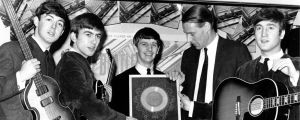
LONDON – 1964: Rock and roll band "The Beatles" poses for a portrait with their producer George Martin. (L-R) Paul McCartney, George Harrison, Ringo Starr, producer George Martin, John Lennon. (Photo by Michael Ochs Archives/Getty Images) -
Musician Dave Wakeling, founder of 'The English Beat' performs before thousands of rock fans at the US Festival, May 29,1983 in Devore, California. (Photo by Bob Riha, Jr./Getty Images) -
Miranda Lambert performs "Kerosene" at the Madison Square Garden in New York City, New York (Photo by Rick Diamond/WireImage) -
British singer Dusty Springfield (1939 – 1999) performing during a rehearsal for her TV show, 'It Must Be Dusty', at ATV Studios in Borehamwood, Hertfordshire, 1968. (Photo by Keystone/Hulton Archive/Getty Images) -
NITED STATES – JANUARY 01: Photo of Joe COCKER; Joe Cocker performing on stage (Photo by Robert Knight Archive/Redferns) -
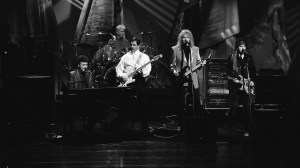
THE TONIGHT SHOW STARRING JOHNNY CARSON — Pictured: James Young of the musical guest Styx performs on March 12, 1991 — (Photo by: NBCU Photo Bank/NBCUniversal via Getty Images via Getty Images)