
On this day (July 23) in 1969, the Rolling Stones were at the top of the Official UK Singles Chart with “Honky Tonk Women.” It was recorded during the sessions for their 1969 album Let It Bleed, which features the original country-leaning version of the song called “Country Honk.” While the song was a hit for the band and remains a fan favorite, its recording and release marked dark days for the band.
The Rolling Stones, without guitarist and founding member Brian Jones, recorded “Honky Tonk Women” on June 8, 1969. After they finished the session, Mick Jagger, Keith Richards, and Charlie Watts went to Jones’ home to inform him that he was out of the band. Mick Taylor, who had just cut his first song as the Stones’ new guitarist, didn’t go with his bandmates.
Videos by American Songwriter
Jones was found dead in his swimming pool in the early hours of July 3, 1969. Later that day, “Honky Tonk Women” was released.
How Hank Williams and a Trip to Brazil Inspired a Rolling Stones Classic
Keith Richards, Mick Jagger, Marianne Faithfull and Anita Pallenberg took a trip to Brazil, where they lived on a ranch for a while. They were surrounded by horses and cowboys in working western wear. “Mick and I were sitting on the porch of this ranch house, and I started to play, basically fooling around with an old Hank Williams idea,” Richards recalled.
[RELATED: 3 Rolling Stones Songs That Will Make You Understand the Hype]
“It started out as a real country honk put on, a hokey thing. Then, a couple of months later, we were writing songs and recording and somehow by some metamorphosis it suddenly went into this little swapy…blues thing,” he explained. He speculated that the song naturally made the transition from country to blues in part because the genres share the same roots. “I think it has to do with the fact that we were playing around with open tunings at the time. So, we were trying songs out just to see if they could be played in an open tuning. That one just sunk in,” he added.
Featured Image by Richard E. Aaron/Redferns
-
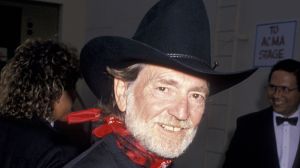
Musician Willie Nelson attends 24th Annual Academy of Country Music Awards on April 10, 1989 at Disney Studios in Burbank, California. (Photo by Ron Galella, Ltd./Ron Galella Collection via Getty Images) -
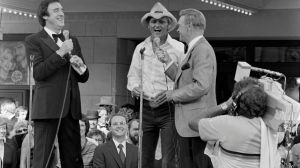
Jim Nabors (L) and Jerry Reed (C) appear onstage during a screening at the Paramount Theatre in Austin, Texas, on July 11, 1982. (Photo by Ken Vaughan/WWD/Penske Media via Getty Images) -

Steve Gulley of Mountain Heart and Grasstowne, September 20, 1962 — August 18, 2020. (Photo courtesy of Facebook) -
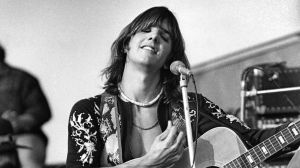
LIVERMORE, CA – Gram Parsons of The Flying Burrito Brothers performs onstage at The Altamont Speedway on December 6, 1969 in Livermore, California. (Photo by Robert Altman/Michael Ochs Archives/Getty Images) -
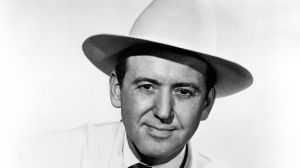
American musician Red Foley poses for a portrait circa 1955. (Photo by Michael Ochs Archives/Getty Images) -

UNITED KINGDOM – MARCH 01: WEMBLEY EMPIRE POOL Photo of Skeeter DAVIS (Photo by David Redfern/Redferns)