
On this day (August 7) in 2011, Marshall Grant died at age 83 in Jonesboro, Arkansas. An original member of Johnny Cash & the Tennessee Two, Grant and Luther Perkins formed the core group that helped create Cash’s trademark ‘boom-chicka-boom’ sound at the beginning of his storied career.
Marshall Grant recorded with Cash from 1954 until 1980, even voluntarily assuming road manager responsibilities for the Man in Black. Despite some professional and legal struggles, he remained one of Cash’s closest confidants until the latter’s death in 2003. Today, we’re reflecting on the life and legacy of Marshall Grant.
Videos by American Songwriter
About Marshall Grant
Born May 5, 1928, in Bryson City, North Carolina, Marshall Grant married his wife, Etta, in 1946.
They moved to Memphis the following year, where Grant worked as a mechanic. By July 1954, he had risen through the ranks to become chief mechanic at the Automobile Sales Company, where both Luther Perkins and Cash’s older brother Roy also worked.
Meeting Johnny Cash
According to Johnny Cash’s daughter, Rosanne, Roy picked up his younger brother at the bus station after his discharge from the U.S. Air Force.
Immediately, he brought the Man in Black to his workplace, where Roy introduced him to Marshall Grant and Luther Perkins.
“Roy says you boys pick a little music,” Cash said.
“Very little,” Grant replied.
“Maybe I can pick with you sometime,” the “Ring of Fire” singer responded.
“And that was the beginning,” wrote Rosanne Cash in a 2013 Oxford American essay.
Becoming Johnny Cash & the Tennessee Two
At first, the trio played together as rhythm guitarists. Then, Marshall Grant taught himself to play bass.
From 1955 to 1958, Johnny Cash & the Tennessee Two recorded multiple songs for Sun Records, including “Cry, Cry, Cry”; “Folsom Prison Blues”; “I Walk the Line”; and “Hey Porter”.
In the late 1950s, they switched to Columbia Records, where they recorded both Cash’s infamous prison albums.
Grant also doubled as his road manager, booking shows around the United States and organizing schedules.
Legal Woes, Then Reconcilation
Unfortunately, Johnny Cash was also spiraling further into drug abuse. In 1980, a chain of disagreements sparked by the singer’s long-standing drug problems led to him firing Marshall Grant from his band.
Later, Grant and the family of Luther Perkins—who died in a house fire in 1968—filed separate lawsuits against Cash for embezzlement of retirement funds.
Eventually, they settled the matter out of court, and the two men rekindled their friendship.
After leaving Cash’s band, Grant managed the Statler Brothers until their retirement in 2002.
His final onstage appearance with Cash came in 1999 as an original member of the Tennessee Two.
Perhaps it’s fitting that Grant’s final public appearance came at a a festival to raise funds for the restoration of Cash’s childhood home. In the Oxford American essay, Rosanne Cash credited Marshall Grant with keeping her father together during the height of his self-destruction.
Their friendship, she wrote, endured “staggering success and inconceivable fame, my dad’s drug addiction, my parents’ divorce, Dad’s recovery from addiction and chronic relapses, a devastating lawsuit between them, and eventually, sweet reconciliation in their later years.”
Featured image by Al Clayton/Getty Images
-
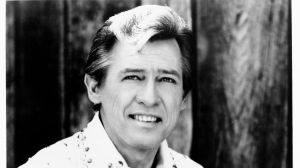
UNSPECIFIED – CIRCA 1970: Photo of Cal Smith Photo by Michael Ochs Archives/Getty Images -

American Country musician Tanya Tucker performs onstage at the Bottom Line, in Greenwich Village, New York, New York, December 13, 1978. (Photo by Gary Gershoff/Getty Images) -

ATLANTA – Singer-songwriter John Prine performs at Atlanta Symphony Halll on April 23, 1975 in Atlanta, Georgia. (Photo by Tom Hill/Getty Images) -

NASHVILLE, TENNESSEE – Buck Trent performs with Marty Stuart and his Fabulous Superlatives at the second of three Marty Stuart Artist-in-Residence Shows at Country Music Hall of Fame and Museum on September 18, 2019 in Nashville, Tennessee. (Photo by Jason Kempin/Getty Images for Country Music Hall of Fame and Museum)