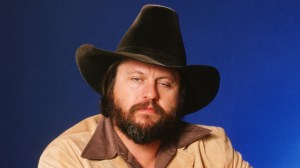
In the second week of 1976, an unknown truck-driving country singer named C.W. McCall dethroned the Bay City Rollers’ “Saturday Night” atop the U.S. pop chart with a novelty song called “Convoy”. Also spending six weeks at No. 1 on the U.S. country chart, “Convoy” later inspired the 1978 action film of the same name starring Kris Kristofferson and Ali MacGraw. This feat is all the more impressive when you realize that C.W. McCall was not a real person, but rather the brainchild of advertising executive William Dale Fries Jr., born on this day (November 15) in Audubon, Iowa.
Inspired by the citizens-band radio fad sweeping the U.S. in the 1970s, “Convoy” helped fuel a nationwide craze for trucker culture and lifted McCall’s sophomore album Black Bear Road to No. 1 on the Top Country Albums chart.
Videos by American Songwriter
Recording as C.W. McCall, Fries sent a dozen songs to the Hot Country Singles chart before retiring from music in 1979. He then moved to Ouray, Colorado, where he would serve three terms as mayor of the small mountain town.
On April 1, 2022, Bill Fries died from complications of cancer at age 93 in Ouray. Today, we’re honoring his legacy on what would have been his 98th birthday.
He Was an Artist First
Before the world knew him as C.W. McCall, he was born Billie Dale Fries before legally changing his name to William Dale Fries Jr. as an adult.
Music surrounded him; his father Bill Sr.,—a farm equipment factory foreman by day—played the violin alongside his two brothers in the Fries Brothers Band. His mother Margaret often played the piano alongside her husband at local dances.
Bill Sr. also introduced his son to the world of trucking, often hauling prefabricated swine barns to customers. Bill Jr. made his performance debut singing “Coming Round the Mountain” in a local talent show at just three years old. He also played the clarinet in his high school band, becoming drum major.
However, art competed with music for Fries’ attention, having started mimicking the cartoon characters of Walt Disney as a child. After high school, he majored in commercial art at the University of Iowa, also performing in the campus symphony orchestra.
However, finances forced him to leave the university after just one year, and in 1950, he took a commercial artist gig at an Omaha, Nebraska radio station.
Fries did graphic work, lettering, and set design, winning an award from the Omaha Artists and Art Directors Club before leaving to take an art director job with a local advertising firm.
C.W. McCall Got His Start in a Bread Commercial
While working for the public-relations firm Bozell & Jacobs, Fries was tasked with putting together a TV advertising campaign for Old Home Bread.To narrate these ads, he created a truck character named C.W. McCall, taking the name from McCall’s magazine and adding the initials C.W. for “country and western.”
He partnered with jingle writer Chip Davis — who later founded the neoclassical new-age ensemble Mannheim Steamroller. Davis composed the music, while Fries wrote the lyrics.
The ads became so popular that viewers began calling the Omaha World Herald requesting a printed TV schedule for when the commercials aired. After winning a Clio Award, Fries decided to take C.W. McCall into the studio.
A Brief But Spectacular Musical Career
As C.W. McCall, Fries first scored a top 40 pop hit with “Wolf Creek Pass”, the title track from his 1975 debut album.
The album went gold, and Fries followed it with Black Bear Road. This yielded the novelty hit “Convoy”, inspired by the singer-songwriter’s own foray into the Denver trucking industry.
“I always kind of identified with truckers with the stuff I was doing, and (Chip and I) went out to see what was going on out on the highways… The truckers were forming things called convoys and they were talking to each other on CB radios. They had a wonderful jargon,” Fries said in a 2011 interview. “Chip and I bought ourselves a CB radio and went out to hear them talk. We said, ‘Why don’t we write a song about a fictitious convoy that stretches clear across the country, breaks all the rules and exceeds the newly imposed speed limit.’
He continued, “I said, ‘Chip, it’s got to sound kind of militaristic and rebellious in tone.’ We completed the project and we put it on the album and sent it off to MGM.”
[RELATED: 3 Country No. 1 Hits From the 1970s That Beat Out Some of the Decade’s Biggest Players]
Decades later, “Convoy” would enjoy a resurgence as a rallying cry for Canadian truckers protesting as part of the 2022 Freedom Convoy.
Featured image by Ron Tom/NBCU Photo Bank/NBCUniversal via Getty Images via Getty Images
-
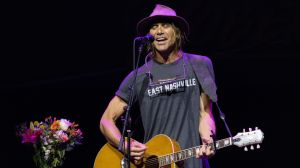
AUSTIN, TEXAS – AUGUST 28: Todd Snider performs in support of Robert Earl Keen's 2022 Final Tour, "I’m Comin’ Home: 41 Years On The Road" at ACL Live on August 28, 2022 in Austin, Texas. (Photo by Rick Kern/WireImage) -

American musician Gretchen Peters performs onstage, Columbia, South Carolina, September 24, 1995. (Photo by Paul Natkin/Getty Images) -
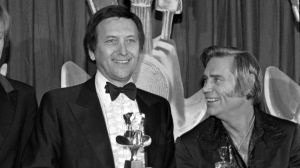
Hervé Villechaize, Buddy Killen and George Jones at the 16th Annual Academy of Country Music Awards on April 30, 1981 at the Shrine Auditorium in Los Angeles, California. Credit: (Photo by Ralph Dominquez / MediaPunch via Getty Images) -
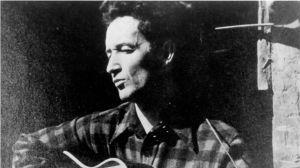
Musician Woody Guthrie poses for a portrait with his guitar that has a sitcker on it that reads "This Machine Kills Fascists" on it circa 1942. (Photo by Michael Ochs Archives/Getty Images) -
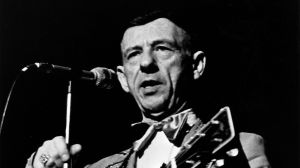
NASHVILLE – CIRCA 1955: Country musician Hank Snow performs onstage at the Grand Ole Opry in Nashville, Tennessee in circa 1955. (Photo by Michael Ochs Archives/Getty Images)