
Neil Young has never shied away from dark subject matter, and “Revolution Blues” from his 1974 album On The Beach shows the Canadian singer-songwriter at what was arguably his creepiest. Inspired by the Manson murders, this On The Beach track makes the monsters Young sings about in “Vampire Blues” seem like child’s play. “Revolution Blues” is sinister in a real, unsettling way.
Indeed, Young leaves little to the imagination while adopting the voice of Charles Manson, the megalomaniac who spurred the murders of several celebrities in their Hollywood homes. “I got the revolution blues, I see bloody fountains / and ten million dune buggies comin’ down the mountains / Well, I hear that Laurel Canyon is full of famous stars / but I hate them worse than lepers, and I’ll kill them in their cars.”
Videos by American Songwriter
The song was so creepy, in fact, that when Young asked his bandmates in Crosby, Stills, Nash & Young if they wanted to cover “Revolution Blues” on the road, they said no.
Neil Young’s CSNY Bandmates Were Nervous About “Revolution Blues”
In The Dark Stuff: Selected Writings On Rock Music by Nick Kent, Neil Young recalled bringing up “Revolution Blues” to CSNY. “Crosby and the rest… Man, they didn’t know if they wanted to stand on the same stage as me when I was doing it. I was going, ‘It’s just a f***ing song. What’s the big deal? It’s about the culture. It’s about what’s really happening.’” In 2015, Rolling Stone reported that Crosby was still not a fan of the song. Young, meanwhile, performed this song sparingly in the years that followed the release of On The Beach.
Young’s protectiveness of “Revolution Blues” stemmed from his genuine interest in someone like Charles Manson. In his memoir Waging Heavy Peace, Young remembered meeting Manson in the 1960s. Manson showed Young his songs, and the “Heart Of Gold” singer described them as “off-the-cuff things he made up as he went along.” He continued, “Kind of like Dylan but different because it was hard to glimpse a true message in them. But the songs were fascinating. He was quite good.”
Ultimately, Young’s clash with his bandmates over “Revolution Blues” revealed a deeper disconnect in CSNY. Talking to Nick Kent about David Crosby and others’ reluctance to play the song, Young said, “That’s why I always went for Crazy Horse over CSNY.” The disagreement was just one of many things Young and his bandmates didn’t see eye to eye on. So, one day, on his way to the studio, Young decided he was done. “I just turned around and went home,” he told Kent. “And stayed home, as far as that project was concerned.”
Photo by Michael Putland/Getty Images
More Behind The Song
-
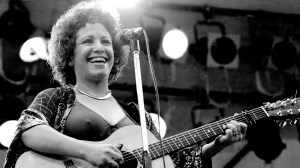
NEW YORK: Janis Ian performs live on stage in New York in 1975 (Photo by Richard E. Aaron/Redferns) -
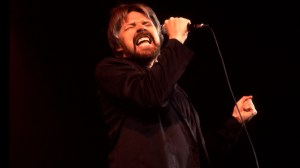
Musician Bob Seger performs at the Poplar Creek Music Theater, Hoffman Estates, Illinois, August 13, 1986. (Photo by Paul Natkin/Getty Images) -
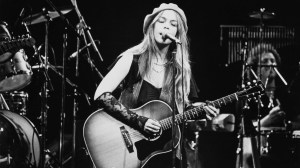
American vocalist, musician, songwriter, producer, actress and narrator Rickie Lee Jones performing live, circa 1979. (Photo by Gus Stewart/Getty Images) -
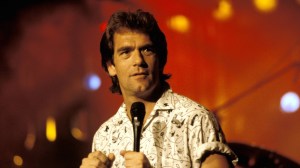
UNSPECIFIED – JANUARY 01: Photo of Huey LEWIS & The News; (Photo by David Redfern/Redferns) -
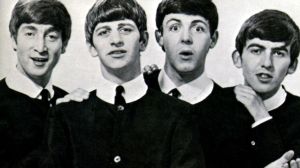
Photo by Fireshot/Universal Images Group via Getty Images -
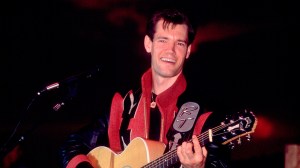
American Country musician Randy Travis plays guitar as he performs onstage at the Wisconsin State Fair, Milwaukee, Wisconsin, July 15, 1988. (Photo by Paul Natkin/Getty Images) -
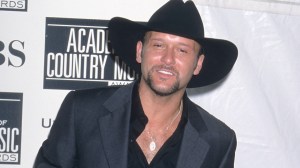
UNIVERSAL CITY, CA – MAY 3: Singer Tim McGrawl attends the 35th Annual Academy of Country Music Awards on May 3, 2000 at the Universal Amphitheatre in Universal City, California. (Photo by Ron Galella, Ltd./Ron Galella Collection via Getty Images) -
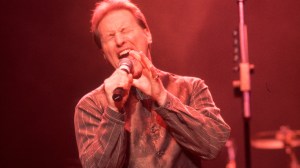
American country and western music singer Collin Raye performs at the Rialto Theater in Joliet, Illinois, November 25, 1996. (Photo by Paul Natkin/Getty Images)