Nashville wasn’t always the epicenter of country music. In fact, it wasn’t until this day (October 2) in 1928 that the first commercial country music recording session took place in Music City. The performer was the “harmonica wizard” himself, DeFord Bailey, and it wasn’t the only barrier he broke during his roughly two-decade career. Widely regarded as the first Black country star, Bailey was also one of the original performers on the Grand Ole Opry after its inception in 1925. Today, we’ll learn more about that session 98 years ago and the incomparable artist behind it.
About DeFord Bailey
Born in Smith County, Tennessee, on December 14, 1899, DeFord Bailey grew up surrounded by what he called “Black hillbilly music.” His grandfather was a local champion fiddler, and other members of the family played the guitar, banjo, harmonica, and other traditional instruments.
Videos by American Songwriter
Bailey learned to play his signature instrument while bedridden with polio at just three years old. Only able to move his head and arms, the young boy composed tunes by mimicking the sounds of nature around him — dogs howling, wild geese flying, wind blowing, and the distant rumble of trains.
He eventually recovered, although the disease permanently stunted his growth.
As a teenager, a white storekeeper hired Bailey to entertain the customers with his harmonica playing. He remained with the storekeeper until moving with his family to Nashville in 1918.
Creating Country Music
DeFord Bailey spent the next six years working odd jobs, including as a houseboy, drugstore errand boy, and elevator operator. In his spare time, he learned jazz, blues, and pop songs from recordings and live shows he attended in local theaters.
On December 6, 1925, Bailey won second place in a local radio station’s French harp contest with his rendition of “It Ain’t Gonna Rain No More”. Soon after, he made
his debut on WSM Radio, where he earned the title “Harmonica Wizard.”
Bailey secured at least one spot on the Opry most weeks until May 1941. In 1928, he appeared twice as often as any other performer. He became best known for his novelty pieces such as “The Fox Chase” and “Pan American Blues”.
Before long, Bailey was attracting the attention of record companies. In April 1927, he recorded eight titles for the Brunswick label in New York.
More than a year later, on October 2, 1928, he recorded for Victor Records in Nashville. Bailey’s recording of “Ice Water Blues/Davidson County Blues” became so popular that the Victor label released it three times.
[RELATED: 4 of the Most Influential Black Country Artists of All Time]
His Legacy
DeFord Bailey toured the South with the leading stars of the Grand Ole Opry in the 1930s, including Roy Acuff, Uncle Dave Macon, and Bill Monroe.
While fans country music fans loved him, he often faced difficulty finding accommodations due to racial segregation laws.
Unfortunately, Bailey’s radio career ended in 1941 when the Opry fired him due to a licensing dispute between BMI and ASCAP, which meant he couldn’t play his most popular tunes on the radio.
Understandably hurt, the harmonica virtuoso retired from performing and made his living operating a shoeshine parlor. However, he never stopped playing music, and his impact on Nashville lingers still today, nearly a century later after he made those recordings.
Featured image by Getty Images
-
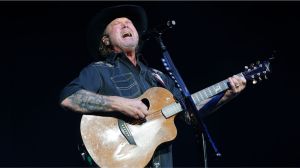
NASHVILLE, TENNESSEE – Tracy Lawrence performs at the Ryman Auditorium on May 18, 2025 in Nashville, Tennessee. (Photo by Jason Kempin/Getty Images) -
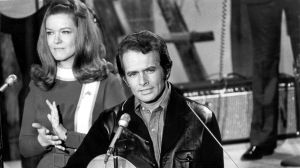
CIRCA LATE 1960s: Country musician Merle Haggard performs on stage with Bonnie Owens during a late 1960's concert. (Photo by Michael Ochs Archives/Getty Images) -
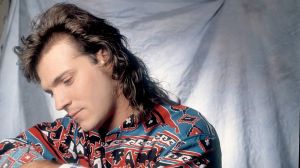
Portrait of Daron Norwood at the Opryland Hotel in Nashville, Tennessee, March 12, 1994. (Photo by Paul Natkin/Getty Images) -
BRONX, NEW YORK – SEPTEMBER 25: A view of atmosphere during Disney Tim Burton's The Nightmare Before Christmas Light Trail at New York Botanical Garden on September 25, 2024 in Bronx, New York. -
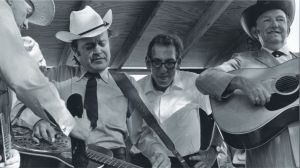
Pioneering Dobro player Josh Graves died on September 30, 2006, in Nashville, Tennessee. (Photo courtesy of the Bluegrass Music Hall of Fame & Museum)