On this day (August 14) in 1946, Hank Williams auditioned for the Grand Ole Opry after his friend and musical influence, Ernest Tubb, convinced him to do so. Unfortunately, the Opry rejected him. This led to his first run on the Louisiana Hayride.
In 1946, Williams and his band had been performing on the radio and in theaters and honky tonks throughout Alabama, Georgia, and Florida. He had also published a songbook containing nine original songs. However, he was still relatively unknown. This was likely why the Grand Ole Opry turned him away.
Videos by American Songwriter
After being turned away, Williams and his wife and manager, Audrey Williams, approached Fred Rose, who had recently formed Acuff-Rose Music, during his regular ping-pong game in the WSM studio. They asked if Williams could sing a song for him, and he agreed. Rose saw potential in the young artist and gave him a publishing deal. He also helped him land a recording contract with Sterling Records. Later that year, he recorded his first sides for Sterling.
Hank Williams Eventually Joined the Grand Ole Opry
Roughly a year after signing his record deal, Hank Williams moved to MGM Records. His first release for the label, “Move It on Over,” peaked at No. 4 on the country chart, giving Williams his first hit. In 1948, he relocated to Shreveport, Louisiana, and joined the cast of the Louisiana Hayride. The show, which broadcast on KWKH, was both a stepping stone to and direct competition for the Opry.
By 1949, Williams’ singles were consistently finding the upper region of the country chart. As a result, his second audition for the Grand Ole Opry was successful. However, there was a catch. Williams had already gained a reputation for drinking and being a little rough around the edges. As a result, he became one of the few artists to make two Opry debuts.
First, he appeared on the unsyndicated portion of the show in what was referred to as a backdoor debut, and it went well. As a result, they brought him back for the syndicated portion of the show, which was sponsored by Prince Albert. During his June 11 debut, Williams performed “Lovesick Blues” and returned to the stage six times for encores.
The next day, Opry management reviewed the Prince Albert portion of the show. When they heard how much the crowd loved him, they invited him to become a member of the Grand Ole Opry. Later that year, he toured Europe with the show, playing on military bases for American troops, according to the Opry website.
Unfortunately, his time on the show was short. In August 1952, he was fired from the Opry, and he returned to The Louisiana Hayride. He died less than a year later.
Featured Image by Michael Ochs Archives/Getty Images
-
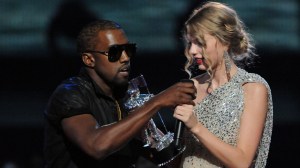
Taylor Swift and Kanye West at the 2009 VMAs -
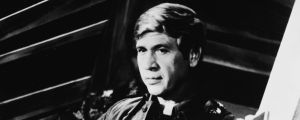
American country musician Buck Owens plays guitar in a promotion portrait for his 'All American Show,' mid 1960s. (Photo by Archive Photos/Hulton Archive/Getty Images) -
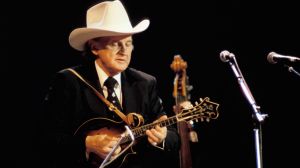
UNSPECIFIED – JANUARY 01: Photo of Bill MONROE (Photo by David Redfern/Redferns) -
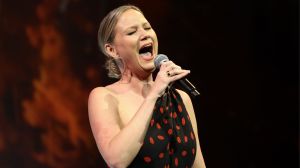
NEW YORK, NEW YORK – OCTOBER 28: Jennifer Nettles performs during the PAC NYC ICONS OF CULTURE Gala at Perelman Performing Arts Center on October 28, 2025 in New York City. (Photo by Dimitrios Kambouris/Getty Images for Perelman Performing Arts Center (PAC NYC)) -
Kenny Buttrey, April 1, 1945 – Sept. 12, 2004 (Photo courtesy of Facebook)