On this day (July 15) in 1972, Elton John topped the Billboard 200 with Honky Château. It was his first album to reach No. 1 in the United States. The LP also kicked off a streak of six consecutive chart-toppers. The album’s success was driven by a pair of hit singles. “Honky Cat” reached No. 8 on the Hot 100. “Rocket Man,” widely considered John’s signature song, peaked at No. 6.
When John began working on Honky Château, he had already released six albums–four studio LPs, a live album, and the soundtrack to the 1971 film Friends. All had been recorded in England. Moreover, outside of a few tracks, all of his studio albums had been recorded with session musicians. They changed everything with his 1972 release.
Videos by American Songwriter
According to John’s website, this was the first album to feature his road band–Nigel Olsson (drums), Dee Murray (bass), and Davey Johnstone (guitar). They also left England for the sessions. Instead, they cut the album in Château d’Herouville, an 18th-century French château that had been converted into a live-in recording studio. It was where David Bowie recorded Low with Tony Visconti and Brian Eno. All three reported supernatural happenings. Bowie believed that composer Frederic Chopin haunted the master bedroom.
Another major change was that all of the songs were fresh. “Bernie’s freshly typed lyrics were waiting for Elton when he sat down at the food hall’s rehearsal piano to start each day,” according to his website. “Before the meal had a chance to get cold, a tune would be written and subsequently fleshed out by the band in anticipation of moving over to the recording studio the following week.”
Elton John Found His Signature Sound
“Rocket Man” was the first song written for the album. It later became a massive hit and Elton John’s signature song. Interestingly, it was also the song on which his backing band established themselves as some of the finest backing vocalists in the industry.
“It was a constant creative thing. Brilliant,” producer Gus Dudgeon said of how they built their harmonies under his direction. “They are unquestionably, in my mind, the best in-house backing vocalists that anybody’s ever had on record. I can’t imagine anybody could do a better job than those guys.”
Featured Image by George Wilkes/Hulton Archive/Getty Images
-
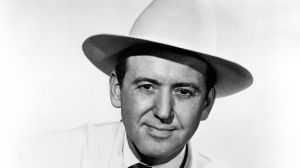
American musician Red Foley poses for a portrait circa 1955. (Photo by Michael Ochs Archives/Getty Images) -

UNITED KINGDOM – MARCH 01: WEMBLEY EMPIRE POOL Photo of Skeeter DAVIS (Photo by David Redfern/Redferns) -
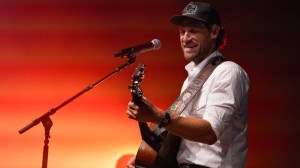
Chase Rice performs at Billboard Country Live held at Category 10 on June 04, 2026 in Nashville, Tennessee. (Photo by Jamie Schramm/Billboard via Getty Images) -
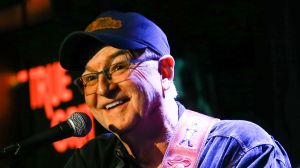
NASHVILLE, TENNESSEE – APRIL 22: Musician Carl Jackson performs during a special tribute concert in honor of Glen Campbell’s birthday at Glen Campbell Museum and Rhinestone Stage on April 22, 2021 in Nashville, Tennessee. (Photo by Terry Wyatt/Getty Images)