
In 1971, Led Zeppelin released “Stairway To Heaven”. The song, from their fourth studio album, Led Zeppelin IV, was written by Robert Plant and Jimmy Page.
To this day, “Stairway To Heaven” remains one of Led Zeppelin’s most memorable songs. A Top 20 single, despite “Stairway To Heaven” being just over eight minutes in length, there are few songs that are as iconic in rock music history as this song. So it’s surprising that Plant later reveals he had no idea he was writing one of the most memorable songs of all time when he wrote the lyrics to “Stairway To Heaven”.
Videos by American Songwriter
Plant and Page were sitting by a fire when “Stairway To Heaven” began.
“I was holding a pencil and paper, and for some reason I was in a very bad mood,” Plant remembers. “Then all of a sudden my hand was writing out the words, ‘There’s a lady who’s sure all that glitters is gold/And she’s buying a stairway to heaven…’ I just sat there and looked at the words and then I almost leapt out of my seat.”
What Jimmy Page Says About “Stairway To Heaven” by Led Zeppelin
Plant may have begun the lyrics for “Stairway To Heaven”. But it’s Page who suggested a really long song, long before Led Zeppelin IV was even completed.
“I don’t want to tell you about it in case it doesn’t come off,” Page said at the time. “It’s an idea for a really long track on the next album. … We want to try something new with the organ and acoustic guitar building up and building to the electric thing.”
Page reportedly wanted to do a 15-minute song but agreed to make “Stairway To Heaven” a little more than eight minutes.
When Page played “Stairway To Heaven” for the members of Led Zeppelin, they were not immediately taken with the song.
“It’s not just one of those things where it goes verse-chorus-verse,” Page admits. “It was tricky because it had sections, but they didn’t repeat exactly the same each time.”
“Stairway To Heaven” is also a song that doesn’t stop, giving band members little reprieve for eight minutes.
“The thing I was very keen to establish was that the whole thing would keep moving in tempo and intensity,” Page recounts. “The tempo changes from the beginning to the end – it’s quite radically different – but that was the intention. You would find that, having been a studio musician, the one thing any trained musicians will tell you you don’t do is speed up or slow down. This, as far as I could see, was in league with the whole concept of classical writing where everything is moving, moving, moving.”
Photo by Robert Knight Archive/Redferns
More Behind The Song
-

NEW YORK: Janis Ian performs live on stage in New York in 1975 (Photo by Richard E. Aaron/Redferns) -
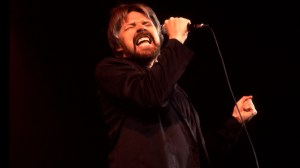
Musician Bob Seger performs at the Poplar Creek Music Theater, Hoffman Estates, Illinois, August 13, 1986. (Photo by Paul Natkin/Getty Images) -

American vocalist, musician, songwriter, producer, actress and narrator Rickie Lee Jones performing live, circa 1979. (Photo by Gus Stewart/Getty Images) -
UNSPECIFIED – JANUARY 01: Photo of Huey LEWIS & The News; (Photo by David Redfern/Redferns) -
Photo by Fireshot/Universal Images Group via Getty Images -
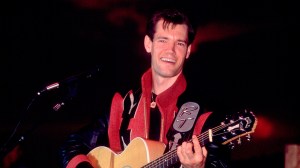
American Country musician Randy Travis plays guitar as he performs onstage at the Wisconsin State Fair, Milwaukee, Wisconsin, July 15, 1988. (Photo by Paul Natkin/Getty Images) -
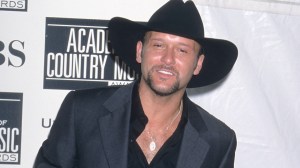
UNIVERSAL CITY, CA – MAY 3: Singer Tim McGrawl attends the 35th Annual Academy of Country Music Awards on May 3, 2000 at the Universal Amphitheatre in Universal City, California. (Photo by Ron Galella, Ltd./Ron Galella Collection via Getty Images) -

American country and western music singer Collin Raye performs at the Rialto Theater in Joliet, Illinois, November 25, 1996. (Photo by Paul Natkin/Getty Images)