
There have been several songs that have done well after the deaths of their respective artists. Especially when it comes to iconic pop culture figures like Michael Jackson, Whitney Houston, and the like, fans have been known to get songs back on the charts in no time, following their passing. Then there’s folk singer Jim Croce’s “Time In A Bottle”. I’m not sure there’s ever been a success story for a song quite as moving. Or one that’s quite as tragically ironic.
Jim Croce first released “Time In A Bottle” in 1972 on his album You Don’t Mess Around with Jim. Croce wrote the song after his wife, Ingrid, told him she was pregnant. On September 30, 1973, while Croce was on tour for another album of his, I Got A Name, the singer tragically passed away in a plane accident. Behind him, he left Ingrid and their new baby boy, A.J.
Videos by American Songwriter
After the plane crash, “Time In A Bottle” was rereleased as a single in November of 1973. Fourteen weeks after the incident, the song shot to No. 1 on Billboard. This was Croce’s second and final No. 1 hit.
If you’ve ever listened to this track, you know that there’s something haunting about it. Maybe it’s the lyrics, or maybe it’s the significance of its message, especially when you know the context.
Ingrid Croce on “Time In A Bottle”
In an interview with Gary James, Ingrid Croce discussed “Time In A Bottle” and the song’s origins. Obviously, her pregnancy catalyzed Jim Croce’s creation of the song, but according to her, “Time In A Bottle” is about more than that. Namely, “the immortality of life.”
Around the time that Ingrid told Croce that she was pregnant, he had been working three jobs and barely had time for music. When you take this into account, “Time In A Bottle” becomes about taking chances.
“A. J. might have been the trigger for that song as well as our relationship,” Ingrid told James. “I think Jim was a very eclectic songwriter. When he wrote something, it usually wasn’t one circumstance that spurred it on. It was a lot of different people and a lot of different circumstances that brought that song together, which is why I think his music is so universal.”
She continued, “He didn’t just have an experience happen to him and say ‘I’m gonna write a song about it.’ He looked at other people, and talked with a lot of other people. He was in a sense a journalist of what was going on at the time.”
Photo by: ABC via Getty Images
More Behind The Song
-
NASHVILLE, TN – NOVEMBER 08: (FOR EDITORIAL USE ONLY) Miranda Lambert performs onstage during the 51st annual CMA Awards at the Bridgestone Arena on November 8, 2017 in Nashville, Tennessee. (Photo by Terry Wyatt/FilmMagic) -
English pop group The Moody Blues, group portrait, 1972, (L-R) Mike Pinder, Justin Hayward, John Lodge, Ray Thomas and Graeme Edge. (Photo by Michael Putland/Getty Images) -
MINNEAPOLIS – AUGUST 3: Prince performs a benefit concert for the Minnesota Dance Theatre at First Avenue nightclub in Minneapolis, Minnesota on August 3, 1983. (Photo by Jim Steinfeldt/Michael Ochs Archives/Getty Images) -
LOS ANGELES – 1974: Singer Joni Mitchell performs in 1974 in Los Angeles, California. (Photo by Donaldson Collection/Michael Ochs Archives/Getty Images) -
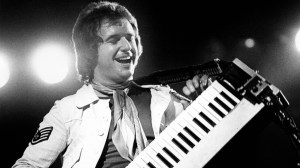
DETROIT, USA – 1st FEBRUARY: Gary Wright performs live on stage in Detroit, Michigan in February 1976. (Photo by Fin Costello/Redferns) -
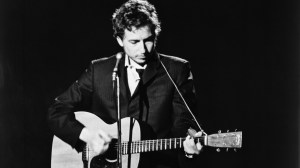
ASHVILLE, TN – JUNE 07: Bob Dylan appearing on "The Johnny Cash Show" for ABC/TV taped at Ryman Auditorium on June 7, 1969 in Tennessee, Nashville. (Photo by Michael Ochs Archives/Getty Images) -
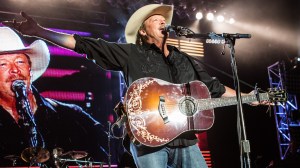
OS ANGELES, CA – JULY 25: Musician Alan Jackson performs at The Greek Theatre on July 25, 2012 in Los Angeles, California. (Photo by Chelsea Lauren/WireImage) -
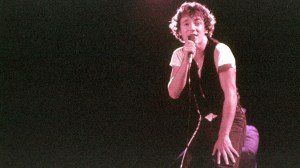
Singer and songwriter performs in 1975 in Los Angeles, California. (Photo by Suzan Carson/Michael Ochs Archives/Getty Images)