Your cart is currently empty!



3 Country Ballads From the 1950s We’ll Never Stop Singing
Country ballads attract listeners with simple melodies and emotionally straightforward lyrics. The arrangements are familiar, with strummed acoustic guitars, fiddle, weeping pedal steel, and a slow-trot rhythm section. However, the simplicity is deceptively complex. Anyone can write a country ballad; few have recorded great ones.
Videos by American Songwriter
In the 1950s, country music enjoyed commercial success as honky-tonk songs offered tragic tales and raw poetry. Soon, the “Nashville sound” had smoothed the edges of honky-tonk as the genre aimed for wide-ranging pop audiences. It’s hard to pick only three, but here, let’s highlight three country ballads from the decade we’ll never stop singing.
“I Can’t Stop Lovin’ You” by Don Gibson
Don Gibson planned to write a “lost love ballad”, but once he wrote the lyric, “I can’t stop loving you,” he changed course and instead wrote his lonesome ballad in the present tense. Ray Charles had a hit with his 1962 rendition, which appears on Modern Sounds In Country And Western Music. But Gibson’s original gallops forward with a less dense arrangement than Charles’s. Produced by Chet Atkins, it became a hallmark of Nashville’s polished new sound. Fittingly, it appears on Gibson’s 1958 album, Oh Lonesome Me.
“Your Cheatin’ Heart” by Hank Williams
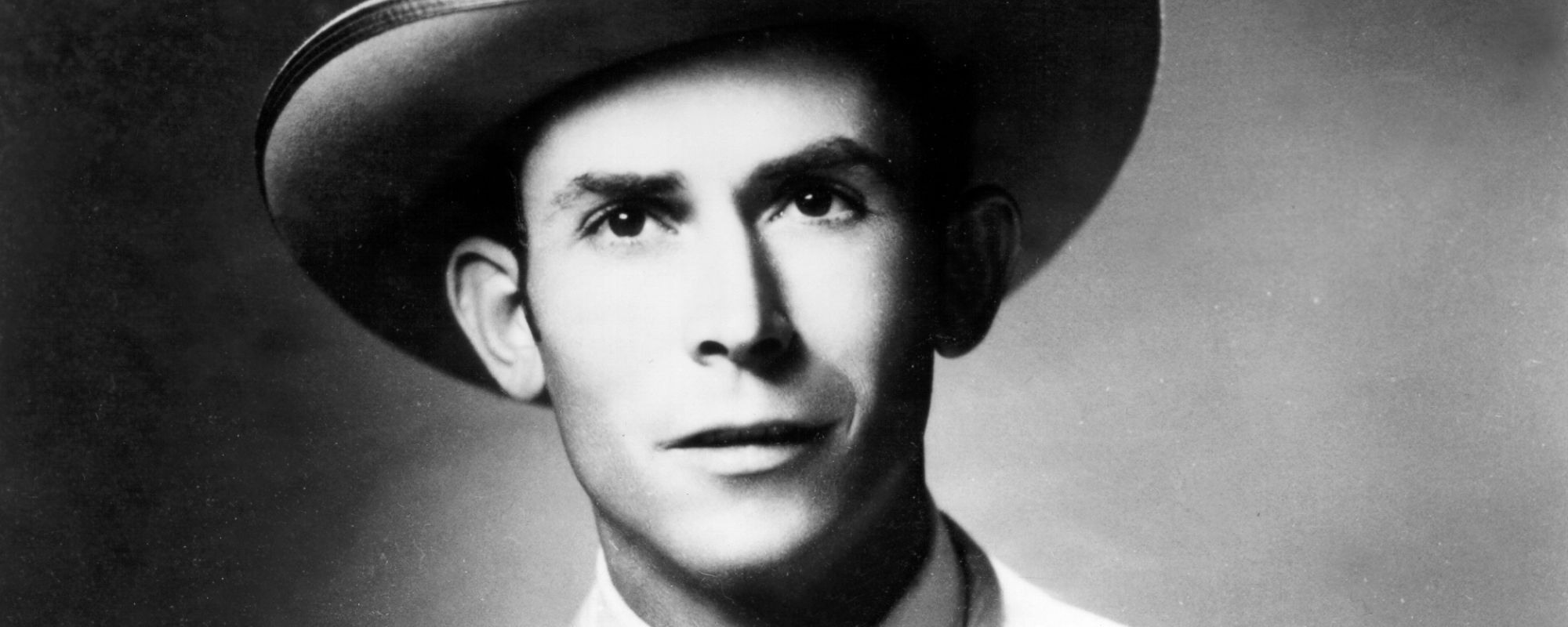
The final days of Hank Williams were full of tumult and hope. His health had been deteriorating, and he’d divorced Audrey Sheppard. He was planning to marry Billie Jean Jones when he unknowingly began his final session, which produced, among other songs, “Your Cheatin’ Heart”. The bitter ballad was directed at Sheppard, but Williams wouldn’t live long enough to see its release. Williams set the standard for country music and famously lived the heartache his songs described.
“I Don’t Hurt Anymore” by Hank Snow
In “I Don’t Hurt Anymore”, Hank Snow reaches the point in a failed relationship where he’s finally moved on from his ex. He says the despair he felt from the breakup inspired a pain so deep he wanted to die. But the woozy instrumentation gives the sense that Snow isn’t yet stable on his feet. Perhaps the broken heart has dulled his senses. He doesn’t hurt anymore because he can’t feel. I like the drunken vibe of this track. As if Snow is wandering around saying, No, really, I’m fine, but no one’s buying it. Or perhaps he’s really moved on.
Johnny Cash recorded a cover just before he died in 2003. In Cash’s voice, and at this stage of his life, “I Don’t Hurt Anymore” feels more like a gospel tune. A man at the end of his life, reflecting on the past, and letting go of what he can no longer drag with him.
Photo by Michael Ochs Archives/Getty Images



Leave a Reply
Only members can comment. Become a member. Already a member? Log in.