
With his mandolin playing and his high, lonesome tenor voice, Bill Monroe gave birth to the bluegrass genre.
More of an alchemist than an ordinary musician, Monroe fused gospel harmonies and Celtic fiddles with blues, jazz, and folk music to create something entirely his own.
Videos by American Songwriter
“I wanted to have music of my own to start with, Karl,” Monroe said in a 1979 interview with Karl Dallas for Rock’s Backpages. “Where I could say that I wasn’t copying no man.”
Monroe certainly wasn’t copying anyone, but generations of musicians have imitated him. He established the blueprint for generations of musicians to come. Some examples include the Everly Brothers, Elvis Presley, George Jones, and Grateful Dead frontman Jerry Garcia.
On this day (September 9) in 1996, the “Father of Bluegrass” died in Springfield, Tennessee, just four days shy of his 85th birthday. Today, we’re honoring his extraordinary life and legacy
Bill Monroe and the Origins of Bluegrass Music
Born September 13, 1911, on his family’s farm near Rosine, Kentucky, William Smith “Bill” Monroe grew up in a musical family.
His father was a locally known step-dancer. Meanwhile, his mother sang traditional ballads and folk songs and played both accordion and fiddle.
Other musical influences included his uncle Pendleton “Uncle Pen” Vandiver, an old-time fiddler, and Black blues guitarist Arnold Shultz. Shultz often played the same local events as Monroe and “Uncle Pen.”
A Family Affair
After losing both parents by age 16, Bill Monroe followed his brothers, Charlie and Birch, north to the Chicago area, where he worked in the Sinclair Oil refinery.
He performed on local radio as part of a trio with Charlie (who played guitar) and Birth (who played fiddle). Being the youngest of eight children relegated Bill to playing mandolin — the least desirable of the string instruments.
After Birch left the trio, Bill and Charlie forged ahead as the Monroe Brothers. After gaining radio exposure in Iowa and Nebraska, they moved to North Carolina in 1935, where the siblings grew their regional audience.
Signing with RCA Victor in 1936, the Monroe Brothers scored an immediate hit with the gospel song “What Would You Give in Exchange For Your Soul?”
The Blue Grass Boys
However, sibling tensions eventually divided the brothers permanently in 1938. After a short-lived stint with his band the Kentuckians in Little Rock, Arkansas, Bill Monroe moved to Atlanta, Georgia.
There, he formed the earliest edition of the Blue Grass Boys — named for the Blue Grass of Monroe’s home state. The original lineup consisted of singer/guitarist Cleo Davis, fiddler Art Wooten, and bassist Amos Garren.
Soon, Monroe landed a regular slot on the Grand Ole Opry after impressing founder George D. Hays with his performance of Jimmie Rodgers’ “Mule Skinner Blues”. By 1943, he was earning $200,000 a year from live performances alone.
Perfecting the Sound
Bill Monroe spent the 1940s fine-tuning the sound that would come to be known as “bluegrass.” Two key developments arrived in December 1945 in the form of rhythm guitarist Lester Flatt and legendary banjo player Earl Scruggs.
This iteration of the Blue Grass Boys recorded 28 songs that have since become bluegrass standards, including “Blue Moon of Kentucky”.
Many artists — such as Elvis Presley, Paul McCartney, and Patsy Cline — would go on to record the famous waltz.
“I put some blues in it, you know,” Monroe explained of bluegrass music.
A little bit of jazz. Scotch bagpipe. Baptist, Methodist and holiness style of singing in it. I really put a solid beat in it. A drive in. A driving beat. So it would be different.”
He gained a newfound audience among urban folk-music fans in the 1960s, and in 1967 he started the annual bluegrass festival in Bean Blossom, Indiana.
[RELATED: Meaning Behind Bill Monroe’s “Blue Moon of Kentucky”]
Inducted into the Country Music Hall of Fame in 1970, Bill Monroe played his final show on March 15, 1996. He retired from touring a month later after suffering a stroke.
Featured image by Michael Ochs Archives/Getty Images
-
American singer Bobbie Gentry performs on the Bobbie Gentry music series for BBC Television at Television Centre in London circa 1968. (Photo by David Redfern/Redferns) -
CIRCA 1965: Songwriters Barry Mann and Cynthia Weil pose for a portrait circa 1965. (Photo by Michael Ochs Archives/Getty Images) -
Tammy Wynette And George Jones, Wembley Arena, London – 1981, Tammy Wynette And George Jones, Wembley Arena, London – 1981 (Photo by Brian Rasic/Getty Images) -
CHARLOTTE, NORTH CAROLINA – OCTOBER 08: (EDITORS NOTE: Image has been created using a starburst filter) Riley Green performs onstage during SiriusXM's Play On Series Presented By Spectrum In Charlotte at The Underground on October 08, 2026 in Charlotte, North Carolina. (Photo by Derek White/Getty Images for SiriusXM) -
Pop duo Darrell "Dash" Crofts (R) and Jim Seals Of Seals and Crofts pose for a Warner Bros Records publicity still circa 1975. (Photo by Michael Ochs Archives/Getty Images) -
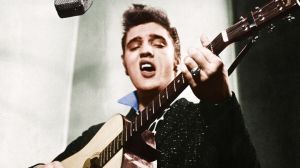
1/1956-Close up of Elvis Presley playing guitar. -
Naomi and Wynonna Judd during The Judds farewell tour. -
THE DEAN MARTIN SHOW — Episode 15 — Pictured: Tennessee Ernie Ford — (Photo By: NBC) via Getty Images)