Your cart is currently empty!


The Sedonas Single Out Their Best, Live, on ‘Opening Selects’
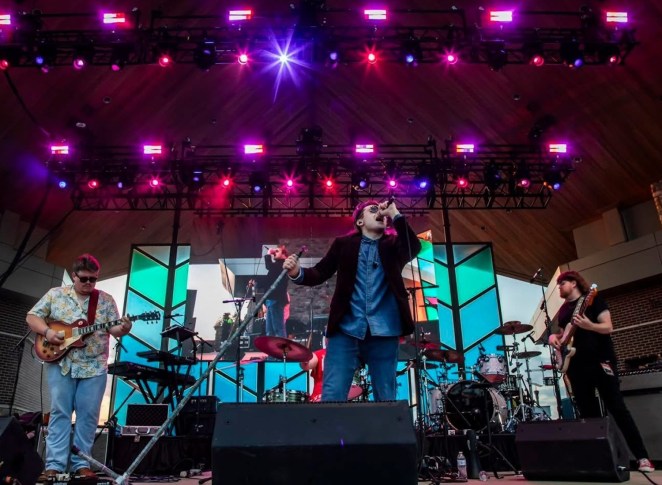
James Connor Wike believes the Sedonas songs have always sounded their best live. Perhaps it’s a notion precipitated by the Knoxville-based foursome’s desire to win over audiences as an opening band, but whatever the Sedonas have been doing over the past decade, since forming, has worked and landed them in supporting slots, opening for The Who, Lynyrd Skynyrd, and ZZ Top.
The Sedonas’ recent run of shows also prompted the band to revisit a collection of live performances since forming in 2016 on their latest album, Opening Selects. Each called “bootlegs,” the 14 tracks on Opening Selects are a mixed chronology of the Sedonas’ catalog spanning their 2017 debut American Paint through their third album, The ’79 Session, in 2022.
“All of these tracks have been broken in for several years now,” said Wike in a previous statement. “They have the feel we always intended.”
Opening Selects is a collection of what the Sedonas have done best, live, introducing the band’s musical DNA of Americana, country, rock, blues, and more genres. “Our sound has generally been very raw and live, even in the studio,” adds Wike. “We take risks onstage with improvisation, and that comes through clearly on ‘Opening Selects.’ It highlights how cooperative our group can be live.”
The album kicks off where everything started for the band with a live version of “Live My Years” from American Paint, then into “You Know (You Ought to Know)” and “Too Tired (For Common Sense),” from The ’79 Session, along with the Sedonas’ funkier 2018 single, “Mind.”
Live versions of tracks from the band’s 2020 release, The Sedonas LP, also slip in with the harder rock “Living’ Fastly,” and “It’s Bad,” along with more nuances on the slower “Trace of Rain” and “1 Day or Another.”
Videos by American Songwriter
As the band gears up for more shows and hits the studio again, Wike reflected on the Sedonas’ first live release, touring with legends, and where they’re headed next.
Within the past year, you’ve had a whirlwind of shows with some legendary bands: the Who, ZZ Top, and Lynyrd Skynyrd. Where has it all left the Sedonas now?
Those guys were super kind to use, The Who and [Lynyrd] Skynyrd, of course. I didn’t really think we were going to get shows like that, but they gave us some chances, and we were very happy with it. It definitely got some eyes on us after we opened for the Who on their final North American date.
It’s been a decade since the Sedonas formed. Why did you want to get these live recordings out now?
I think we sound better live. Live, we jam and improv, and it opens up a whole different element to the songs. I always intended for us to have that spontaneity that’s in the live recordings in the studio, but it’s so hard to capture that in the studio. You need an audience in front of you to feel it, so that was the real reason—capturing what we’ve been doing live the last few years.
In between touring and The ’79 Session, when did Opening Selects start coming together?
Well, those are the songs that we play the most live, and I feel like they get the most broken in, and have elements that you don’t hear in the studio. There’s a lot more jamming, and some extended things at the end of the songs that aren’t on the studio.
Some of these songs have been with you for a decade or more. What’s your connection to some of them now?
That first track, “Live My Years,” has changed quite a bit [live], compared to the studio version. It’s gone up a key, and it’s a bit faster too. The lyrics describe playing to an audience and overcoming things to be able to perform live. Now, I think that song has transformed into what the lyrics always meant.
How has the band’s sound and songwriting changed since American Paint?
Our guitarist, Ryan Sise, was not with us on American Paint but joined when we did the single “Mind” in 2018, and that was a big change. His playing is very soulful and bluesy, and that’s changed our sound a lot. With songwriting, I’m trying to be more to the point. I’m trying to simplify things so when we play live, it’s not too technical. I just want to come right to the people. I don’t want it to be too confusing. I was overthinking things with The Sedonas LP and on American Paint, so I’m trying to be a bit more natural with my songwriting.
Did you ever come across a song that was difficult to finish?
There was one I wrote about my grandma after she passed called “The Tune to You” (from The ’79 Session), and I’ve never performed it live. It’s also up in my register, and that whole song is about her, so it’s very difficult to sing. I put everything I could into that song to make sure that I could do her some honor.
Are you finding it easier to dig deeper with lyrics now?
I think so. I’ve been able to pinpoint what I think makes good lyrics. I’m able to figure out “This rhyme scheme sounds better with this kind of song” or “This song would sound better if I do it more like this, or maybe something a little Bob Dylan-ish, where at the end of every line you’re rhyming.” I’ve picked up on these things a bit more. Getting older helps a lot, too, with art. It gives you a much better perception.
I was maybe a bit more, I don’t want to say pessimistic, but I had a bit different view of the world earlier on with The Sedonas LP. Since I was struggling more with the music, I had a tendency to do that. On The ’79 Session, you can start hearing me talk a bit more hopefully. On this most recent record, I want things to be positive, but I also want them to be hard-hitting. I still want the songs to be rocking, inspirational, and not so down on things. Now that I’m older, I feel like I’m finding my place in the world a bit more.
Photo: Joey Lax Salinas
Leave a Reply
Only members can comment. Become a member. Already a member? Log in.