
“Songwriting is the most mystifying thing in the world, really, because no one can tell you why it works,” says Billy Corgan.
Despite claiming not to know why songwriting works, though, Corgan has certainly proven that he has mastered the mechanics of creating a successful song. As the leader of The Smashing Pumpkins, he has written several of the most popular songs in alternative rock, including “Cherub Rock,” “Today,” “Disarm,” “Bullet with Butterfly Wings,” “1979,” “Zero,” “Tonight, Tonight,” and many more.
Videos by American Songwriter
But before all those acclaimed singles, there was Gish, the Pumpkins’ debut album, which received critical praise and created a buzz in the underground scene, but produced no major hits when it was released in 1991. But after the band became hugely successful with their sophomore album, Siamese Dream (1993), many people went back and gave Gish a listen, and it eventually attained platinum sales status. To mark the album’s 35th anniversary this year, it’s being reissued in multiple vinyl versions on May 29, via UMR.
[Purchase the May/June 2026 Issue Featuring: Billy Corgan HERE]

During a video call, Corgan offers a frank assessment of his time writing the songs for Gish. “In the years of ’88 to ’90, which is when we were making the record, it was such a struggle to write songs—I had such a hard time with it,” he says. “Mostly, I was just so overwhelmed by everything that had come before me; I felt that nothing I could do would seem to match up against my heroes.”
Still, he refused to stop trying: “I would just play and play and play, and if I found one little motif or riff that seemed to feel different enough, or connect to me emotionally, I would follow that like a thread down a rabbit hole. It was like, ‘Oh my God, I actually found something!’ Almost every song on that first album is representative of that, because I didn’t know how to conventionally write at all. I mean, I had no musical training; I never even had music lessons.”
Instead, Corgan recalls, he had learned about songwriting by osmosis as he was growing up in Chicago. “I listened to the radio obsessively, and my father was a musician, so I was surrounded by music,” he says. “I was aware of the great music that had come before me—maybe too much so. And so it was very intimidating. It seemed like artists like the [Rolling] Stones and The Beatles and Black Sabbath and Led Zeppelin had the possession of some mysterious key that I had no access to.
[RELATED: Smashing Pumpkins’ Lost Track “Chrome Jets” Finally Takes Flight]
“If you want to play a negative game in your head, you go, ‘Well, I’m never going to write a song better than [Queen’s] “Bohemian Rhapsody.”’ Or, ‘I’m never going to write a song better than [The Beatles’] “Strawberry Fields.”’ The average feeling that I got, in my own internal negativity, was, ‘Don’t even bother. Basically, there’s no possible way you could ever measure up, so don’t even try.’”
But something compelled Corgan to give songwriting a shot, all the same. He started writing songs in his late teens, and joined several bands. In 1988, Corgan decided to form his own group, and The Smashing Pumpkins were born. This, however, didn’t take any of the songwriting pressure off Corgan, who has served as the band’s primary songwriter since its inception.
“James [Iha, The Smashing Pumpkins’ guitarist] and I had a little success here and there writing together, and I really do like the way James thinks about music,” Corgan says, “but it didn’t turn out to be a long-lasting partnership in that way. Jimmy [Chamberlin, drummer] didn’t write, and D’arcy [Wretzky, then-bassist] didn’t write. And so the balance was probably 90 to 95 percent me on the writing side, and the rest would have gone to James, and that would have been it. We just weren’t a band that wrote like that together. It just wasn’t in the cards.” This has remained the case as the band has gone through various lineups, including now that the Pumpkins once again finds Iha and Chamberlin alongside Corgan.
When the band started playing in Chicago’s clubs, Corgan says they were met with hostility because they were so out of step with the kind of music that the other local bands were making. “The indie scene in Chicago was very much like, ‘It’s OK to get up and play three-chord songs about your drunken weekend. No one expects you to be Bob Dylan. No one’s expecting you to reach for greatness.’”
But Corgan wasn’t willing to change his songwriting style, even if others derided him for writing such lengthy songs, and mocked his esoteric lyrics. “People would say stuff like, ‘Well, what the hell is that supposed to mean?’ Anything that veered outside of, ‘You left me and now my heart is sad’ seemed to get people to question my sanity,” Corgan says. “The poetry of the thing was both mystifying to me, as far as what I was after, and mystifying to people who were paying attention, like, ‘Why would you be saying these strange things?’”
Beyond his enigmatic musical style, Corgan also seemed unusual because he made no bones about the fact that he was aiming to gain more than just a local following. “It was not in the ethos of that community to think about aspiration,” he says. “The scene in Chicago was very negative against us because they didn’t understand that we were ambitious. Or, to be more personal, that I was so ambitious. It was kind of a, ‘Who do you think you are that you can get out of here?’ [But] I was like, ‘If I’m going to drag my stuff through the snow on a Wednesday night to go play a gig in front of 20 people, I’ve got to really want to get out of here. This can’t be just to play for the 20 people. That just seems to be a form of madness.’”
The band persevered, finally securing a record deal and putting out Gish in 1991. It was produced by Corgan and Butch Vig, who would soon become famed for also producing Nirvana’s breakthrough album, Nevermind, which was released in 1991, as well. That seminal album, Corgan says, had a big impact on how he approached his songwriting for the next Smashing Pumpkins release.
“I definitely recognized, because of the pressures of the music business at the time, that I had to change the way I wrote,” he says. “The most obvious thing is that between the release of Gish and the making of Siamese Dream, in 1992 to 1993, Nirvana had gone massive, Pearl Jam had gone massive, and I think Alice In Chains was getting massive. So suddenly, there was this pressure to get on the radio. It was like, ‘I guess I’d better learn to write a three and a half minute pop song.’ So I got out The Beatles’ records, and I started trying to understand what that mentality is, because I never thought like that before then.”
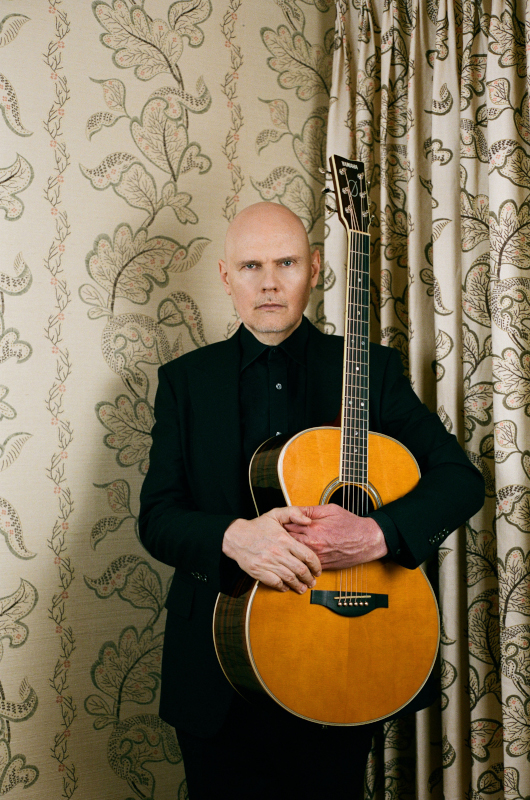
Around this same time, a key conversation also shaped Corgan’s new approach to songwriting. “I was on the phone once with Courtney Love, and I was discussing writing what became Siamese Dream,” he says. “She had been listening to Gish, and she said, ‘What is all this hippie claptrap that you’re singing about?’ I was like, ‘Well, I was doing a lot of LSD, and it all kind of made a certain sense.’ And she said, ‘I get that, but these lyrics really don’t have much meaning in them. You are a deeper thinker than this. So why don’t your lyrics reflect the person that I talk to on the phone?’ So she kind of laid down this challenge that I write a better lyric.
“Those dots started to connect in my mind that you could write in a very high-minded way, but in a way that was very stark. Once you open that door, it opens the door to the whole world—I mean, you can talk about anything.”
Finally, Corgan found the right balance, and began writing songs that were catchy, yet still retained the band’s atmospheric intensity. He points to the song “Today” as a prime example of this. “[That] would have been the first example of that change in attitude where I took something really hard to confront in my life, which was suicidal ideation and a true desire to kill myself because I was in so much psychic pain, and then somehow converting that into the currency of a song. I finally found the modality that was who I was,” he says.
Siamese Dream became a massive hit when it was released in 1993. Three singles from that album—“Cherub Rock,” “Today,” and “Disarm”—entered the Top 10 on the U.S. charts. Suddenly, The Smashing Pumpkins were being hailed as one of the most innovative alternative rock bands.
Corgan admits that after enduring the scorn of his peers in the Chicago scene, this accomplishment was vindicating, “but I handled it poorly, too, because I felt sort of bitter about the way we’d been treated, so I said very unkind things and made a lot of enemies,” he says, “which I later made peace with because I recognized that I didn’t handle the success that we were granted with grace. But it did embitter me at the time. Not now, but at the time, because I really wanted to be part of that community.”
The band continued their commercial success with their next album, Mellon Collie and the Infinite Sadness (1995), which yielded four more Top 10 singles: “Bullet with Butterfly Wings” (which won a Grammy for Best Hard Rock Performance), “1979,” “Zero,” and “Tonight, Tonight.”
The band won another Grammy in 1998, also for Best Hard Rock Performance, for the song “The End Is the Beginning Is the End,” which appeared on the Batman & Robin film soundtrack in 1997.
With the wisdom of experience, Corgan has some advice for aspiring songwriters who hope to achieve success while also staying true to themselves: “As trite as it sounds, you’ve got to trust yourself,” he says. “You have to trust that what you feel and what you’re interested in is the best thing. I received so much negative feedback in the first four or five years of my songwriting. I could have quit at any point, and nobody would have even cared—but I needed to trust it. I had no other better option than to trust it.
“So if what’s coming out of you is a seven minute song, you’ve just got to trust it. It doesn’t mean you don’t need the discernment down the road to say, ‘OK, I can trim that to five and a half minutes; I don’t need that extra verse.’ That’s fine. That’s just the mechanics. But trusting where your heart wants to go with writing, I think is the key. If you don’t buy it, they certainly won’t.”
He also has some insight into what not to do as a successful musician: in hindsight, he admits he maybe could’ve handled his newfound fame a little bit better. “I ran around and talked way too much in my heyday about who I was and what I was, mostly because I felt I was being underestimated or overlooked, which I guess is two versions of the same thing,” he says. “I didn’t do myself any favors with self-aggrandizement, but it was something I needed to do for my own reasons. I’m not saying it was a good idea. It just was something I did.”
When Adore, The Smashing Pumpkins’ fourth studio album, was released in 1998, it also went platinum, securing their legacy as one of the defining bands of the 1990s. With the turn of the century, however, the musical landscape seemed to shift, and their subsequent releases, while critically acclaimed and selling well, have not produced the same kind of lofty chart placements.
Corgan acknowledges that it hasn’t been easy navigating this kind of changing landscape. “I dealt with the inevitable thing that happens in the music business where you’re not as successful, and then people start questioning your sanity, questioning even that what you did do correctly was good, or as great, as you think it was. And then at some point, you pick yourself back up off the floor and you get back to work. And I think I’ve done a good job of reestablishing the throughline of why I’m a writer, and why I would say writing is the best thing I’ve ever done.”
On the most recent Smashing Pumpkins albums (the latest, Aghori Mhori Mei, was released in 2024), Corgan’s songwriting has become more expansive again, bringing the band back to the kind of exploratory, esoteric soundscapes that seem like particularly fitting successors to the tracks on Gish. And this, Corgan makes clear, is exactly where he wants to be as a songwriter.
“I like to think maybe I’m at a point that it’s now balanced between all those concerns,” he says. “Like, I can write a seven minute art song, or I can write a three minute pop song. It doesn’t really affect me one way or the other. I don’t attach anything to it other than, I just do it because I’m interested. There’s no other agenda.”
Although he continues to be musically adventurous, Corgan says he still finds himself often returning to one theme in many of his lyrics: “I certainly feel, like many do, that I’m sort of a person in the wrong place at the wrong time. So I think there’s kind of a yearning, both for a world that is a little bit more accommodating to the way you view the world, and maybe you can find your place in it, or yearning for a state of something that doesn’t exist. It’s neither sentimental or idealistic, but exists somewhere in between.”
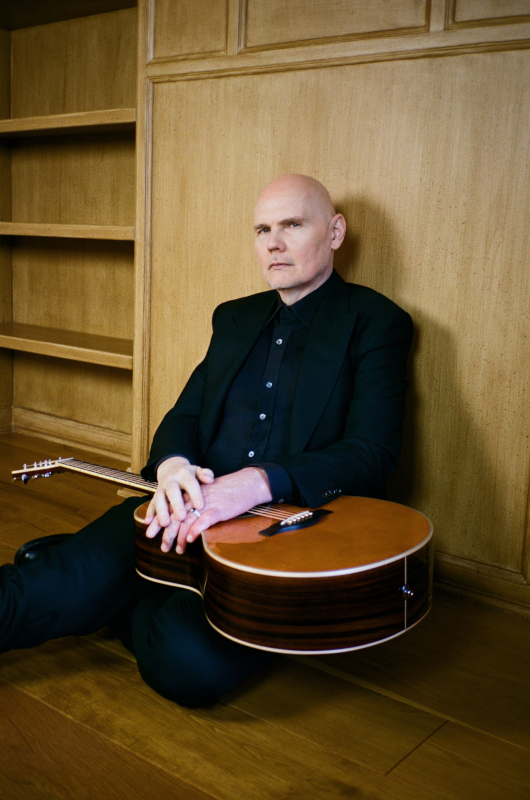
As he navigates The Smashing Pumpkins toward their 40th anniversary, Corgan is still resisting the expectations that others try to put on him and his songwriting, just like what happened at the start of his career. “I know I’m not for everybody—I’m not a ‘cars and girls’ type of writer,” he says, “but I think I’ve certainly proven that I’m serious about it. That whatever happened in 1993 doesn’t define who I am as a writer. I’ve moved on. Many people put pressure on me to go back and just be that writer again, because it would have been commercially expedient to do so.
“But I guess what I’m trying to say in the most humble of ways is, if you’re a true songwriter, you’re on a journey, and you’re always on a journey, and that journey takes you places you could never imagine. And sometimes it works, and sometimes it doesn’t—but it’s the joy of the chase, it’s the joy of finding something new.”
And to that end, Corgan makes it clear that he’s not stopping anytime soon: “It’s the arrogance of a writer, but I feel like I found gold in every period of my writing life,” he says. “I know not everyone agrees, but I don’t feel that way. I feel like that book is still being written.”
Photos by Kristin Gallegos
More Features
-
UNSPECIFIED – CIRCA 1970: Photo of Carpenters Photo by Michael Ochs Archives/Getty Images -
UNSPECIFIED – CIRCA 1970: Photo of Jim Croce Photo by Michael Ochs Archives/Getty Images -

Singer-songwriter John Prine performs at Symphony Hall on April 26, 1974 in Atlanta, Georgia. (Photo by Tom Hill/Getty Images) -
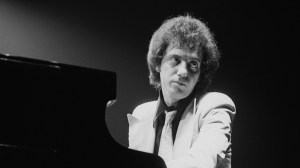
American singer-songwriter Billy Joel, performing in New York City, 7th December 1977. (Photo by Michael Putland/Getty Images) -

American rock and roll singers the Everly Brothers, Phil and Don Everly, circa 1958. (Photo by Archive Photos/Getty Images) -

Photo by Michael Ochs Archives/Getty Images -
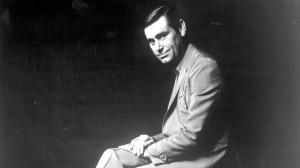
UNSPECIFIED – CIRCA 1970: Photo of George Jones Photo by Michael Ochs Archives/Getty Images