Your cart is currently empty!



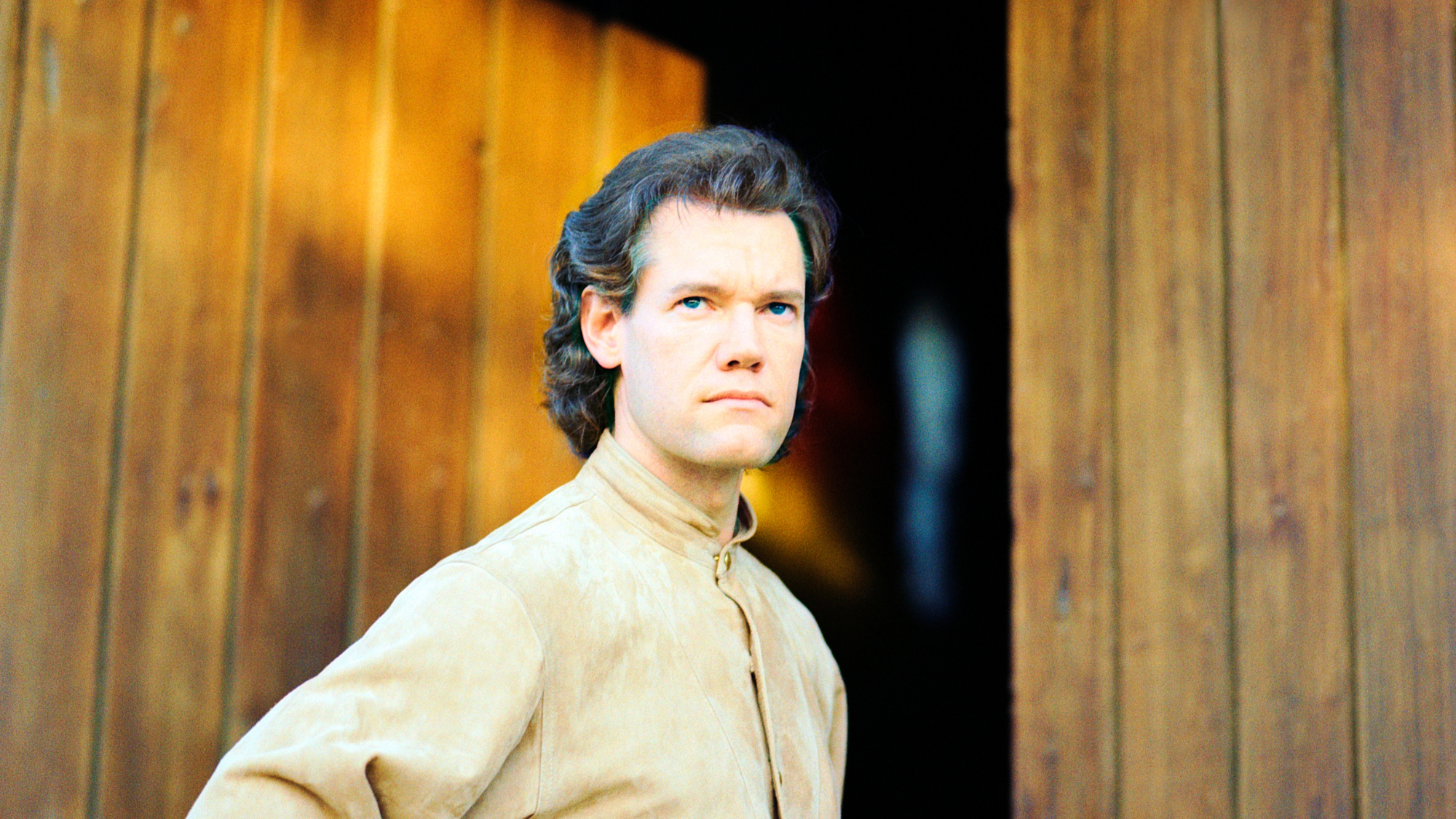
On This Day in 2013, Country Music Nearly Lost Randy Travis—but His Wife Refused To Pull the Plug
Twelve years ago today, July 8, doctors at The Heart Hospital Baylor in Plano, Texas, put Country Music Hall of Famer Randy Travis on life support.
Videos by American Songwriter
He had been diagnosed with walking pneumonia and flatlined at other hospitals. Travis and his wife, Mary, were fighting for his survival.
Doctors told her to pull the plug.
The neo-traditional baritone, whom many credit with saving country music from the genre’s soft pop lean of the ’80s, suffered a sudden and shocking health emergency on July 7, 2013. Three days prior, The Travises thought he was healthy.
On July 4, 2013, Travis spent his usual three to four hours working out in his gym. July 5, he sat through an all-day business meeting. Then, on July 6, he complained of congestion in his airways and went to a nearby emergency room, which is where he was diagnosed with walking pneumonia. The next day, the singer told his wife he felt much worse and couldn’t breathe at all. She took him back to the hospital, and both of his lungs had filled with fluid.
At The Heart Hospital, Dr. Michael Mack diagnosed Travis with viral cardiomyopathy, a virus that settles in the heart. His heart had started to shut down, which caused his lungs to accumulate fluid.
(The Travises think the singer picked up the virus five weeks before on a sweltering movie set in a 50-year-old chemical, feed, and seed store in Louisiana.)
Randy Travis Had a 1 to 2 Percent Chance to Survive
He was on life support, and when he came out of a coma 48 hours later, doctors realized Travis had suffered a massive stroke. Doctors told Mary Travis that lifesaving surgery was required. And even with surgery, her husband had only a 1 to 2 percent chance of survival.
“I’m in a fog,” Mary Travis told me in 2017. “You don’t really have time to think about how you’re feeling. You’re answering questions. You’re making decisions and scared to death. At this point, the 1 to 2 percent chance is 100 percent chance over zero. I prayed hard, ‘God, please let me have him back, any way, shape, or form.’”
After surgery, Travis spent nearly six months in hospitals in Texas and Tennessee—about six weeks in a coma. He had two brain surgeries, got pneumonia three times, was intubated seven times, had three tracheotomies and a feeding tube. While hospitalized in Nashville, Travis caught staph infections from hospital-borne bacteria, and doctors spent two weeks telling his wife he was going to die. If he did survive, they told his wife, he’d likely be confined to a wheelchair for the rest of his life.
Travis was in a coma state when she entered his hospital room, took his hand, and asked: “Do you want to keep fighting, baby?”
He squeezed her hand, and a tear rolled down his cheek.
He Wasn’t Ready to Quit Fighting
“I knew then he wasn’t ready to quit fighting,” she told me. “I went back and told the doctors, ‘It’s not our choice to decide that. … And I suggest that everybody get on board and do everything they can do to save him.’”
Soon after, the Travises switched doctors. His new specialist prescribed a more powerful antibiotic, and within three days, Travis started to show improvement. Five days after that, the doctor told Mary Travis she could start planning her husband’s trip home. “Home” meant seven more weeks in Texas hospitals before she wheeled him out, a bag of laundry in his lap, just in time to spend Thanksgiving at their ranch in Tioga, Texas.
Three years and three months later, Travis walked on stage to be inducted into the Country Music Hall of Fame. He stood throughout his induction and then stunned the room, singing “Amazing Grace.”
Recovery was grueling. In 2017, Travis’ speech was broken, and he maneuvered around his Nashville condo in a wheelchair. He could dress and bathe himself, but it was a struggle.
When I asked if he was happy, the singer paused for several seconds.
“Well … no,” he admitted, before another long pause. “Damaged.”
Randy Travis Says He’s “Damaged”
In the eight years since, the singer’s progress has been slow and steady. He and Mary chose to shift the emphasis from frustrating rehabilitation to living. That isn’t to say the couple is still working to regain as much speech and mobility as possible – just that they also prioritize living their lives. Travis can now sign autographs, work the television remote control, make his own coffee, and articulate more clearly.
Since the 1986 release of his multi-platinum-selling “Storms of Life,” Travis charted 16 No. 1 songs, and his traditional country baritone rang out on hits including “Forever and Ever, Amen,” “Deeper than a Holler,” and “On the Other Hand.”
Fans who want to hear Travis’ hits have a slew of opportunities to do so – in a couple of different ways.
Travis recently announced plans for NOW PLAYING – Randy Travis, a new vinyl collection that includes 10 of his most beloved songs available on August 1. The couple is also readying for the “More Life Tour,” a salute to the music of Randy Travis. The tour features his original band members, guest vocalist James Dupré, and Randy and Mary will be onstage for the entire show, interacting with Dupré, the band, and the audience.
(Jonathan Mailhes/CSM/Shutterstock)



Leave a Reply
Only members can comment. Become a member. Already a member? Log in.