
When one thinks of Southern rock, they’ll typically conjure images of bands like Lynyrd Skynyrd and The Allman Brothers Band—bands whose home bases were within driving distance of Birmingham, Alabama, not heavy metal rockers from Birmingham, U.K., like Ozzy Osbourne. Nevertheless, Southern rock played an integral role in the making of Osbourne’s sixth solo album, No More Tears.
No More Tears includes several massive Ozzy hits, including the title track, “Mama, I’m Coming Home”, and “Hellraiser”. The album was a collaborative effort between Osbourne, his then-recently added guitarist, Zakk Wylde, and Motörhead frontman Lemmy Kilmister. With its blistering guitar solos and Osbourne’s signature vocals, No More Tears is undoubtedly a Prince of Darkness album.
Videos by American Songwriter
But as Wylde revealed to Guitar Player, he had other bands in mind when he was helping write No More Tears. And once you hear the 1991 album in that particular context, it’s tough to unhear it.
Southern Rock Helped Inspire Ozzy Osbourne’s ‘No More Tears’
Though it doesn’t always happen this way, some of the best rock ‘n’ roll songs tend to fall out naturally during the jamming process. “No More Tears” was one of these spontaneously inspired creations, according to guitarist Zakk Wylde. After bassist Mike Inez, drummer Randy Castillo, and keyboardist John Sinclair began improvising through what would eventually become Ozzy Osbourne’s title track, Wylde started thinking of his favorite Southern rock bands.
“I had a slide with me, and I was thinking about all those bands like Lynyrd Skynyrd and Molly Hatchet that I liked,” he recalled. “Which was what inspired the slide lines that I started playing, almost like a ‘Freebird’ feel. What’s funny is that the way we jammed it is almost exactly how it came out on the record.”
Wylde’s guitar solos took a little more time to form, which is something he credits to the “Randy Rhoads school of soloing.” Rhoads was the guitar mastermind behind Osbourne’s early solo hits like “Crazy Train”, but a tragic plane crash in 1982 cut Rhoads’ potential short. Wylde paid tribute to Rhoads with his approach to writing solos, which he said he did with a “homework CD of a track” that he played along to until he found a solo he liked.
After hearing about Wylde’s mindset when writing No More Tears with Osbourne, it’s hard not to hear the obvious Southern rock influence. The melodic beefiness and blues-driven sound of the guitars certainly evoke images of ZZ Top and The Allman Brothers, even if Osbourne wasn’t explicitly a Southern rock artist. Different Birminghams, same grooves.
Photo by Martyn Goodacre/Getty Images
More Behind the Album
-

Photo by Ed Rode/Getty Images -
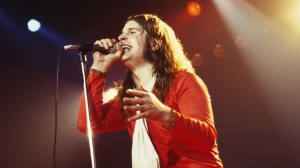
Photo by Chris Walter/WireImage -
Photo by Ed Rode/Getty Images -
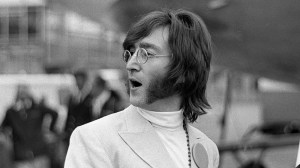
Photo by Murphy/Daily Herald/Mirrorpix via Getty Images -
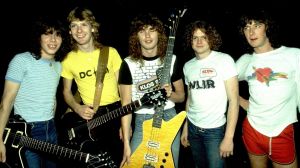
Def Leppard on 8/23/81 in East Troy, Wi. (Photo by Paul Natkin/WireImage) -
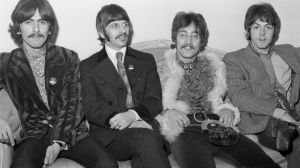
LONDON – MAY 19: (L-R) English musician, singer, songwriter and guitarist George Harrison (1943-2001), English musician, singer and drummer Ringo Starr, English singer, songwriter and guitarist John Lennon (1940-1980), and English singer, songwriter and bassist Paul McCartney of the Beatles attend a press party at the home of manager Brian Epstein supporting the release of Sgt. Pepper's Lonely Hearts Club Band, May 19, 1967 in London, United Kingdom. (Photo by Jeff Hochberg/Getty Images) -
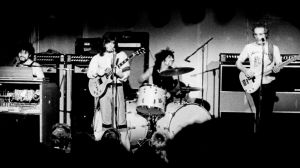
UNITED KINGDOM – JANUARY 01: MARQUEE Photo of VANILLA FUDGE, performing live onstage – L-R: Mark Stein, Vince Martell, Carmine Appice, Tim Bogert (Photo by Estate Of Keith Morris/Redferns) -
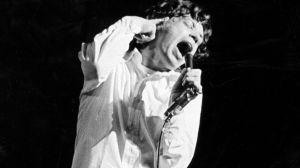
CIRCA 1966: Singer Mick Jagger of the rock and roll band "The Rolling Stones" performs onstage in circa 1966. (Photo by Michael Ochs Archives/Getty Images)