There’s never been a set formula that can ensure a hit song. Often, collaborators come together with seemingly little in common to maximize a song’s potential. For example, take a listen to “Jean”, a fluttery ballad that went to No. 2 in 1969.
It was a rare case where the songwriter behind the scenes was far more popular than the artist who recorded it. But that artist delivered something essential to “Jean” to help it reach its artistic pinnacle.
Videos by American Songwriter
Rod the Hyphenate
Rod McKuen thrived in so many different fields in the 60s that it was easiest to label him as a phenomenon rather than try to narrow it down to one skill set. He made perhaps his biggest impact as a poet, selling books by the millions.
But McKuen also did major business as a songwriter and composer. His songs tended to amble about with sad melodies and sentimental lyrics, a la the French chanson style. A wide variety of artists covered his work. Frank Sinatra once did an entire album of McKuen songs, one of many people who felt deeply about his work.
McKuen also sang his own stuff occasionally in a somewhat dramatic fashion. He served as composer for the 1969 film The Prime Of Jean Brodie and wrote and performed “Jean” as the theme song. Although Maggie Smith would eventually win an Oscar for her portrayal of the titular character, the film didn’t do much at the American box office. As such, McKuen’s song was ripe for rediscovery via a cover version.
Oliver’s Army
Bill Swofford was a North Carolina-bred musician who eventually scored a solo deal as a singer-songwriter. Once he went solo, Swofford adopted his middle name, Oliver, as a stage moniker. And he immediately found success with his No. 3 debut single, “Good Morning Starshine”, which he sourced from the musical Hair.
Oliver released his first album, also titled Good Morning Starshine, in 1969. And he included his own version of “Jean” on the album. Although he didn’t initially choose it as a single, folks started to find it anyway. Once it was released to the radio, “Jean” did even better than Oliver’s preceding single, just missing out on the top spot.
Behind the Lyrics of “Jean”
“Jean” features a narrator trying to coax the protagonist out of her shell. He mentions all the wonders of the world around her as an incentive. “Jean, Jean, you’re young and alive,” Oliver sings. “Come out of your half-dreamed dream.”
“Come out to the meadow, Jean,” he beckons to her. He promises fidelity to her in the meantime. “When the sun comes a-singin’, I’ll still be waitin,” he insists. In the final moments, he portends their eventual reunion. “And run, if you will, to the top of the hill,” he asks. “Come into my arms, bonnie Jean.”
Oliver lost momentum after his fast start, ending up with only one more Top 40 hit. Rod McKuen’s popularity also waned somewhat in the 70s, although his celebrity didn’t completely evaporate. For one special song, these two unlikely musical partners brought the best of their abilities together, leading to the winning portrait of “Jean.”
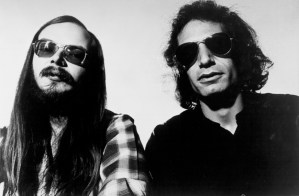
Photo by Michael Putland/Getty Images
More Behind The Song
-

TODAY — Pictured: Keith Urban on Thursday, August 2, 2018 — (Photo by: Nathan Congleton/NBCU Photo Bank/NBCUniversal via Getty Images via Getty Images) -
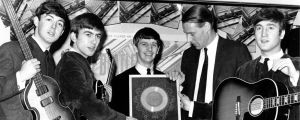
LONDON – 1964: Rock and roll band "The Beatles" poses for a portrait with their producer George Martin. (L-R) Paul McCartney, George Harrison, Ringo Starr, producer George Martin, John Lennon. (Photo by Michael Ochs Archives/Getty Images) -
Musician Dave Wakeling, founder of 'The English Beat' performs before thousands of rock fans at the US Festival, May 29,1983 in Devore, California. (Photo by Bob Riha, Jr./Getty Images) -
Miranda Lambert performs "Kerosene" at the Madison Square Garden in New York City, New York (Photo by Rick Diamond/WireImage) -
British singer Dusty Springfield (1939 – 1999) performing during a rehearsal for her TV show, 'It Must Be Dusty', at ATV Studios in Borehamwood, Hertfordshire, 1968. (Photo by Keystone/Hulton Archive/Getty Images) -
NITED STATES – JANUARY 01: Photo of Joe COCKER; Joe Cocker performing on stage (Photo by Robert Knight Archive/Redferns) -
THE TONIGHT SHOW STARRING JOHNNY CARSON — Pictured: James Young of the musical guest Styx performs on March 12, 1991 — (Photo by: NBCU Photo Bank/NBCUniversal via Getty Images via Getty Images)