
The enduring popularity of the song “I Don’t Like Mondays” by The Boomtown Rats has pushed the title phrase into the lexicon. People reflexively utter that phrase at the start of each week as they ponder the drudgery and length of the workweek ahead of them.
They might not realize, if indeed they borrowed the phrase from the song, the actual provenance of the saying is quite dark. That’s because songwriter Bob Geldof took it from a tragic true story he just happened to hear one day.
Videos by American Songwriter
Welcome to the Boomtown
The Boomtown Rats formed in Ireland and mostly bucked the punk music trend of the late 1970s, instead toeing the line between traditional rock sounds and more colorful new wave vibes. It was a winning formula, as they carved out quite a hot streak on the UK charts over their first two albums.
As was so often the case for UK bands in the pre-MTV era, American success proved elusive. Nonetheless, they were doing their best to make inroads in the U.S., touring and doing promotional appearances. That’s why they were in the position to be inspired to create what would become their signature song.
In early 1979, lead singer Bob Geldof was doing an interview at an Atlanta radio station. In between questions, his attention was drawn to a report coming through the station’s Telex machine. It was a horrible story of a school shooting that had just taken place in San Diego, California. And it was the shooter’s motive that struck Geldof.
Based on a True Story
The shooter in question was a 16-year-old girl who took a rifle her father had purchased and started firing indiscriminately at an elementary school as kids were arriving. Two school workers were killed, and eight others were wounded. When reached by reporters, the killer said she was shooting because, “I don’t like Mondays. This livens up the day.”
Geldof’s songwriting neurons started firing upon reading this. His first version of “I Don’t Like Mondays” featured more of a reggae vibe. But the song was transformed by Rats’ keyboardist (and the song’s co-writer) Johnny Fingers, who, along with a string section, gave the track a high-drama, classical feel.
The track continued the Rats’ UK success, going to the top of the charts, even though Geldof didn’t believe in it as a single. Although a worldwide success, “I Don’t Like Mondays” failed to do much business in America. Perhaps that’s because the inspiration for the song reminded folks too much of the terrible event.
What is the Meaning of “I Don’t Like Mondays”?
Geldof’s basic idea behind “I Don’t Like Mondays” was to try and pin down how and why such a thing might have happened. On the one hand, the senselessness can’t be explained: The silicon chip inside her head gets switched to overload.
The killer’s family scrambles for answers: And Daddy doesn’t understand it / He always said she was good as gold. Officials on the scene try to make sense of it all: And then the bullhorn crackles and the captain tackles / All the problems and the hows and whys. Every time another person fails to come up a good reason, it just further highlights the senselessness of it all.
The song also spends time lamenting the victims of such horror: And school’s out early and soon we be learning / And the lesson today is how to die. “I Don’t Like Mondays” by The Boomtown Rats doesn’t pretend to make any sense of the tragedy. But the band deserves credit for bravely addressing such a random act of violence, instead of shying away and pretending it didn’t happen.
Photo by Gary Gershoff/Getty Images
More Behind The Song
-
NEW YORK: Janis Ian performs live on stage in New York in 1975 (Photo by Richard E. Aaron/Redferns) -
Musician Bob Seger performs at the Poplar Creek Music Theater, Hoffman Estates, Illinois, August 13, 1986. (Photo by Paul Natkin/Getty Images) -

American vocalist, musician, songwriter, producer, actress and narrator Rickie Lee Jones performing live, circa 1979. (Photo by Gus Stewart/Getty Images) -
UNSPECIFIED – JANUARY 01: Photo of Huey LEWIS & The News; (Photo by David Redfern/Redferns) -
Photo by Fireshot/Universal Images Group via Getty Images -
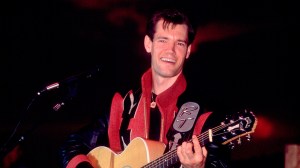
American Country musician Randy Travis plays guitar as he performs onstage at the Wisconsin State Fair, Milwaukee, Wisconsin, July 15, 1988. (Photo by Paul Natkin/Getty Images) -
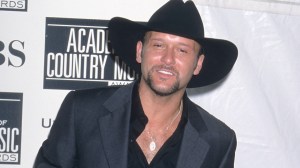
UNIVERSAL CITY, CA – MAY 3: Singer Tim McGrawl attends the 35th Annual Academy of Country Music Awards on May 3, 2000 at the Universal Amphitheatre in Universal City, California. (Photo by Ron Galella, Ltd./Ron Galella Collection via Getty Images) -
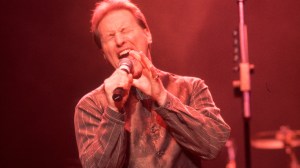
American country and western music singer Collin Raye performs at the Rialto Theater in Joliet, Illinois, November 25, 1996. (Photo by Paul Natkin/Getty Images)