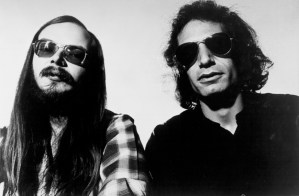
Willie Nelson’s decades-long musical career features countless iconic hits, but it could have included one more if Shotgun Willie hadn’t rejected this country hit for being too long. But despite missing out on a song that would later spur movies, countless pop culture references, and multiple platinum certifications, Nelson doesn’t regret his choice.
As he told the hosts of The Today Show in the summer of 2020, Nelson thinks that no one else but the song’s most famed artist should have had that track.
Videos by American Songwriter
The Country Hit Willie Nelson Rejected
In a video interview from his home in July 2020, Willie Nelson revealed that Kenny Rogers had originally asked the “Crazy” singer to record a version of “The Gambler.” The song had already been passed around the Nashville community by that point, with versions by Bobby Bare, Johnny Cash, and songwriter Don Schlitz already out.
“He tried to get me to record “The Gambler,”” Nelson recalled. “We were somewhere. I don’t know. He said, ‘I got this song here. I think you should do it.’ And he played it for me, and I said, ‘It’s a great song, but I don’t think I’ll do it’ because I was doing every night a song called “The Red Headed Stranger,” which has 100 verses in it. It’s a long song. I said I just don’t want to do another long song, and I can’t quit doing “Red Headed Stranger.” So, he said, ‘Okay, I’ll record it myself.’ And so he did, and there it is” (via Saving Country Music).
Rogers released his version of “The Gambler” in November 1978 to great critical acclaim. The track hit No. 1 on the U.S. Billboard Hot Country Songs chart and received double-platinum certification in the U.K. and New Zealand. As for Nelson? He has no regrets. “That was Kenny’s song all the way,” Nelson told The Today Show.
How “The Gambler” Was Inspired From Beyond the Grave
While we most often associate “The Gambler” with Kenny Rogers, American songwriter Don Schlitz was the song’s composer. During a 1979 radio interview, Schlitz explained that the song fell out of him. “[I] had no idea where the song was coming from,” he admitted. “Something more than me wrote that song” (via Country Now).
“I’m convinced of that,” he continued. “There was something going through my head, which was my father. It was just a song, and it somehow filtered through me. Six weeks later, I received the final verse. Months later, it came to me that it was inspired by and possibly a gift from my father.” Schlitz’s father had died that same year.
We don’t doubt that Willie Nelson could have delivered a tremendous rendition of “The Gambler,” although Kenny Rogers’ iconic 1978 track is hard to beat. Nevertheless, Nelson’s decision to pass on the country hit is, in a way, a testament to the song itself—knowing when to hold, when to fold ‘em, when to walk away, and when to run.
Photo by Scott Moore/Shutterstock
More Behind The Song
-
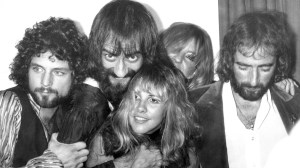
LOS ANGELES – SEPTEMBER 1: Fleetwood Mac (L-R Stevie Nicks, Lindsey Buckingham, Christine McVie, John McVie and Mick Fleetwood) backstage at the Los Angeles Rock Awards on September 1, 1977 in Los Angeles, California. (Photo by Richard Creamer/Michael Ochs Archives/Getty Images) -
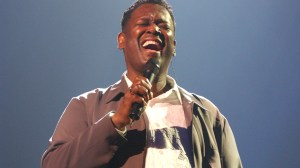
Luther Vandross on stage at the 2002 American Music Awards at the Shrine Auditorium in Los Angeles January 8, 2002 (Photo by KMazur/WireImage) -
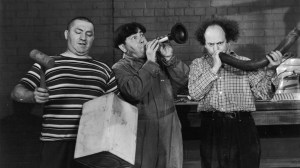
circa 1940: The Three Stooges turn plumbing equipment into musical instruments in a still from an unidentified film. L-R: Curly Howard (1903 – 1952), Moe Howard (1897 – 1975) and Larry Fine (1902 – 1975). (Photo by Hulton Archive/Getty Images) -
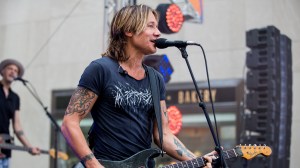
TODAY — Pictured: Keith Urban on Thursday, August 2, 2018 — (Photo by: Nathan Congleton/NBCU Photo Bank/NBCUniversal via Getty Images via Getty Images) -
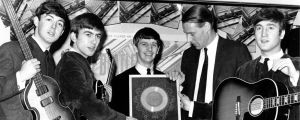
LONDON – 1964: Rock and roll band "The Beatles" poses for a portrait with their producer George Martin. (L-R) Paul McCartney, George Harrison, Ringo Starr, producer George Martin, John Lennon. (Photo by Michael Ochs Archives/Getty Images) -
Musician Dave Wakeling, founder of 'The English Beat' performs before thousands of rock fans at the US Festival, May 29,1983 in Devore, California. (Photo by Bob Riha, Jr./Getty Images) -
Miranda Lambert performs "Kerosene" at the Madison Square Garden in New York City, New York (Photo by Rick Diamond/WireImage)