
Very few bands have ever enjoyed the kind of longevity on the pop charts that Chicago was able to achieve. For a good portion of that time, the band expressed conflicted emotions about the quest for the next hit single.
When they scored what turned out to be their final Top 40 hit, it was a muted success. And it convinced them that it was time to get off the pop merry-go-round and follow their artistic tendencies.
Videos by American Songwriter
Playing the Slow Stuff
When Chicago first formed in 1967, they rode a wave of rock bands who incorporated horns to such an extent that their sound was a fusion of different elements. And, for a while, radio accepted ambitious tracks from the group like “Beginnings” and “25 or 6 to 4”.
They outlasted the other horn-fueled bands who emerged with them in the 60s. But that longevity also meant that they continued into an era where radio formats were much more regimented and less amenable to fusion-type efforts. As a result, Chicago began to rely on simpler ballads for their singles, several of which scored big in the 70s.
In the 80s, the band essentially ceded much of their artistic direction to producer David Foster. Foster relied far more on synths than horns and often subbed out Chicago’s instrumentalists for session players. Meanwhile, lead singer Peter Cetera, who sang those power ballad smashes in the early 80s, became the face of the band more than ever before. That didn’t necessarily sit well with others in the group.
Diane’s Magic Touch
Eventually, Chicago made the decision to move on from Cetera in a you’re fired/I’m leaving situation. But they still relied heavily on the power ballads, even after Foster was also out of the picture. And you couldn’t blame them, because the hits kept coming.
In 1988, the 20th year of their recording career, Chicago delivered a No. 1 pop hit with the song “Look Away”. Diane Warren, who had just begun her reign as pop’s ultimate writer-for-hire at the time, penned it. It only made sense for the band to return to that well on subsequent albums.
By 1991, the push and pull between the desire of the core members of the band to return to their former sound and the record company’s demands for accessible pop material reached a tipping point. Much of their album Twenty 1 featured founding member Robert Lamm trying to reinsert the horns into the picture. But their label insisted on a Warren-written track as the first single.
“Wind” Chimes
“Chasin’ The Wind”, like “Look Away”, was written by Warren and featured Bill Champlin. And it’s a perfectly fine piece of adult contemporary pop, if a bit generic. But by ’91, such ballads were no longer tipping the needle as consistently. The song rose to No. 39 on the charts before fading.
Perhaps feeling emboldened by this result, Chicago took full control of their sound on what was intended to be their next album. Realizing that hits weren’t likely to be in the cards anymore, the band cut loose with a free-flowing, horn-heavy approach.
That album, Stone of Sisyphus, would get turned down by Warner Bros. in 1994, effectively ending the band’s long tenure at the label. But at least Chicago had freed themselves from those balladic expectations that had frustrated them for so long.
Photo by Harry Langdon/Getty Images
More Behind The Song
-
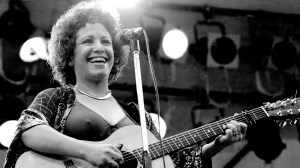
NEW YORK: Janis Ian performs live on stage in New York in 1975 (Photo by Richard E. Aaron/Redferns) -
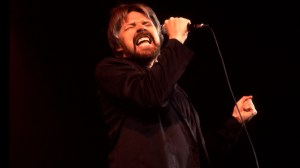
Musician Bob Seger performs at the Poplar Creek Music Theater, Hoffman Estates, Illinois, August 13, 1986. (Photo by Paul Natkin/Getty Images) -

American vocalist, musician, songwriter, producer, actress and narrator Rickie Lee Jones performing live, circa 1979. (Photo by Gus Stewart/Getty Images) -
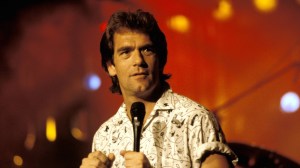
UNSPECIFIED – JANUARY 01: Photo of Huey LEWIS & The News; (Photo by David Redfern/Redferns) -
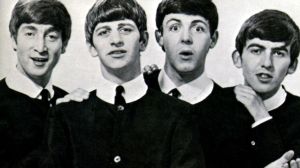
Photo by Fireshot/Universal Images Group via Getty Images -
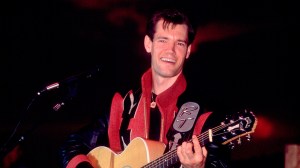
American Country musician Randy Travis plays guitar as he performs onstage at the Wisconsin State Fair, Milwaukee, Wisconsin, July 15, 1988. (Photo by Paul Natkin/Getty Images) -
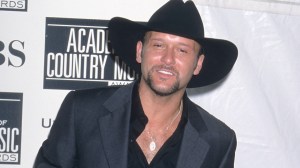
UNIVERSAL CITY, CA – MAY 3: Singer Tim McGrawl attends the 35th Annual Academy of Country Music Awards on May 3, 2000 at the Universal Amphitheatre in Universal City, California. (Photo by Ron Galella, Ltd./Ron Galella Collection via Getty Images) -
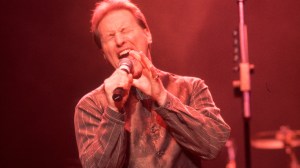
American country and western music singer Collin Raye performs at the Rialto Theater in Joliet, Illinois, November 25, 1996. (Photo by Paul Natkin/Getty Images)