
The American folk music revival movement began in the 1940s. It would find its mainstream peak in the 1960s, when countless singer-songwriters began to dish out their vulnerable and often political folk songs during the Vietnam War era. But where would those musicians be without the inspirational and influential American folk songs of the 1940s? Let’s look at just a few classics that helped shape the 1960s sound from several decades away.
“This Land Is Your Land” by Woody Guthrie (1945)
“This land is your land and this land is my land / From California to the New York island / From the redwood forest to the Gulf Stream waters / This land was made for you and me.”
Videos by American Songwriter
This wouldn’t be a list of influential American folk songs from the 1940s without mentioning this legendary song from Woody Guthrie. This song was a response to Irving Berlin’s “God Bless America”, and it remains one of the greatest folk works of all time. It manages to be political without an ounce of vitriol, imploring the listener to see the United States as a natural wonder that belongs to us all. Countless musicians in the 1960s would say they were inspired by Guthrie, from Bob Dylan to Pete Seeger.
“Which Side Are You On?” by The Almanac Singers (1941)
“My daddy was a miner / And I’m a miner’s son / And I’ll stick with the union / ‘Til every battle’s won.”
The origins of this folk standard and union organizer song can be traced back to songwriter Florence Reece. She penned the tune in 1931. It has been covered, recorded, and performed by countless singer-songwriters and folk musicians since. However, The Almanac Singers’ version from 1941 is particularly noteworthy. The Weavers, Pete Seeger, Charlie Byrd, and others would cover this very song in the 1960s.
“The Wayfaring Stranger” by Burl Ives from ‘The Wayfaring Stranger’ (1944)
“I’m just a poor wayfaring stranger / Traveling through this world of woe / And there’s no sickness, no toil, no danger / In that fair land to which I go.”
This song might be the oldest one on our list. The origins of “The Wayfaring Stranger” can be traced back to religious tunes from the mid-1800s. It’s a simple song about journeying through life; a subject that would become standard for folk musicians in the 1960s. It has been recorded by countless musicians with varying lyrical changes. Burl Ives ended up turning it into his signature song in the mid-1940s.
Photo by CBS via Getty Images
More The List
-
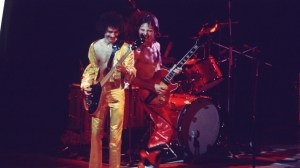
(MANDATORY CREDIT Koh Hasebe/Shinko Music/Getty Images) GRAND FUNK live at Nippon Budokan, Tokyo, May 22, 1975. (Photo by Koh Hasebe/Shinko Music/Getty Images) -
Photo by David Redfern/Redferns -

Gwen Stefani of No Doubt performs at Shoreline Amphitheatre on May 30, 1997 in Mountain View, California. (Photo by Tim Mosenfelder/Getty Images) -
Photo by Michael Ochs Archives/Getty Images -
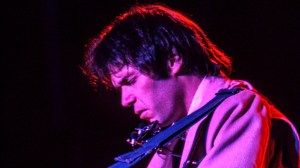
SAN FRANCISCO – MAY 25: Neil Young performs at The Boarding House in San Francisco, California on May 25, 1978 (Photo by Ed Perlstein/Redferns/Getty Images) -
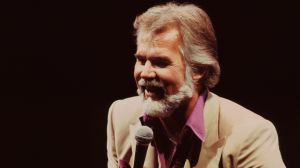
LONG BEACH, CALIFORNIA – MAY 09 : Kenny Rogers performs in concert, May 9, 1986 at Long Beach Arena in Long Beach, California. (Photo by Getty Images/Bob Riha, Jr.) -
Photo by Michael Ochs Archives/Getty Images -

NEW YORK – OCTOBER 30: Warren Zevon performs three of his legendary songs, "MUTINEER", "GENIUS" and "ROLAND THE HEADLESS" when he visits the Late Show with David Letterman, Wednesday, Oct. 30, 2002 on the CBS Television Network. This photo is provided by CBS from the Late Show with David Letterman photo archive. (Photo by Barbara Nitke/CBS via Getty Images)