
Looking back with the perspective of history, it’s easy to understand how some albums became classics. After all, we just have to listen to hear the quality of those records unburdened by any context.
But when you look back to the year 1971, several albums that would go on to make music history came from artists you might not have expected. Here are four examples of smash LPs that no one could have predicted at the time.
Videos by American Songwriter
‘What’s Going On’ by Marvin Gaye
What’s Going On set the tone for a new awareness in the music world. On the record, Marvin Gaye fearlessly sang about the struggles of the masses and the indifference of the powers that be to those ills. But that material was a far cry from what Gaye had previously done. He made his mark in the 60s as the suave vocalist on light-footed R&B, occasionally showing off his grittier side on tracks like “I Heard It Through The Grapevine”. But Gaye never delivered any topical material in his run of 60s hits. In fact, he had to battle Motown honcho Berry Gordy just to release What’s Going On. Good thing he did, or else we would have missed out on a masterpiece.
‘Tapestry’ by Carole King
Despite penning a slew of hits for other artists in the 60s, Carole King was discouraged from recording her own material during that time period. When she finally released the album Writer under her own name in 1970, it flopped. Understandably, no one expected much from Tapestry when it arrived in 1971. This time around, the production (from Lou Adler) better served the material. King also did an outstanding job of melding songs freshly written with some that others had already recorded. Those who felt she didn’t have what it took as an artist must have felt foolish when this became one of the most successful singer-songwriter albums ever.
‘Every Picture Tells A Story’ by Rod Stewart
Hardcore rock fans likely knew Rod Stewart for the way he popped out throughout the 60s as a vocalist for a variety of blues-rock outfits. By 1971, his profile was rising thanks to taking over as lead singer of the Faces. But his first two solo albums had mostly come and gone without much fanfare. Suddenly, with Every Picture Tells A Story, Stewart was elevated to pop icon status. The song that did it for him, “Maggie May”, was released as a B-side, just another reason his ascension was so unlikely. But this was no fluke. Stewart, producing the record himself, delivered a stellar set of lively rockers and aching ballads, his inimitable voice riding herd over it all.
‘Nilsson Schmilsson’ by Harry Nilsson
Harry Nilsson had already delivered success as both a performer and songwriter heading into 1971. But he hadn’t been able to put it together all at once for an album that achieved anything more than cult status. Nilsson Schmilsson repositioned him in something more of a rock lane, which gave him a bit more commercial clout. It didn’t hurt that he had a who’s who of instrumental talent at his beck and call, with producer Richard Parry uniting them seamlessly. Nilsson couldn’t quite replicate the success of this record, as his quirks and personal issues prevented that. But he truly found the sweet spot on this, one of the 70s’ most enjoyable albums.
Photo by Shutterstock
More The List
-
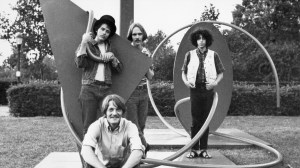
CIRCA 1967: Members of the rock band "Youngbloods" pose for a circa 1967 portrait. Original members include Jesse Colin Young, Lowell "Banana" Levinger, Jerry Corbitt and Joe Bauer. (Photo by Michael Ochs Archives/Getty Images) -
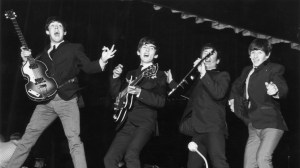
The Beatles, from left to right: Paul McCartney, George Harrison (1943 – 2001), John Lennon (1940 – 1980) and Ringo Starr, jump for joy during a rehearsal for the Royal Command Performance at the Prince of Wales Theatre. (Photo by Fox Photos/Getty Images) -
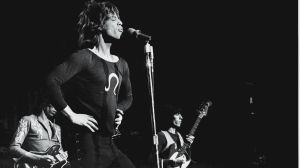
English singers, musicians, and songwriters Mick Jagger (at microphone), Keith Richards and Bill Wyman (far right) of the rock band 'The Rolling Stones,' perform on stage at Madison Square Garden, November 28, 1969. Jagger stands with his hands on his hips, eyes closed, and lips pursed together as he sings. (Photo by David Fenton/Getty Images) -
Featured Image by Gijsbert Hanekroot/Redferns -
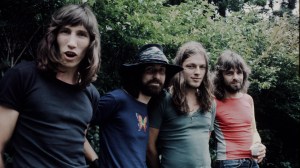
(MANDATORY CREDIT Koh Hasebe/Shinko Music/Getty Images) Pink Floyd live at Hakone Aphrodite, Kanagawa, August 6, 1971. (Photo by Koh Hasebe/Shinko Music/Getty Images) -
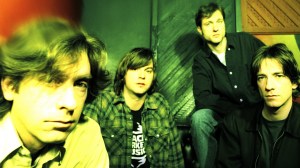
NEW YORK – JULY 1995: (EDITORS NOTE: THIS IMAGE WAS CREATED USING CROSS-PROCESSED FILM) American alternative country rock band Son Volt (L – R) bassist Dave Boquist, guitarist, harmonica & vocalist Jay Farrar, drummer Mike Heidorn and banjo, fiddle & lap steel guitarist Jim Boquist pose for a July 1995 portrait in New York City, New York. (Photo by Bob Berg/Getty Images) -
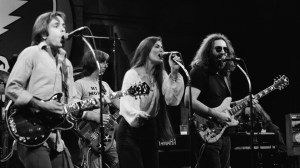
SATURDAY NIGHT LIVE — Episode 5 — Pictured: Musical guests The Grateful Dead: (l-r) Bob Weir, Donna Godchaux, Jerry Garcia perform on November 11, 1978 — Photo by: Fred Hermansky/NBC/NBCU Photo Bank -
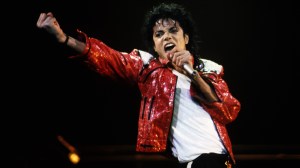
Michael Jackson performs during the 'Bad' tour at Madison Square Garden in New York City on March 3, 1988. (Photo by Kevin Mazur/WireImage)