Your cart is currently empty!



Marvin Gaye’s First Top 40 Hit Came With Its Own Dance Move
Marvin Gaye became one of the most successful and influential R&B artists of his or any other generation. But the style of music for which he became famous wasn’t initially what he wanted to do with his career. Gaye had to overcome his reticence for rhythm and blues at the beginning of his journey. Once he did, he started churning out hits. And his first Top 40 song, “Hitch Hike”, even started a minor dance craze.
Videos by American Songwriter
Early Days at Motown
Marvin Gaye’s career was marked by him succeeding in areas he was moderately uncomfortable inhabiting. He wanted to be a crooner but eventually found stardom at Motown delivering more rhythmic music. And though he suffered from stage fright, he overcame it to the point that he turned into a scintillating live performer (although he never truly enjoyed the experience).
But beyond anything else, Gaye wanted to succeed. Getting over those qualms was a kind of necessary evil on his way to the heights. Granted, stardom seemed a huge long shot when Gaye, having performed mostly as a singer in a doo-wop group, ended up at Motown in the early 60s, right when the famous record company was finding its sea legs.
Even at that tender age, Gaye showed off immense talent. He displayed the ability to write, play instruments, and sing at a ridiculously high level. Gaye had to overcome Motown founder Berry Gordy’s reluctance to let anyone at the label be a do-it-all type besides Smokey Robinson. But eventually, he got the chance to record his debut album in 1961.
The Reluctant R&B Star
His debut album The Soulful Moods Of Marvin Gaye looked to put Gaye in competition with folks like Tony Bennett or Nat King Cole. But the record flopped. Gaye turned his attention to playing on other Motown recordings and writing. He eventually co-wrote one of the label’s first big hits in “Beechwood 4-5789” for the Marvellettes.
But even as he advanced at the label, he refused to play the game. He resisted Gordy’s attempts to get him to do the social training expected of all Motown artists. Only when he went out on tour and he saw that his audiences were predominantly Black and expecting more R&B-related material did he change artistic course.
He subtly referenced his obstinate ways with the 1962 single “Stubborn Kind Of Fellow”. That track just missed the pop charts, but it was an R&B smash. It raised Gaye’s exposure level, meaning that his follow-up single was poised for big things.
With a “Hitch”
“Hitch Hike”, written by the artist with Mickey Stevenson and Clarence Paul, featured Gaye sinking his teeth into a robust groove. It was an influential one as well, as The Beatles’ 1964 song “You Can’t Do That” is a kind of soundalike.
As mentioned above, Gaye struggled originally to project as a live performer. But he fed off the energy of the crowds as he started to do more shows. He eventually started engaging with the audience and developed into a charismatic frontman. That paid off when it came to “Hitch Hike”.
While performing the song on American Bandstand, Gaye briefly broke into a thumbs-up dance move in homage to the song’s title. That move briefly became a bit of a craze on the show, and it certainly didn’t hurt the song’s commercial prospects.
“Hitch Hike” made it to No. 30 on the pop charts in early 1963. It was the first of an incredible 41 Top 40 hits for Marvin Gaye. Not bad at all for somebody who wasn’t sure if crossover success was for him.
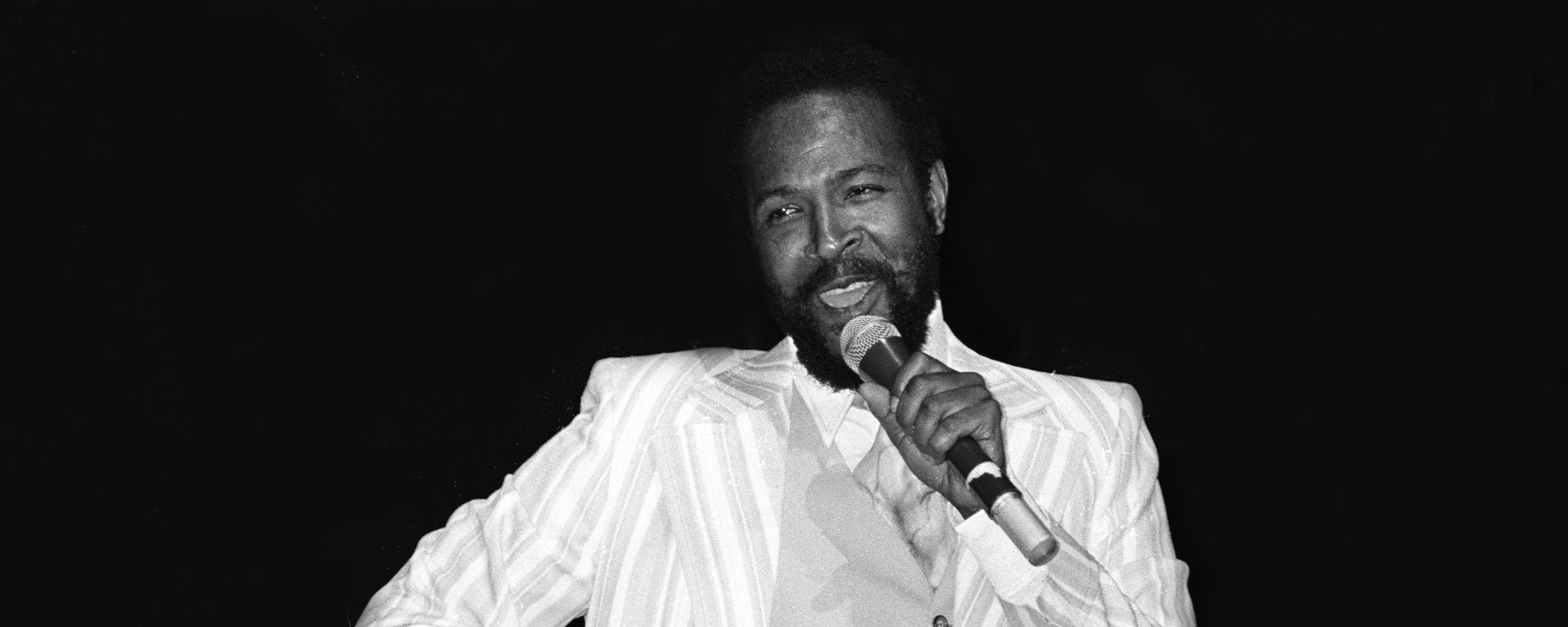
Photo by Michael Ochs Archives/Getty Images
Leave a Reply
Only members can comment. Become a member. Already a member? Log in.