The best performers won’t let their audience know they’re suffering through a song, even if they are, and that includes in the recording studio. After all, a bad performance recorded to tape is all but immortal. If they wanted their record to have any chance of being successful, they’d grit their teeth and bear their unsavory conditions. And Hank Williams certainly knew how to do just that when he was recording his 1951 track, “(I Heard That) Lonesome Whistle”.
The pioneering country musician entered Castle Studio in Nashville in late July 1951. Summertime in Tennessee is notoriously hot, and that day was no different. But Williams and his band didn’t have the luxury of playing in an air-conditioned room. Any fans or AC units were too noisy, and the microphones would pick up the extra buzzing and hums.
Videos by American Songwriter
“Hank had his shirt unbuttoned all the way, and he was absolutely soaking wet. It seemed that all he was…was voice. It came up from I don’t know where,” Acuff-Rose songwriter Helen Hudgins recalled in a later interview, per Hank Williams: The Biography. “There was no alternative but to sweat it out.”
Hank Williams’ Top 10 Hit Went On to Inspire Johnny Cash
Despite the arduous conditions of the Nashville recording studio in the middle of summer, Williams pulled off a successful performance. Bare chest and covered in sweat, Williams managed to cut a version of “(I Hear That) Lonesome Whistle” that would break into the Top 10 of the Most Played Juke Box Folk Records chart. Other notable and equally hot players included Jerry Rivers on fiddle, Sammy Pruett on lead guitar, Don Helm on steel guitar, Howard Watts on bass, and Jack Shook on rhythm guitar. Hank, of course, sang lead.
While the song isn’t necessarily the most commercially successful of Williams’ career, it was among his most influential. “(I Heard That) Lonesome Whistle” was very likely an inspiration for another country smash hit, Johnny Cash’s “Folsom Prison Blues”. In Williams’ tune, he sings, “All alone I bear the shame / I’m a number, not a name / I heard that lonesome whistle blow / All I do is sit and cry.”
In Cash’s “Folsom Prison Blues”, which he released four years after Williams, he sings, “I shot a man in Reno just to watch him die / When I hear that whistle blowin’, I hang my head and cry.” Both songs juxtapose the violent, brash crimes committed by the narrator and the vulnerable emotions they felt after they were caught.
Photo by Michael Ochs Archives/Getty Images
More Behind The Song
-
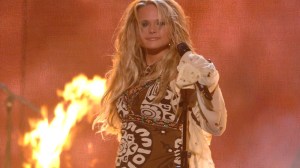
Miranda Lambert performs "Kerosene" at the Madison Square Garden in New York City, New York (Photo by Rick Diamond/WireImage) -
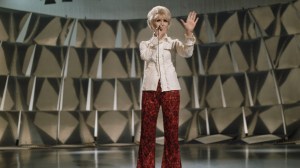
British singer Dusty Springfield (1939 – 1999) performing during a rehearsal for her TV show, 'It Must Be Dusty', at ATV Studios in Borehamwood, Hertfordshire, 1968. (Photo by Keystone/Hulton Archive/Getty Images) -
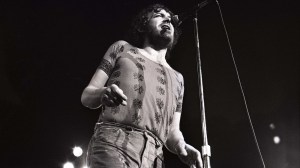
NITED STATES – JANUARY 01: Photo of Joe COCKER; Joe Cocker performing on stage (Photo by Robert Knight Archive/Redferns) -
THE TONIGHT SHOW STARRING JOHNNY CARSON — Pictured: James Young of the musical guest Styx performs on March 12, 1991 — (Photo by: NBCU Photo Bank/NBCUniversal via Getty Images via Getty Images) -
UNITED STATES – MAY 09: Photo of Bob DYLAN; performing live onstage at the benefit for ousted Chileans: Felt Forum, New York (Photo by Steve Morley/Redferns) -
NEW YORK: Janis Ian performs live on stage in New York in 1975 (Photo by Richard E. Aaron/Redferns) -
Musician Bob Seger performs at the Poplar Creek Music Theater, Hoffman Estates, Illinois, August 13, 1986. (Photo by Paul Natkin/Getty Images)