
On this day (August 20) in 1923, Jim Reeves was born in Galloway, Texas. He had a promising baseball career until an injury took him out of the game forever. Later, he embarked on an incredibly successful career in country music. Working closely with Chet Atkins, he helped to define the Nashville Sound of the 1950s and ’60s. A plane crash cut his life and career short in 1964. However, he continued to notch hits for nearly 20 years after he died.
Reeves was playing guitar and singing with a band on Shreveport, Louisiana, radio station KRMD by the time he was 12 years old. Later, he won a baseball scholarship to the University of Texas at Austin. He cut his college career short to volunteer to serve in World War II. However, he failed the physical exam. At that point, he played minor league baseball. In 1947, an injury ended his baseball career.
Videos by American Songwriter
Reeves’ recording career took off in the early 1950s. He signed with the Abbott Record Company and released his first No. 1 single, “Mexican Joe,” in 1953. This helped him find work on the Louisiana Hayride. According to the Country Music Hall of Fame, he joined the Grand Ole Opry two years later.
Jim Reeves and the Nashville Sound
Jim Reeves held to the loud, brash East Texas style in his early career. It fit with the status quo of country music at the time and yielded several hits. However, he wasn’t satisfied with his output. His influences included Jimmie Rodgers and Moon Mullican as well as pop greats like Bing Crosby and Frank Sinatra. He wanted to find a middle ground between those sounds. This meant singing more quietly, closer to the microphone, and in a lower register.
Initially, the higher-ups at RCA Records balked at his new style. However, producer Chet Atkins knew he was on to something. In 1957, Atkins and Reeves proved executives wrong when “Four Walls” went to No. 1 on the country charts and crossed over to the pop chart, peaking at No. 11.
The next few years saw Reeves notching a line of hits with “Two Shadows on Your Window,” “Anne Marie,” “I Love You More,” “Blue Boy, and the chart-topping “Billy Bayou.” He started the 1960s with the million-selling “He’ll Have to Go,” which topped the country chart for 14 weeks and went to No. 2 on the Hot 100.
Reeves quickly found international fame. He helped popularize the Nashville Sound across Europe. He was especially popular in Sri Lanka and South Africa. Reeves recorded several albums in the Afrikaans language and starred in a South African film called Kimberly Jim.
Posthumous Hits
On July 31, 1964, Jim Reeves and his manager, Dean Manuel, boarded a single-engine plane in Batesville, Arkansas, with Reeves at the controls. They were on their way to Nashville for a business meeting. However, they encountered a severe storm and crashed near Brentwood that afternoon.
RCA continued releasing Reeves’ songs after his death. Those songs continued to climb the charts. On August 29, 1964, he scored his first posthumous No. 1 with “I Guess I’m Crazy,” which retained the top spot for seven weeks. It was the first of six chart-toppers the late crooner would score after his passing.
“This Is It” and “Is It Really Over” topped the chart in 1965. “Distant Drums,” “Blue Side of Lonesome,” and “I Won’t Come in While He’s There” went to No. 1 in 1966.
Reeves’ singles continued to see success throughout the 1970s and early ’80s. His final top 10 hit was “Have You Ever Been Lonely,” a duet with Patsy Cline. It reached No. 5 in 1982, 18 years after he died.
Jim Reeves was more than a hitmaker. He helped to usher in the Nashville Sound, which became the backbone of Music City’s output for decades. The country music world would not be the same without his influence.
Featured Image by Keystone/Hulton Archive/Getty Images
-
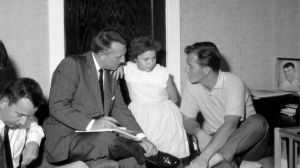
Country singer songwriter and producer Owen Bradley takes notes while collaborating with child country singing superstar Brenda Lee and Pat Boone circa 1960 in Nashville, Tennessee. (Photo by Bob Grannis/Getty Images) -
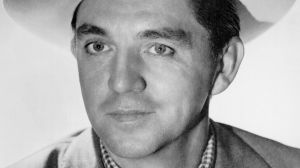
Photo by Michael Ochs Archives/Getty Images -
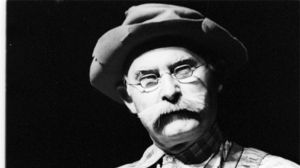
UNSPECIFIED – CIRCA 1950: Photo of Grandpa Jones Photo by Tom Copi/Michael Ochs Archives/Getty Images