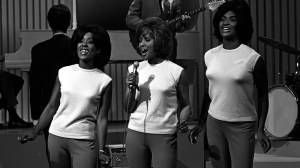
On this day (August 8) in 1921, Webb Pierce was born in West Monroe, Louisiana. He was one of the most successful artists during the golden age of honky tonk. He launched a string of hits in the 1950s and ’60s, including the classic “There Stands the Glass.” Moreover, he shaped the future of country music by kickstarting the careers of future stars like Faron Young and innovative pianist Floyd Cramer.
Pierce found his love of country music–then still referred to as hillbilly music–as a child. Western swing, Cajun music, and the recordings of Jimmie Rodgers gave him a musical foundation to build from. He learned to play guitar before he entered his teens. By the age of 15, he had a regular radio show.
Videos by American Songwriter
In 1949, Pierce signed a record deal with 4 Star Records. Then, he joined the Louisiana Hayride. According to AllMusic, he formed a backing band of future legends during his early days on the show. At the time, though, Floyd Cramer, Faron Young, Teddy Wilburn, Doyle Wilburn, and Tillman Franks were, like Pierce, local musicians hoping to make it big.
Everyone in the band did just that. Young had a wildly successful recording career between the 1950s and ’70s. Known as the Hillbilly Heartthrob, he wrote and recorded multiple hit songs and helped Willie Nelson break into the industry. The Wilburn Brothers had a successful run in the ’50s and ’60s. Cramer’s signature “slip-note” piano style became the backbone of the Nashville sound. Franks went on to write several songs with Johnny Horton, including “Honky Tonk Man,” which has been a hit for multiple artists.
Pierce went on to be one of the biggest honk tonk singers in history.
Webb Pierce Dominates the Charts
Webb Pierce left 4 Star and signed a deal with Decca Records in 1951. Later that year, he released his first nationally distributed single, “Wondering.” It went to No. 1. The single started a streak of 30 consecutive top 10 singles. Thirteen of those went to the top of the chart.
Several of those songs became classics. Two became historically important.
Pierce released “Slowly” in 1954. When it started its 17-week run at No. 1, it was the first song to feature a pedal steel guitar to top the country chart. Pedal steel master Bud Isaacs played on the track.
The next year, Pierce’s cover of the Jimmie Rodgers classic “In the Jailhouse Now” spent 21 weeks at the top of the chart. More than Pierce’s biggest hit, it was one of the most successful singles in the history of country music.
Fame, Fortune, and Flash
By the mid-1960s, the Nashville Sound was taking over the charts. As a result, Webb Pierce’s singles began to slip down the chart. However, he maintained his superstar status. He toured constantly and continued to record new music. Pierce also became one of the flashiest stars in the genre.
He reached out to Nudie Cohen, the tailor behind the legendary Nudie suits worn by countless country stars, to cover a pair of Pontiac convertibles with silver dollars. He also built a guitar-shaped pool at his Nashville home. It quickly became a tourist attraction, drawing thousands of visitors every week. It was so popular, in fact, that his neighbors sued to prevent throngs of tourists from invading their neighborhood to see Pierce’s pool.
Pierce, like a handful of his fellow honky tonkers, didn’t fall out of favor with the industry because his music dipped in quality. His songs slipped down the charts because he refused to chase trends. He continued to make the music he loved, even when almost no one else in Nashville was doing so.
In short, Webb Pierce was one of the most successful and influential artists in the history of country music. He was finally inducted into the Country Music Hall of Fame in 2001, ten years after his death from pancreatic cancer.
Featured Image by Archive Photos/Getty Images
-
LAS VEGAS, NEVADA – APRIL 05: Rhett Akins performs onstage at ACM: Stories, Songs & Stars: A Songwriter's Event Benefiting ACM Lifting Lives on April 05, 2019 in Las Vegas, Nevada. (Photo by Rich Fury/Getty Images for ACM) -
CHICAGO, ILLINOIS – American musician Lacy J. Dalton (born Jill Lynne Byrem) performs on stage at the Park West Theater, Chicago, Illinois, April 4, 1981. (Photo by Paul Natkin/Getty Images) -
Nederpopzien, Anita Kerr headline, April 9, 1974, music, The Netherlands, 20th century press agency photo, news to remember, documentary, historic photography 1945-1990, visual stories, human history of the Twentieth Century, capturing moments in time. (Photo by: Sepia Times/Universal Images Group via Getty Images)