Arriving in Nashville in the 1960s, Waylon Jennings struggled to find his place among what he considered the restrictive confines of the country music machine—so he made his own. Throwing out the playbook entirely, Jennings blazed an outlaw trail and maintained creative control the entire time. More than two decades after his death at age 64 from complications of diabetes, his name is still spoken reverentially in country-music circles. Today, we’re celebrating the legacy of Waylon Arnold Jennings on what would have marked his 89th birthday.
Waylon Jennings Got His Start With Another Texas Legend
Born June 15, 1937, in Littlefield, Texas, Waylon Jennings’ mother taught him to play “Thirty Pieces of Silver” on guitar when the boy was just 8 years old.
Videos by American Songwriter
By age 12, he was playing in a band and working as a radio disc jockey. Dropping out of Littlefield High School at age 16, Jennings continued pursuing music while driving trucks for local lumber companies.
After meeting rockabilly legend Buddy Holly at a Lubbock restaurant, the two began attending each other’s shows. In 1956, Jennings moved to Lubbock full time to work in radio.
Soon, Holly tapped him to play bass in his new band on a tour through the Midwest in late 1958 and early 1959.
In fact, Jennings should have been aboard that fatal flight that killed Holly, Ritchie Valens, and J. P. Richardson, known as “the Big Bopper.” However, he gave up his seat at the last minute to Richardson, who was suffering from the flu.
Grieving Holly’s death, Jennings left his radio station job and later landed a full-time gig at a club in Phoenix, Arizona.
Finding His Own Sound
At first, Waylon Jennings tried to imitate his heroes—Hank Williams, Carl Smith, Ernest Tubb.
“I was in Phoenix and in a club before I really realized that I was different – and that no matter how hard I tried, I couldn’t imitate nobody,” he told NPR in 1996.
That distinct style made him a local celebrity in Phoenix. Eventually, he caught the attention of country singer Bobby Bare, who heard him perform live and “just flipped out,” according to Jennings.
On his way back to Las Vegas, “he stopped at every phone booth he saw, and he hounded Chet Atkins, saying: You’ve got to sign this guy,” Jennings said. “He said: This guy deserves to be on a major label. Finally, Chet called me to get Bobby Bare to shut up.”
[RELATED: 3 Heartbreaking Folk Songs by Waylon Jennings From His Pre-Outlaw Days]
Jennings signed with RCA Records, but as he put it, “They didn’t know quite what pocket to put me in.”
Frequent clashes with his label over creative control eventually led to Jennings going his own way, helping invent outlaw country and changing the genre forever.
Featured image by Clayton Call/Redferns
-
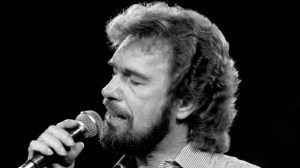
Gene Watson, who had several hits with Dallas Harms songs -
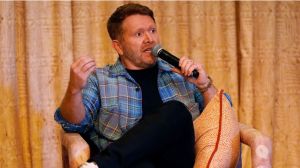
NASHVILLE, TENNESSEE – Shane McAnally speaks onstage during GLAAD's Pride & Progress Event at Soho House Nashville on June 05, 2026 in Nashville, Tennessee. (Photo by Erika Goldring/Getty Images for GLAAD) -
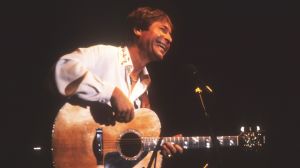
MINNEAPOLIS, MN – John Denver performs at the Northrup Auditorium in Minneapolis, Minnesota on October 5, 1991. (Photo by Jim Steinfeldt/Michael Ochs Archives/Getty Images) -
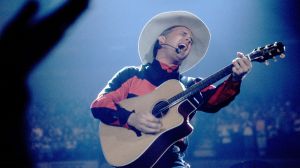
American country musician Garth Brooks performs onstage, Chicago, Illinois, October 1, 1993. (Photo by Paul Natkin/Getty Images) -
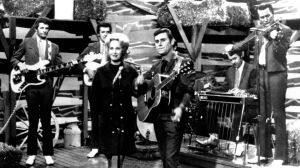
Tammy Wynette and George Jones Perform on stage with the Jones Boys in circa 1972. (Photo by Michael Ochs Archives/Getty Images) -
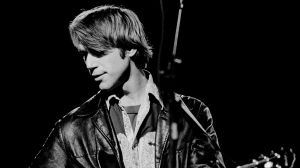
American Folk musician Todd Snider plays guitar as he performs onstage at Medinah Temple, Chicago, Illinois, November 27, 1997. (Photo by Paul Natkin/Getty Images)