Your cart is currently empty!


Jon Batiste Etches Into Americana, Reconnects With Guitar, and Gets Randy Newman to Sing Again on ‘Big Money’
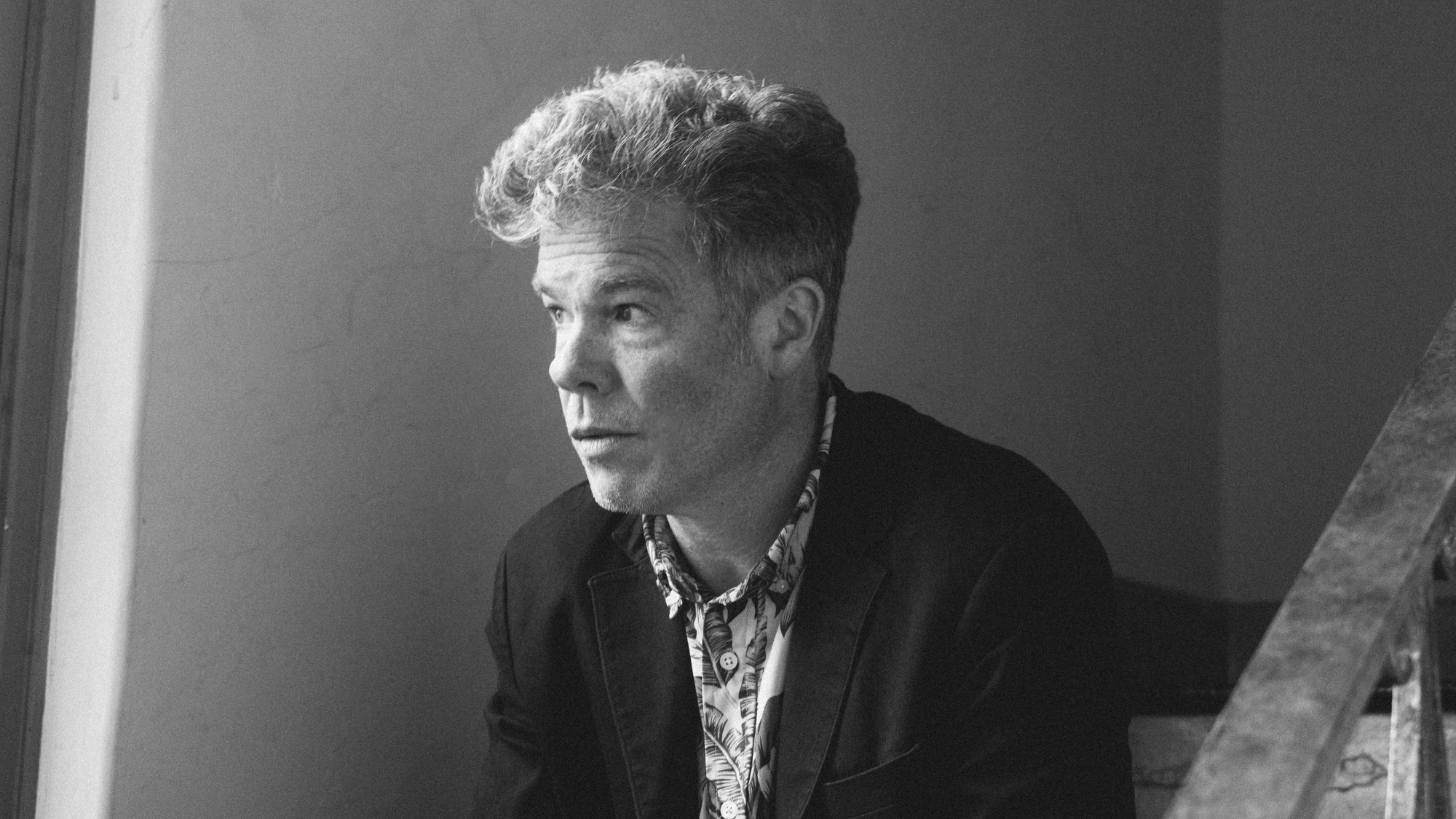
Jon Batiste never intended to write another album. While on tour supporting his previous album World Music Radio, the Oscar-winning musician and composer found himself reconnecting with the guitar again, pulling it out nightly. “It was a companion of mine,” says Batiste, mostly recognized sitting behind the piano. “I was playing it on the tour bus, and I really started to write from the guitar in a way that I hadn’t done for an album,” adds Batiste. “I wasn’t even intending to make an album at the time. It was just a very organic relationship with the guitar that had developed on this tour, traveling across America.”
It was the evening after Batiste’s show at the Ryman Auditorium in Nashville that kick-started his new album Big Money, and impelled him to write what would become the title track while en route to the next stop on tour.
“I felt so inspired,” says Batiste. “The show was electric. It felt like an amazing time to go in and record and write, so I wrote ‘Big Money’ on the way from leaving Nashville to the next city.”
Eventually, “Big Money” became the “thesis statement” of the album, says Batiste, sonically and lyrically. “Sonically, because of all the different things the song is built on,” he says. “It’s built on a blues form, a Bo Diddley beat, and it has a New Orleans clave. It has all of the elements I love in terms of the crossover between bluegrass, folk, and spirituals.”
You can buy a house, but you can’t buy a home / You can be surrounded and still be alone / You can be living the life but not living the dream, sings Batiste on identity and delusions. “It’s like a parable,” adds Batiste. “You can buy a house, but you can’t buy a home. You can be surrounded and still be alone. It has scriptures in it, and once we had the rest of the songs, it became clear that this was the thesis statement of the record.”
During that week, Batiste wrote and recorded another track on tour, “Petrichor.” Calling it a multi-track song, Batiste plays every instrument on “Petrichor” and recorded it on his tour bus. “I recorded it into one microphone on the bus,” he says. “It all came at once.” Those were two of three songs—along with “Pinnacle”—that laid the foundation for Big Money.
Videos by American Songwriter
Since its release in August 2025, Big Money has earned the seven-time Grammy-winner three additional nominations, including Best American Roots Performance, Best American Roots Song, and a first for Best Americana Album. Batiste previously picked up his first Folk and Americana nomination for his T Bone Burnett-produced Hollywood Africans in 2018.
“Some folks classify this as an Americana album,” Batiste says. “For me, I classify it as my first guitar album.”
Blending gospel, blues, folk, and Americana, Big Money is also a response to the “power structure,” financial stratification, and a fixation on attaining more. “There are so many ways that that manifests,” says Batiste. “There are a lot of things that are happening in the world, and it makes people want to go back home, and go back to the roots, back to the source. The question of our time is how we orient ourselves towards the massive abundance of resources and big money that has created this massive wealth gap and separation of resources.”
Responding to the socio-political dissonance made Batiste revert to when music was crafted for more fundamental reasons.
“It made me think about where these musical styles that we’re drawing from came from,” says Batiste. “It came from people going back to the source and creating communal rituals and being in rooms together and building history, building upon their collective story, and passing it on to the next generation. That’s what I wanted to really tell the story of in so many different ways—both personally and also the continuum of that story for all of us.”
[RELATED: The Story Behind Randy Newman’s Misunderstood First Hit “Short People”]
Big Money also leans on matters of the heart and a space of unity where everyone can illuminate, from the opening “Lean on My Love,” featuring Andra Day—You can lean on my love when there’s no one to hold you / I’ll lift you up, never run from what you’re going through.
A more surprising moment on Big Money is Batiste’s duet with Randy Newman on their bluesier cover of the 1958 Doc Pomus-penned Ray Charles’ hit “Lonely Avenue,” a collaboration that came together during an impromptu jam session between the composers. “That song was really it was a moment that came from our friendship,” says Batiste. At the time, Newman hadn’t been recording or singing for years, since releasing his 2017 album Dark Matter and 2020 single “Stay Away,” so Batiste didn’t have any expectations.
“He was not really in a zone where I was expecting that from him, but I was honored that my ability to bring that out of him was so inspiring and so motivating that he wanted to do more singing and playing together,” shares Batiste. “Everyone in his life that had seen him in recent years felt it was a very special occasion, because I was able to connect with him on that level, and it made him feel reinvigorated in a certain way.”
Equipped with a basic recording setup, both sat at the piano in the living room at Newman’s house and played through several songs.
“It was a very old school situation where we captured the moment, and ‘Lonely Avenue’ was one of those moments that we captured in that time,” says Batiste. “I felt like it was very appropriate for the message and the narrative of this album. It felt spiritually aligned to include that piece on the record.”
More special guests fill in spots on Big Money, including the Womack Sisters on the rockabilly-bent “Pinnacle” and NO ID and Billy Bob Bo Bob for the closing “Angels.”
Recognized by the Recording Academy across seven genres—jazz, classical composition—recently hitting No. 1 with Beethoven Blues in 2024—Americana, American roots, and R&B/Traditional R&B, along with music for visual media for his recent Netflix documentary American Symphony, and 20 years since Batiste’s debut, Times in New Orleans, his vision is even more coherent now.
“I knew I had a vision for what I wanted to do,” says Batiste of Big Money. “It’s a timestamp. I always feel like an album captures a moment in time. It freezes the moment in time for you to be able to revisit it.”
Photo: Carly Mackler/Getty Images

Leave a Reply
Only members can comment. Become a member. Already a member? Log in.