
Rolling Stones guitarist Keith Richards has never been one to mince words, and like most old men who have been spouting their red-hot opinions since their 20s, many of Richards’ takes didn’t hold up to the test of time. One such opinion came to a head in 1997 during the making of the band’s 23rd studio album, Bridges To Babylon.
For historical context, The Rolling Stones had been in the public eye for three decades by this point. The late 1990s prioritized the lingering influence of grunge, the burgeoning Y2K pop movement, and rock ‘n’ roll subgenres that were noticeably younger and less inclusive of the music of older Gen Xers and baby boomers. This cultural shift, paired with pressure from their record label, pushed The Rolling Stones to bring in new producers for a younger, fresher sound.
Videos by American Songwriter
The only problem with a young, fresh sound, of course, is that it can seem like a personal affront to old heads like Richards. Two of the first producers were The Dust Brothers, Danny Saber, and Babyface, who had previously worked with 90s giants Beck and The Beastie Boys. This was a good idea in theory, if only Richards didn’t have such a personal vendetta against loop pedals.
Keith Richards Kicked This Young Producer Out of the Studio
Keith Richards has long been outspoken about his disdain for modern guitar gadgets, like looper pedals. These small pieces of equipment let an instrumentalist record a snippet of music and then immediately layer it with more melodies, phrases, and rhythms. It’s essentially overdubbing in real time, allowing musicians to create larger-than-life compositions they could never play with just their two hands. The Rolling Stones guitarist was of the mind that guitarists should just play what they can play instead of trying to be “loop gurus.” And unfortunately for Danny Saber, Saber disagreed.
In Stephen Davis’ Old Gods Almost Dead: The 40-Year Odyssey Of The Rolling Stones, he describes the moment Richards returned to the studio during the making of Bridges To Babylon. He walked in on Saber, one of the young producers tasked with revitalizing The Stones’ sound, using a looper pedal. Richards promptly kicked him out.
“Keith hated the Dust Brothers,” one sound engineer recalled. “They were two stoners. One had the record collection and a bong. The other was the knob turner. They got this little drum machine called an 808 that everyone used, and it’s ticking away back there. Keith couldn’t believe these loop gurus were producing Rolling Stones tracks. He went, like, out of his way to insult them in public.”
This account certainly sounds like Richards, as does the outdated nature of his rant. These days, loop pedals are incredibly commonplace. If musicians aren’t using them on stage, they’re likely coming out in the studio. We can only imagine what Richards thinks about this new trend today—though we doubt his feelings have softened much since the late 1990s.
Photo by George Rose/Getty Images
More Behind the Album
-
Photo by Chris Walter/WireImage -

Photo by Ed Rode/Getty Images -
Photo by Murphy/Daily Herald/Mirrorpix via Getty Images -
Def Leppard on 8/23/81 in East Troy, Wi. (Photo by Paul Natkin/WireImage) -
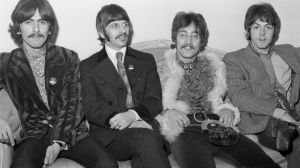
LONDON – MAY 19: (L-R) English musician, singer, songwriter and guitarist George Harrison (1943-2001), English musician, singer and drummer Ringo Starr, English singer, songwriter and guitarist John Lennon (1940-1980), and English singer, songwriter and bassist Paul McCartney of the Beatles attend a press party at the home of manager Brian Epstein supporting the release of Sgt. Pepper's Lonely Hearts Club Band, May 19, 1967 in London, United Kingdom. (Photo by Jeff Hochberg/Getty Images) -
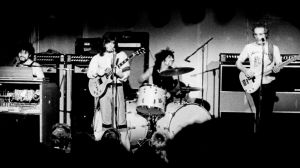
UNITED KINGDOM – JANUARY 01: MARQUEE Photo of VANILLA FUDGE, performing live onstage – L-R: Mark Stein, Vince Martell, Carmine Appice, Tim Bogert (Photo by Estate Of Keith Morris/Redferns) -
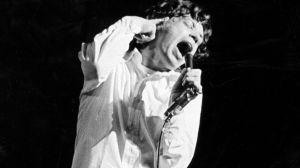
CIRCA 1966: Singer Mick Jagger of the rock and roll band "The Rolling Stones" performs onstage in circa 1966. (Photo by Michael Ochs Archives/Getty Images) -
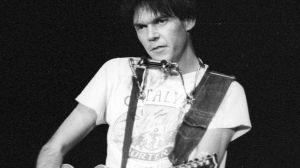
Musician Neil Young performing onstage in 1978 in Los Angeles. (Photo by Michael Ochs Archives/Getty Images)