On June 15, 1978, Bob Dylan took his biggest professional swing yet with his eighteenth album, Street-Legal. The album featured tracks like “Changing Of The Guards” and “No Time To Think”, which showcased the massive backing band he assembled specifically for the album. His once-lean sound was now larger-than-life and included keyboards, horns, strings, saxophones, and a trio of female backing vocalists.
But with more personnel often comes more trouble, and Street-Legal was certainly no exception. Some members were struggling with addiction. Others didn’t feel comfortable playing the parts Dylan was asking—or not asking—of them. There were multiple lineup changes and lengthy auditions mid-production, which inevitably forced the ensemble to reset and redefine their new sound with each change.
Videos by American Songwriter
Even the coinciding world tour Dylan embarked on with the band wasn’t without its fair share of challenges. There was the obvious hurdle of traveling with a band that size, to be sure. But there were also requests from venues in Japan, for example, asking Dylan not to play his new material and to play only the hits. Anyone even vaguely aware of Dylan could imagine how these requests were received, especially given his chronically sour mood that year.
Bob Dylan Was Emotionally Taxed During the Making of ‘Street-Legal’
Bob Dylan was making Street-Legal at the same time that he was going through a bitter divorce and custody battle with his first wife, Sara Dylan. Unsurprisingly, this personal turmoil made Dylan unavailable both emotionally and, oftentimes, physically. One of Dylan’s Street-Legal band members, Rob Stoner, recalled the singer-songwriter being absent from much of the rehearsal process. When he wasn’t there, it’s like he really wasn’t.
“To pass the time and keep everybody together, I was doing the surrogate singing,” Stoner recalled, per Clinton Heylin’s Dylan: Behind The Shades: Take Two. “I was just singing the tunes that I thought everybody should know, in case Bob does show up. And we keep waiting. And [when] he drops in, he’s distracted. Maybe he didn’t like the band. He was really f***ed up [mentally]. He was always bummed out, he was chain-smoking, and he was really in a bad mood.”
As if the divorce and custody battle weren’t big enough emotional and mental distractions, Dylan suffered yet another personal blow (alongside the rest of the world) when Elvis Presley died in August 1977. “It was so sad,” Dylan later recalled. “I had a breakdown. I broke down. One of the very few times I went over my whole life. I went over my whole childhood. I didn’t talk to anyone for a week after Elvis died.”
Despite the many, many challenges that plagued Street-Legal, it remains a shining high point in Dylan’s career. The album might not have the same kind of mainstream hits as his 1960s offerings. But the album saw Dylan at a songwriting peak, keeping this album a beloved favorite among Dylan fans to this day.
Photo by Staff/Mirrorpix/Getty Images
-
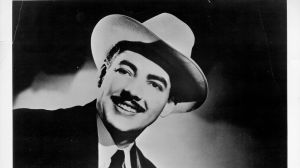
UNSPECIFIED – CIRCA 1970: Photo of Stoney Cooper Photo by Michael Ochs Archives/Getty Images -

Flea performing with Red Hot Chili Peppers -
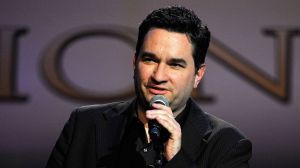
NASHVILLE, TN – Dean Miller accepts the Poet's Award on behalf of his father Roger Miller at the 6th Annual ACM Honors at Ryman Auditorium on September 24, 2012 in Nashville, Tennessee. (Photo by Frederick Breedon IV/Getty Images for ACM) -
Photo by Michael Ochs Archives/Getty Images