
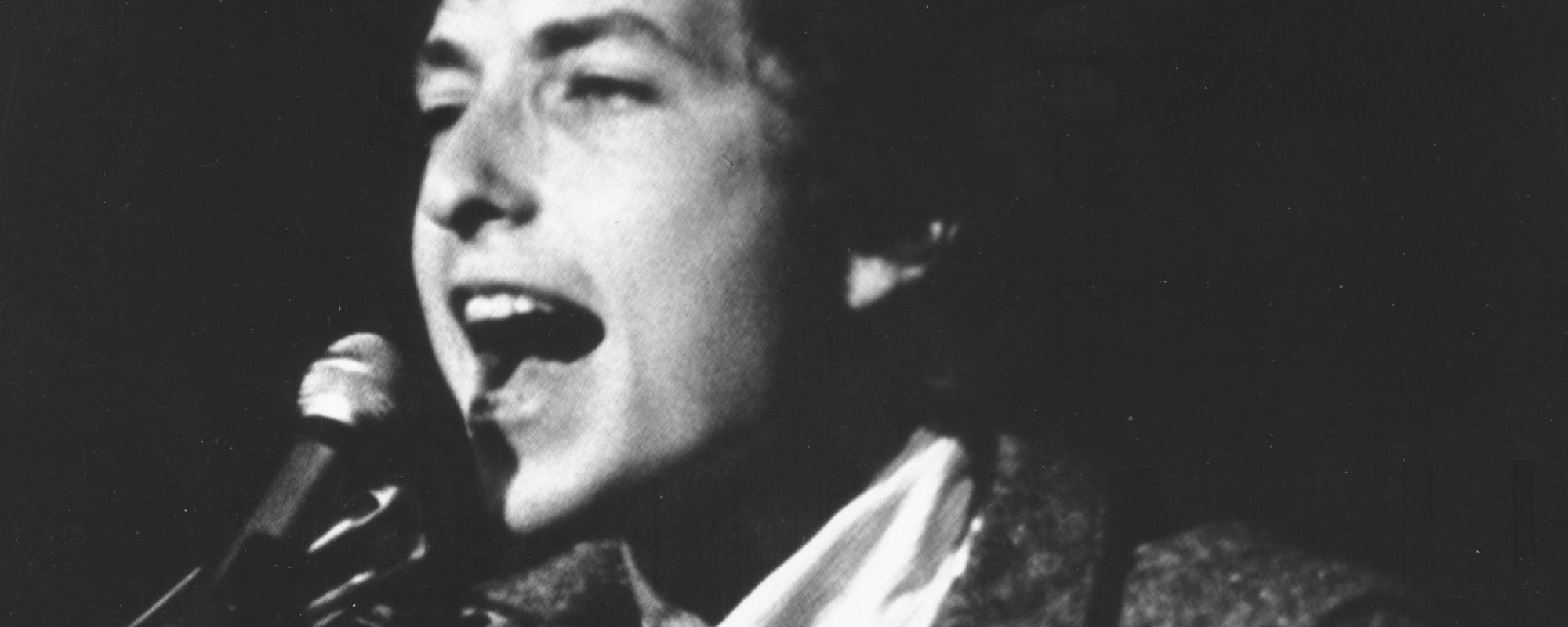
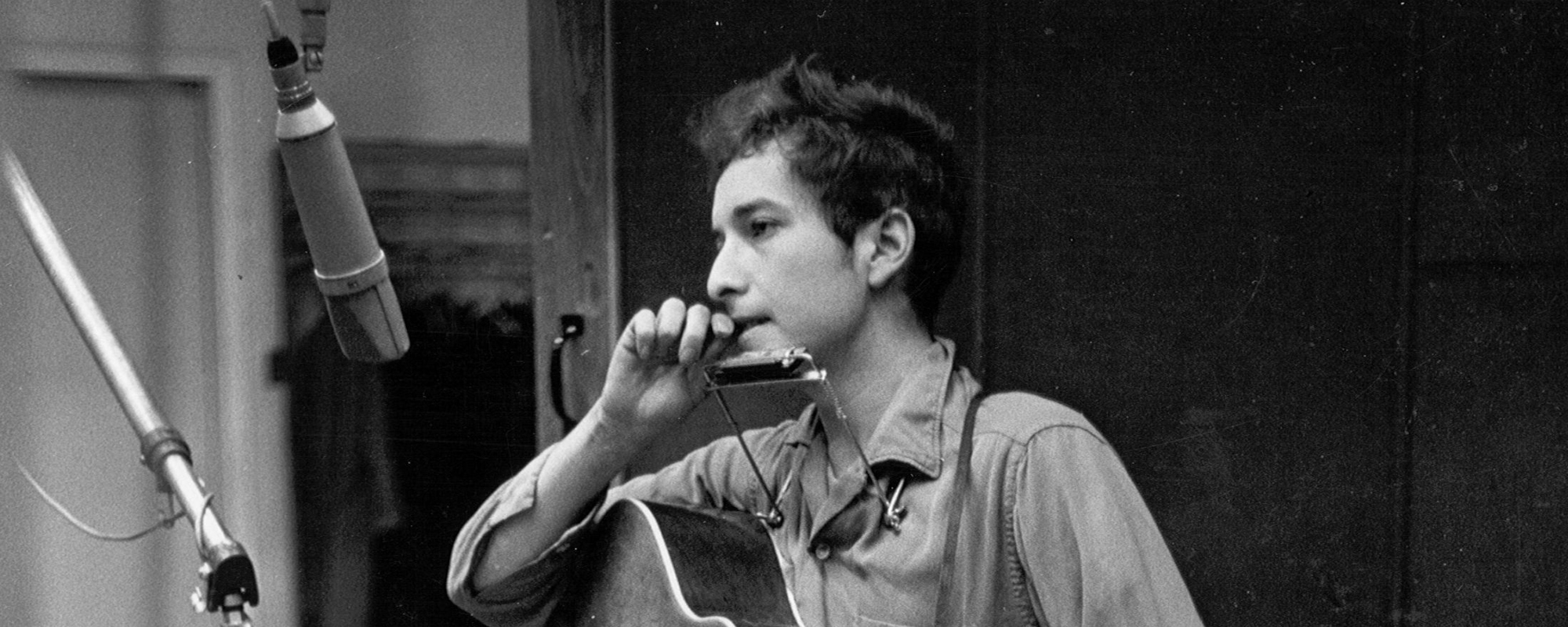
Bob Dylan has gained a reputation as being a tad mercurial when it comes to his choices in the studio. But that’s not always a bad thing. Take, for example, his 1975 album Blood On The Tracks, regarded as an unmistakable pinnacle in his monumental career.
Videos by American Songwriter
Dylan changed his mind about the direction of the album at the last possible minute and re-recorded half the songs. The eleventh-hour decision ended up adding to the richness of the record.
Pay in ‘Blood’
Bob Dylan wrote most of the songs for Blood On The Tracks in the summer of 1974 while back in his old Minnesota stomping grounds. He was separated from his wife Sara, as their marriage had hit a rough patch.
His songwriting, meanwhile, was starting to transform thanks to the painting instruction he’d been receiving from Norman Raeben. He started imagining his songs as canvases spilling over with individual scenes that comprise a rich, multifaceted whole.
Feeling strong about this batch of songs, many of which seemed to reference his marital problems (although Dylan has long denied this), he headed into A&R Studios in New York to lay them down. He knocked them out with relative ease, keeping things simple, often with just acoustic guitar and bass as accompaniment. Test pressings were prepared, and Blood On The Tracks seemed all ready to go. Or so it seemed.
Backtracking on ‘Tracks’
Dylan headed back to his Minneapolis for the 1974 holiday season. But something was bugging him about the record that he couldn’t quite define. He played the album for his brother, David Zimmerman, who worked locally in the music business, concentrating on producing commercial jingles.
David suggested that Dylan shouldn’t release the album if he wasn’t completely satisfied. He also told Dylan that he could assemble some musicians in a local Minneapolis studio to see what they could do with the songs. Dylan agreed.
Dylan re-recorded five of the album’s ten songs over a four-day period at the very end of 1974 with the local musicians. Among the songs laid down were “Tangled Up In Blue” and “Idiot Wind”, which, with fuller instrumentation, sounded much more forceful and anguished than they did on the New York recordings. On “If You See Her, Say Hello”, Peter Ostroushko laid down a delicate mandolin part as a highlight.
On January 20, 1975, Blood On The Tracks officially arrived in the world as a hybrid of the two distinct sessions. Dylan’s late change of heart ended up providing the album with the musical variety to match the range of emotions the various protagonists endure on their harrowing journeys.
The Great Debate
Indirectly, Dylan also helped elongate the shelf life for the album as well with the unorthodox process he undertook making the record. Over the years, all the New York versions of the songs that he redid in Minnesota have cropped up in various releases. Fans can now endlessly debate which takes are the best.
Blood On The Tracks now stands as perhaps the definitive album of lost love. It might not have reached those heights were it not for the cold feet of its creator.
Photo by Everett/Shutterstock
Leave a Reply
Only members can comment. Become a member. Already a member? Log in.