
George Martin helped steward each Beatles album. His steady, experienced hand and a willingness to explore musical boundaries with the band’s four members made a huge difference. Throughout their catalog, his musical genius is a subtle constant.
But Martin nearly wasn’t a part of Abbey Road, the last album that the group ever recorded together. It took some last-minute convincing. Only then did he come aboard and offer his expertise on that monumental record.
Videos by American Songwriter
George’s Anger
The Let It Be project, initially titled Get Back, did more damage to The Beatles than it was probably worth in the end. Among the casualties was George Martin’s ego. He was largely sidelined by the Fab Four during the sessions at the Twickenham film studio, which were being filmed for a documentary.
Martin later helped the band by convincing EMI to lend portable studios to the group when they decided to relocate the sessions to their Apple home base. But Martin disliked the chaotic nature of the recording process and the fact that the group wasn’t seeking his input as they had in the past.
When the sessions ended following the group’s rooftop concert in 1969, Martin truly thought that he was done with the Fab Four. He didn’t think they’d be able to patch up their personal relationships long enough to record another album together anyway. Martin was happily proven wrong on both counts.
A Fateful Phone Call
In the spring of 1969, Martin received a call from a familiar, yet somewhat timid-sounding voice on the other end of the line. Paul McCartney was phoning, hat in hand, asking if Martin would return to produce another record for The Beatles.
As he explained in The Beatles Anthology, Martin essentially gave McCartney an ultimatum in terms of the conditions for his return:
“My immediate answer was: ‘Only if you let me produce it the way we used to.’ He said, ‘We will, we want to.’ – ‘John included?’ – ‘Yes, honestly.’ So I said, ‘Well, if you really want to, let’s do it. Let’s get together again.’ It was a very happy record. I guess it was happy because everybody thought it was going to be the last.”
Important Contributions
Instead of the back-to-basics approach that was haphazardly attached to Let It Be, Abbey Road featured The Beatles once again enhancing their songs with the studio technology afforded them. That included primitive synthesizers on a few songs, which Martin helped to seamlessly incorporate.
His biggest contribution came from the way he helped to meld together the different short songs into the medley on Side Two. You can also sense Martin’s influence in the interplay between the symphonic elements and the rock structures, lending a heaping helping of grandeur to The Beatles’ closing statement.
Who knows if that final album might have turned out the same had Martin stuck to his guns? Thankfully, he relented. And he helped make Abbey Road a suitably majestic farewell for his most famous clients.
(Photo by Michael Ochs Archives/Getty Images)
More Behind The Song
-
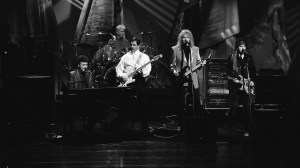
THE TONIGHT SHOW STARRING JOHNNY CARSON — Pictured: James Young of the musical guest Styx performs on March 12, 1991 — (Photo by: NBCU Photo Bank/NBCUniversal via Getty Images via Getty Images) -
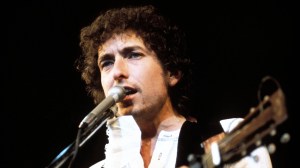
UNITED STATES – MAY 09: Photo of Bob DYLAN; performing live onstage at the benefit for ousted Chileans: Felt Forum, New York (Photo by Steve Morley/Redferns) -
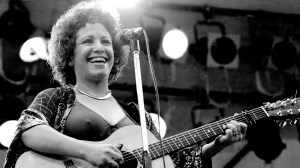
NEW YORK: Janis Ian performs live on stage in New York in 1975 (Photo by Richard E. Aaron/Redferns) -
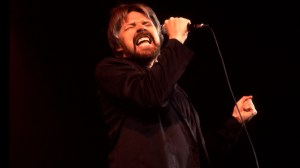
Musician Bob Seger performs at the Poplar Creek Music Theater, Hoffman Estates, Illinois, August 13, 1986. (Photo by Paul Natkin/Getty Images) -

American vocalist, musician, songwriter, producer, actress and narrator Rickie Lee Jones performing live, circa 1979. (Photo by Gus Stewart/Getty Images) -
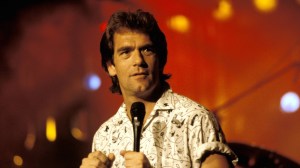
UNSPECIFIED – JANUARY 01: Photo of Huey LEWIS & The News; (Photo by David Redfern/Redferns) -
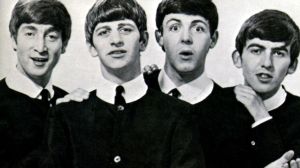
Photo by Fireshot/Universal Images Group via Getty Images -
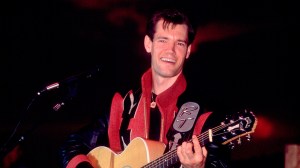
American Country musician Randy Travis plays guitar as he performs onstage at the Wisconsin State Fair, Milwaukee, Wisconsin, July 15, 1988. (Photo by Paul Natkin/Getty Images)