Your cart is currently empty!


The Paper Kites Return Home on Seventh Album “If You Go There, I Hope You Find It”
After the Paper Kites released their debut EP Woodland in 2011, the band started touring Australia and were on their first headlining tour in their home country by 2012 and an international tour a year later, and continued a constant run of touring and recording from their 2013 debut State through Roses in 2021.
Then, in 2023, the band delivered one of its larger undertakings, At the Roadhouse, in 2023, and felt a little uncertain after releasing what was essentially a double album with an accompanying film and a nearly two-year tour with an eight-piece band. “There was a little apprehension of ‘Are we still good enough as the five core members’ after playing shows with such a great group of extra musicians,” says singer Sam Bentley. “It was such a big sound, and we really had an incredible time on that tour that it was always going to be a difficult record to come off the back of.”
Bentley had already written another album, but didn’t know where it would end up when the band convened again. By the end of its cycle, the band felt the weight of the past 15 years of touring and recording, and reached a new consensus around their seventh album, If You Go There, I Hope You Find It.
“We’ve set this band up in a way to be able to move to different projects and not feel too beholden to a particular sound, even though there’s a vein that runs through all the music,” says Bentley. Initially, Bentley says he wrote something “darker and moodier,” before the band found the direction they needed to take. It was like a musical “intervention” within the band that pushed him back to the drawing board—literally—bringing the band together and writing words and sentences on a board until there was a consensus.
On the board, there were words like “human” and “honest,” which helped guide the album. Once there was a direction, Bentley needed a place to write and relocated about an hour and a half outside of Melbourne to a private farm in the Yarra Valley in Victoria, where the band had previously used as a rehearsal space.
Videos by American Songwriter
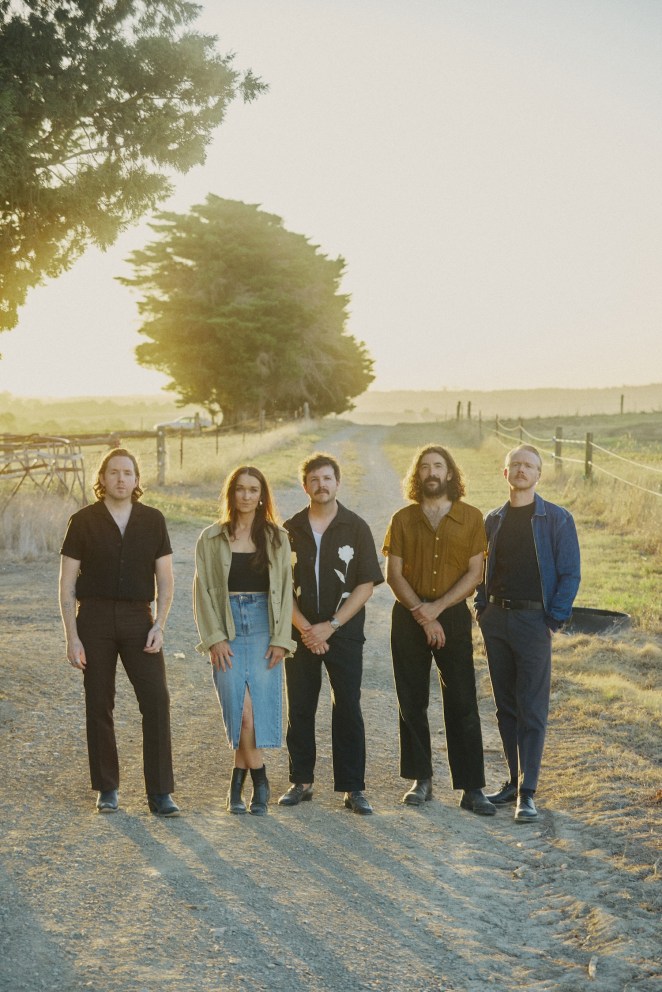
Writing in the attic of an airplane hangar, If You Go There, I Hope You Find It ended up being the first album that felt “grounded at home” for Bentley, with opening contemplations “Morning Gum” and “Change of the Winds,” and “When the Lavender Blooms,” through closing “Borne to You.”
“It’s difficult to find a space that you can create for long periods of time and feel a sense of comfort and safety in order to explore these ideas,” says Bentley. “Every other record [by The Paper Kites], I can set in a place that’s not home. I think about them as elsewhere, but this album inherently feels like a love letter to home and family and the people that you kind of surround yourself with.”
If You Go There, I Hope You Find It is a communion of the familial and returning somewhere safe, again. The slower-burning “Stormwall” is another meditation on losing touch—Don’t you draw me no line / Don’t you say it’s a matter of time—while “Every Town” brings everything back home.
“Every song talks about grounding yourself and choosing to surround yourself with things that you’ve been running from in the past, or that you’ve been afraid to allow yourself—that stability and a place to plant yourself and to root yourself,” shares Bentley.
“Some people find it really difficult to hold down both sides of their life, the traveling, playing, and finding something stable at home,” he adds. “We’re fortunate at this point in our careers. We’ve been doing this for 15 years now, and we have a family around us that is so supportive of what we do. They’re the ones in the background, holding everything together.”
It’s one of the deeper notions explored on the midpoint track “A Word I Needed More,” with Bentley singing Well, the night brings the morning dew / And the world turns like before / Nothing good about leaving / And I can’t find a word I needed more.
“I’ve always kind of turned up my nose at songs that are about how hard it is leaving your family, because it’s a choice to do that, and not something we have to do,” shares Bentley, “but it’s trying to honor and understand the weight of being grounded somewhere and constantly having to uproot yourself from that and not having the word I need to ‘thank you’ or describe the feeling of absence.”
Nothing feels unnatural around the intention and sound of the album, staying true to the Paper Kites’ folk roots. “For me, folk music is the most honest vehicle to present your songs to people,” says Bentley. “You just have your guitar and your voice and your words. It’s similar to country music, similar to blues music. You’re translating in the most basic form, and it seems to connect with people a lot deeper than layering it with all these textures.”
Recorded live, the album also captures the rawness of the songs, including the penultimate “Deep (In the Plans We Made”), one Bentley recorded on acoustic guitar, using one microphone in a room, while harmonizing with keyboardist Christina Lacy and guitarist David Powys.
“That song is so vulnerable, because the whole thing sounds like it’s about to implode, and it doesn’t,” Bentley says. “It kind of holds this beautiful tension.”
He adds, “We really wanted to capture something that felt human and vulnerable and moving. I’d always been scared of imperfection, but those are the things that are the gold in the song for me, hearing the rawness and hearing the humanity. That’s slowly becoming all I care about in the song. You can not be a great singer, but if I can hear the truth in your voice, if I can hear the life lived, that’s what I’m interested in now.”
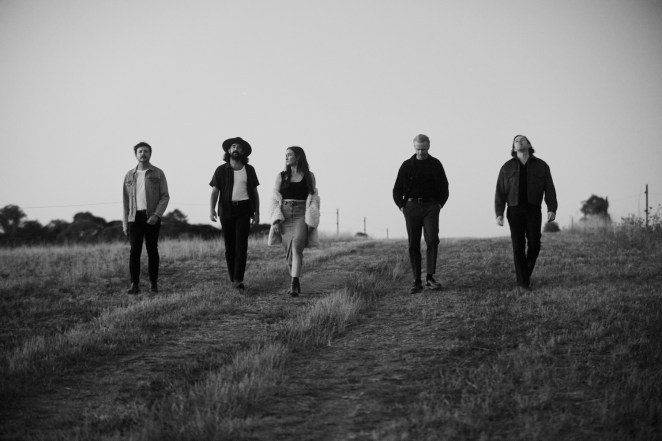
For Bentley, the band’s 2013 debut, States, seems a lifetime away, but he remembers exactly where it came from, and writing it at a friend’s cabin in the woods. In the beginning, he says, songwriting was a “locational” process. While working on the band’s 2015 follow-up, Twelvefour, was more of an “extreme writing concept,” where he found himself writing from midnight to four in the morning, to see what impact it would have on the songs.
“Back then, I thought, ‘I’m a songwriter. I have to put myself in uncomfortable situations and strange locations to write,’” shares Bentley. “I thought that I needed drama and turmoil in my life, and that is the way to navigate being an artist.”
That ideation around songwriting has changed for Bentley, who is centered more on the process. “What I believe in now is showing up to do the work,” he says. “I treat it like a job now, and I found over the years that you don’t need drama and you don’t need to sabotage things and constantly have a state of turmoil to be able to write great songs.”
Another part of it is confidence that comes with age and caring less about what other people think. “That comes hand in hand with knowing yourself,” says Bentley. “I want to know what other people are loving about something, but as far as hunting for what’s new and what’s great, I keep my blinkers on.”
Now, Bentley has also gravitated towards what he values in music and draws from that. “I think it’s really dangerous to be looking around and seeing what’s popular,” he says. “You’ve got to forge your own path.”
Photos: Tim Harris
Leave a Reply
Only members can comment. Become a member. Already a member? Log in.