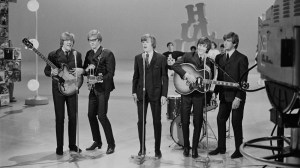
Have you ever had an experience where you checked out the credits to a song that you love and were surprised by the name of one of the songwriters? We’re guessing that some Hall & Oates fans might know the feeling.
The duo mostly wrote their own material with the help of a few trusted collaborators. But they did do the occasional cover song, à la “Family Man”. Who knew that one of the writers was the guy whose spooky instrumental gained notoriety when it was included in The Exorcist?
Videos by American Songwriter
New Age Pioneer to Pop Hitmaker
Mike Oldfield began his music career like many others, trying to find his way in the pop and rock fields. But he soon learned to play a wide variety of somewhat obscure instruments. All of which went into the making of the 1973 album Tubular Bells.
When a snippet of the long instrumental piece was used in the film The Exorcist, Oldfield ended up with an unlikely Top 10 single. Going forward, he returned to those extended passages that had exemplified Tubular Bells. But in the late 70s, he started to incorporate more traditional pop songs in his repertoire. He turned some of those songs into hits in his native Great Britain.
On the 1982 album Five Miles Out, Oldfield included a song called “Taurus II” that took up an entire side of the LP. But the other side was devoted to more bite-sized numbers. One of them, which he composed with members of his touring band at the time, was “Family Man”. Sung by Maggie Reilly, it just missed the UK Top 40. But it had a big second life in it.
All In The “Family”
Daryl Hall happened upon “Family Man” when he heard it being played by his keyboard tech. At the time, he and John Oates were prepping for the album H2O, which would be released in late 1982. They were looking for songs that contrasted the lighter touch found on some of their earlier hits in the decade.
When they decided to record the song, Hall made a slight change to the lyrics. Oldfield’s original version suggests that the “Family Man” in the song ultimately resists the temptation of the prostitute he encounters. In the Hall & Oates take, the guy caves at the song’s end, but the girl is gone by the time he makes that decision.
It’s an interesting twist that darkens the story ever so slightly. Hall & Oates were red-hot at the time that they released the song as the third single off H2O in 1983. That’s why it was no surprise that this somewhat prickly track made it all the way to No. 6, with many folks never realizing it wasn’t an original song by the duo.
Behind the Lyrics to “Family Man”
With “sulky smile” and “sultry eyes,” the female lead in “Family Man” lays her cards on the table in the first verse. “She made it perfectly clear that she was his for a price,” Hall explains. The guy rebuffs her in the chorus: “But he said, ‘Leave me alone, I’m a family man.’” As we find out, his resolve eventually crumbles.
The woman isn’t about to take no for an answer, lowering “her price and pride” in an attempt to seal the deal. She senses his growing weakness: “She knew he couldn’t decide if he should hold his ground.” Eventually, she loses patience at the very moment he’s ready to capitulate: “He waited much too long/But by the time he got his courage up, she was gone.”
Hall gives a frenzied vocal performance in the refrains, playing the part of the harried husband to the hilt. G.E. Smith’s crunching guitar licks placed the song in more of a rock context than what was normal for the duo. “Family Man” achieved the desired change of pace effect for Hall & Oates. Granted, it was a cover, but it helped define an edgier vibe they’d further cultivate in hits to come.
Photo by Michael Putland/Getty Images
More Behind The Song
-
DON GIBSON, Country Sänger, 70er. (Photo by kpa/United Archives via Getty Images) -
Photo by Hulton Archive/Getty Images -
THE TONIGHT SHOW WITH JAY LENO — — Pictured: Musician Trace Adkins performing on April 8, 1998 — (Photo by: Margaret Norton/NBCU Photo Bank/NBCUniversal via Getty Images via Getty Images) -
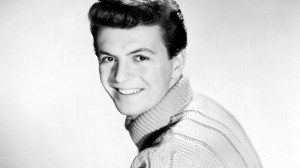
CIRCA 1960 Rock and Roll singer Dion DiMucci of "Dion And The Belmonts" poses for publicity photo after going solo circa 1960. (Photo by: Michael Ochs Archives/Getty Images) -

LONDON, UNITED KINGDOM – JANUARY 11: Debbie Harry of Blondie performs on stage at Hammersmith Odeon on January 11th, 1980 in London United Kingdom. (Photo by Pete Still/Redferns) -
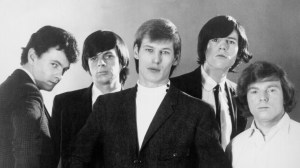
LONDON – 1965: Rock band "Them" featuring Van Morrison (right) and an ever changing line up of session musicians pose for a portrait in 1965 in London, England. (Photo by Michael Ochs Archives/Getty Images) -
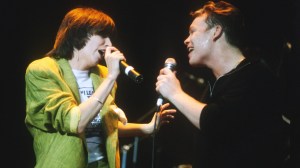
Pretenders, Chrissie Hynde and UB40, T/W, Torhout/Werchter, Belgium, 5th July 1986. (Photo by Goedefroit Music/Getty Images)