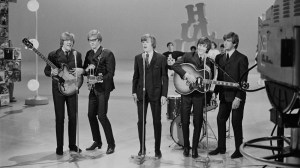
In 1975, Michael Martin Murphey released “Wildfire”, a song that remains his biggest hit. On Blue Sky — Night Thunder, his fourth studio album, Murphey wrote “Wildfire” with his good friend, Larry Cansler. At the time, the two were writing what became Kenny Rogers’ eighth studio album. Murphey unexpectedly had the idea for what became his signature song.
“I was working on a concept album called The Ballad of Calico for Kenny Rogers with my friend Larry Cansler,” Murphey recalls to The Boot. “I was in my third year of college at UCLA, but I was living in the mountains in California.”
Videos by American Songwriter
Murphey spent a lot of time at Cansler’s Los Angeles apartment, so they could work on Rogers’ record.
“We would work, sometimes, 22 hours a day on the album,” Murphey says.
On the night that Murphey had the idea for “Wildfire”, he was sleeping in a sleeping bag on the floor when he had divine inspiration.
“I dreamed the song in its entirety,” Murphey remembers. “I woke up and pounded on Larry’s door and said, ‘Can you come down and help me with this song?’ His wife got up and made us coffee, and we finished it in two or three hours.”
“Wildfire” says in part, “Oh, they say she died one winter / When there came a killing frost / And the pony she named wildfire / Busted down his stall In a blizzard, she was lost / She ran calling wildfire / Calling wildfire / Calling wildfire.”
Murphey is still amazed at how quickly the song came together. Still, he says that the idea originates from his childhood.
“The song came from deep down in my subconsciousness,” Murphey explains. “My grandfather told me a story when I was a little boy about a legendary ghost horse that the Indians talked about. In 1936, author J. Frank Dobie identified this ghost horse story as the most prominent one in the lore of the Southwest.
The Surprising Success of “Wildfire” by Michael Martin Murphey
When Murphey wrote “Wildfire” with Cansler, he had no idea how much the song would quickly take on a life of its own.
“We were working on my album Blue Sky — Night Thunder at the time. And my producer Bob Johnson said, ‘I don’t see how that song will fit in with the rest of the material for that album,’” Murphey recounts. “I asked him if I could record it as an album cut, because I felt very strongly about it.”
Once the song was recorded, Murphey played it for the kitchen staff at the studio where they recorded the song. They loved it so much, Murphey chose to release it as a single.
“It came out, took off in Chicago and Milwaukee. And public demand made it a hit, which proves that those of us in music have no clue about anything when it comes to what will be a hit song,” he adds.
Murphey followed “Wildfire” with “Carolina In The Pines”, which became his final Top 5 single.
Photo by Tom Hill/WireImage
More Behind The Song
-
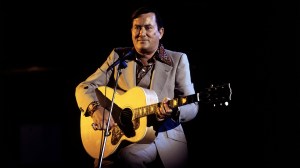
DON GIBSON, Country Sänger, 70er. (Photo by kpa/United Archives via Getty Images) -
Photo by Hulton Archive/Getty Images -
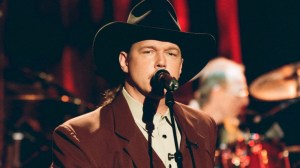
THE TONIGHT SHOW WITH JAY LENO — — Pictured: Musician Trace Adkins performing on April 8, 1998 — (Photo by: Margaret Norton/NBCU Photo Bank/NBCUniversal via Getty Images via Getty Images) -
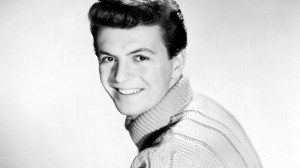
CIRCA 1960 Rock and Roll singer Dion DiMucci of "Dion And The Belmonts" poses for publicity photo after going solo circa 1960. (Photo by: Michael Ochs Archives/Getty Images) -

LONDON, UNITED KINGDOM – JANUARY 11: Debbie Harry of Blondie performs on stage at Hammersmith Odeon on January 11th, 1980 in London United Kingdom. (Photo by Pete Still/Redferns) -
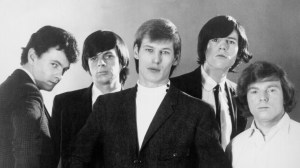
LONDON – 1965: Rock band "Them" featuring Van Morrison (right) and an ever changing line up of session musicians pose for a portrait in 1965 in London, England. (Photo by Michael Ochs Archives/Getty Images) -
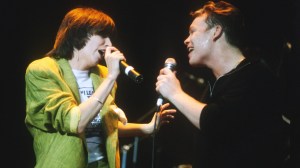
Pretenders, Chrissie Hynde and UB40, T/W, Torhout/Werchter, Belgium, 5th July 1986. (Photo by Goedefroit Music/Getty Images)