Your cart is currently empty!


With New Music on the Horizon, Bryan Ferry Looks Back—and Forward—on His Legendary Career
“Most of the time, I’d like to be working on new stuff—but occasionally, it’s good to take stock of what you have done and put it all in order,” says Bryan Ferry, referring to Retrospective: Selected Recordings 1973-2023, the 81-song overview of his solo career.
Videos by American Songwriter
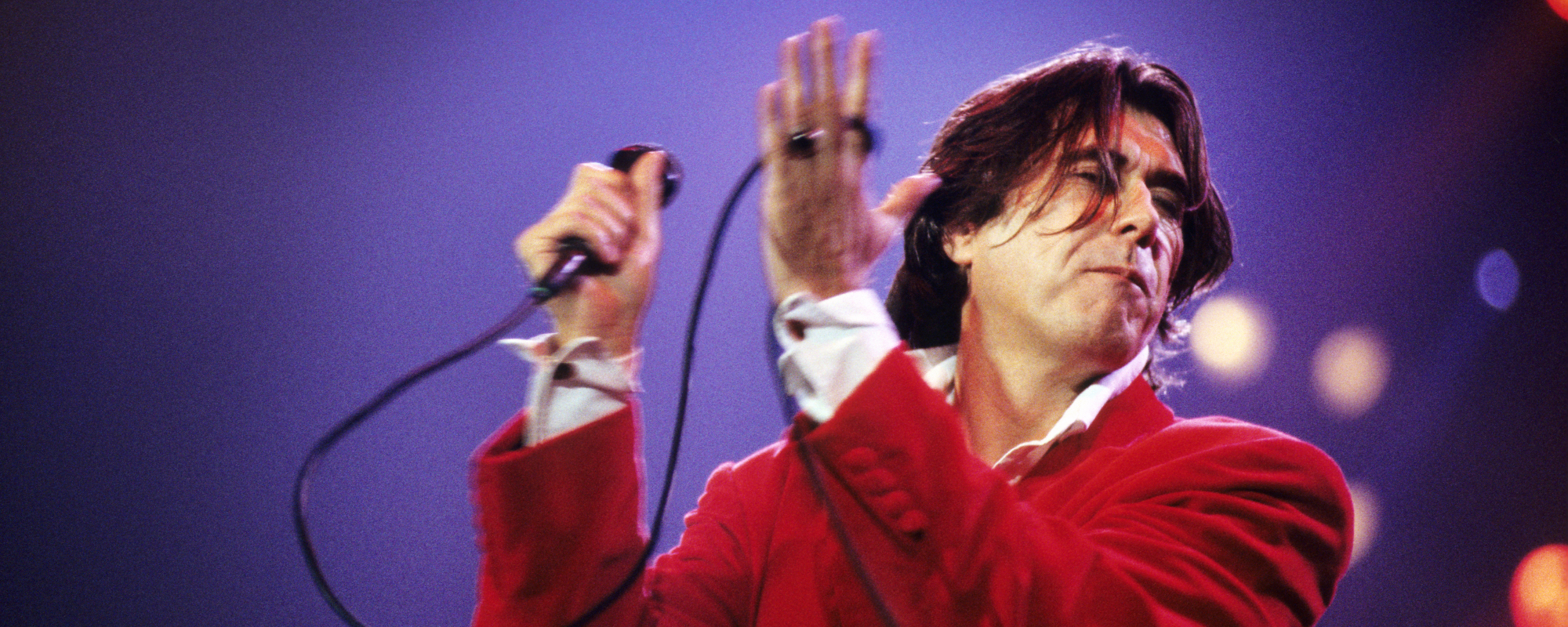
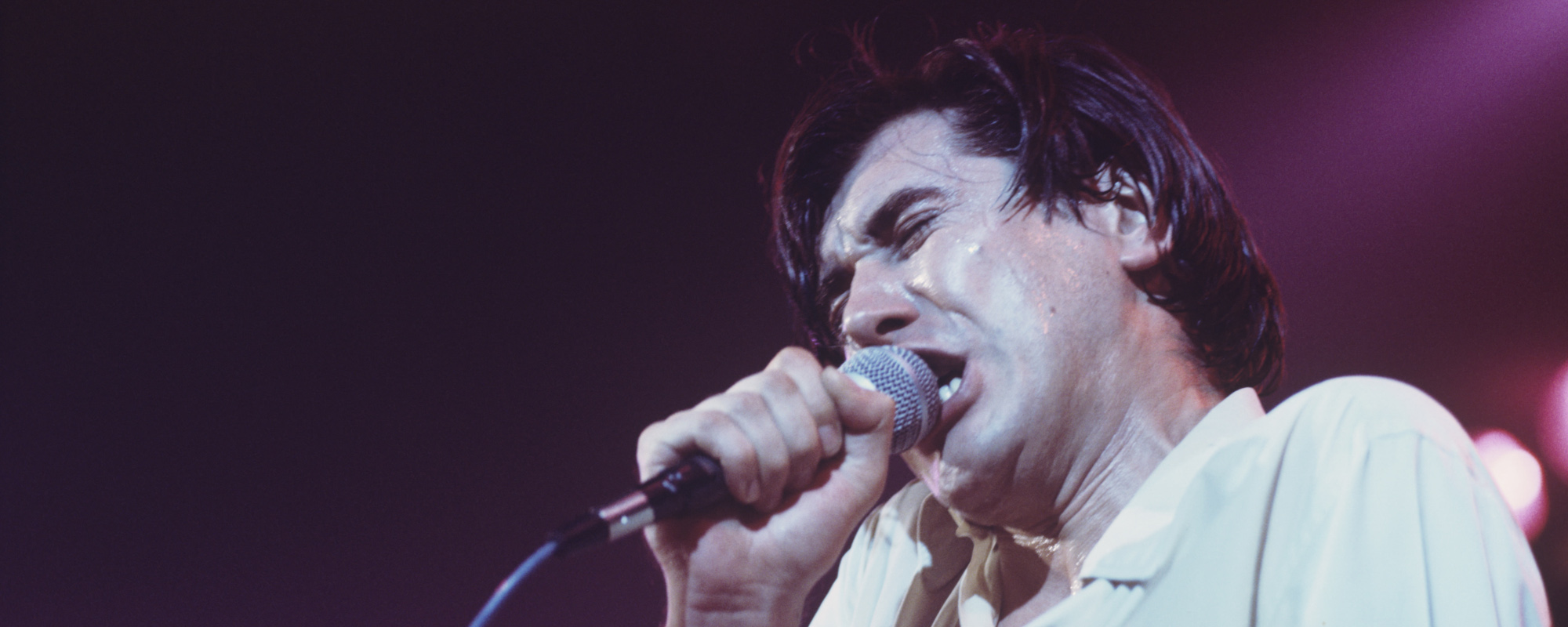
During a video call from Ferry’s London recording studio, he looks debonair in a crisp olive green button-down shirt, his salt-and-pepper hair elegantly swept back. He smiles easily and often, seeming utterly at ease. And why not? For five decades now, he has been celebrated as one of the most influential, charismatic, and innovative performers in rock history, both as the frontman for the legendary band Roxy Music and his highly successful solo career.
[RELATED: 5 Intriguing Discoveries from Bryan Ferry’s 30th-Anniversary ‘Mamouna’ Reissue]
But his prolific output meant that when Ferry decided to put together this retrospective of his solo work, he faced a daunting task: after all, he has released 16 studio albums so far. In the end, though, he was clear about which songs should make the cut: “There are some things which are more hits than others, things that are popular, and they go in. And a few tracks that are less known. We tried to get a balance of stuff,” he says.
Everything a diehard fan could want is here, including Ferry’s international hits such as “Slave to Love” and “Let’s Stick Together,” jazz versions of some of his most beloved songs, and several rare and previously unreleased tracks. There’s an impressive selection of wide-ranging cover songs, including a brand new one, “She Belongs to Me,” which is a Bob Dylan composition.
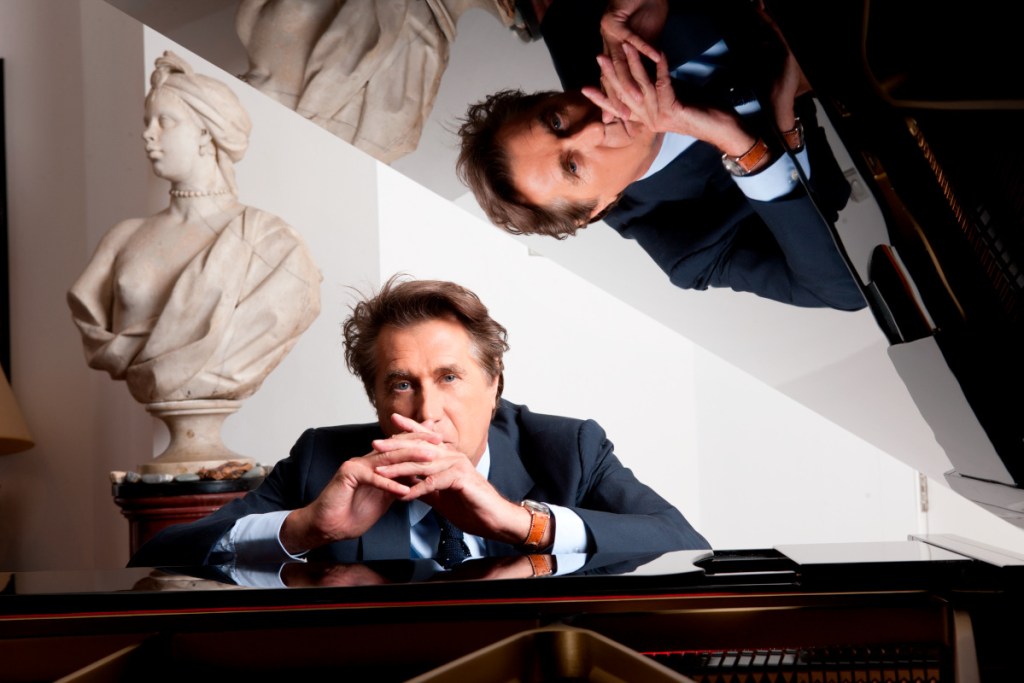
There’s also “Star,” the first original material Ferry has released in more than 10 years. The pulsating techno/electronica track finds Ferry trading vocals with Scottish artist/writer Amelia Barratt and was based on a demo he wrote with Trent Reznor and Atticus Ross of Nine Inch Nails.
“When you work together with other people, it takes off some of the pressure,” Ferry says. “I’ve been concentrating lately on just the musical side, without the pressure of lyric writing. It’s been a joy for me, as the new track “Star” illustrates, I think.”
Ferry says that putting this retrospective together inevitably triggered many memories from across his entire career. “I’ve been in a lot of studios with a lot of people,” he says. “It was very nice for me to listen back to things and remember being in New York or L.A. or London or wherever doing these projects with a lot of great musicians.”
This desire to explore different musical territory was one of the main reasons why Ferry launched his solo career in the first place. “One of the great things of doing the solo recordings over the years has been being free from a band and being able to work with a lot of different musicians, and so that’s been a real pleasure,” he says. “I was very fortunate to be in a great band with some great, talented people. But when I started the solo records, it was trying to get away and work with different people and broaden my horizons a little bit.”
While he has been adventurous with his musical explorations throughout his career, Ferry says that his actual songwriting process has always tended to follow the same pattern: “Normally, traditionally, it’s me improvising at the piano and just finding something there—usually, when I’m on my own and at night. I guess [that’s] why so many of them have a nocturnal mood. I’m not one of these people who practices every day, and I’m not a great piano player, but I’m distinctive.”
Ferry will usually record his ideas onto a cassette tape. “Nowadays, you can do it on a phone. I like cassettes, though,” he says. “And then months, or sometimes years later, you listen to the cassette and think, ‘Hmm, I like that tune. Maybe I’ll turn it into a song with other players.’
“Some songs are done more quickly or easily than others; some hang around for years before you really nail it,” he continues. “It’s lovely when you get there and you think, ‘This really works, and it represents some feelings or thoughts that I’ve had.’ You try and project yourself into a piece of music. And words or music, when they work together, can be a powerful force.”
He confesses that one part of the songwriting process has remained difficult for him despite all his experience. “Usually, I write the lyrics quite late—at the 11th hour, with a gun to my head!” he says with a laugh. “I’ve always found lyric writing quite hard—but very satisfying if you feel you get it right.”
Ferry has always seemed to have a particular knack for writing wistful love songs, and he agrees with this assessment. “I suppose I have sometimes fallen very easily into that mode because songs are kind of intimate, one-to-one; it’s a universal language that everyone knows,” he says. “So many of the great songs have been romantic. They’ve been about person to person. I guess there’s a reason for that.”
He first became aware of music’s power when, as a child in Northern England, he developed a taste for many different musical genres. “I’ve been very lucky that my interests in music have been diverse. I think I’ve found that refreshing—and it helped my, dare I say, longevity as an artist, [because] I’ve gone here and there with my work with Roxy and with the solo career,” he says.
Jazz artists such as Charlie Parker especially intrigued Ferry, as well as what he terms “the great American songs” such as “Smoke Gets in Your Eyes.” Originally a show tune written by Jerome Kern and Otto Harbach in 1933, that song became a chart-topping hit for The Platters in 1959. “I saw The Platters do it onstage in my hometown; I must have been really young, about 10 [years old]. Things like that really affect you,” Ferry says. He later covered that song himself, and it reached the Top 20 in the U.K. music charts in 1974.
Beyond music, Ferry was absorbing many other things that shaped the songwriter he would become. “When I was young, I liked reading; I liked literature. I was inspired by films and things I’d read, and things I’ve done, and people I’ve talked to or heard talking,” he says.
Ultimately, he adds, it’s about “Life’s experience. I guess any artist will absorb what is around him or her. You try and create something that is your own, and reflects your personality, your feelings, your thoughts and your desires, your emotions. It’s hard to pin it down, really. But I feel much more complete when I produce work. The work is a better version of me.”
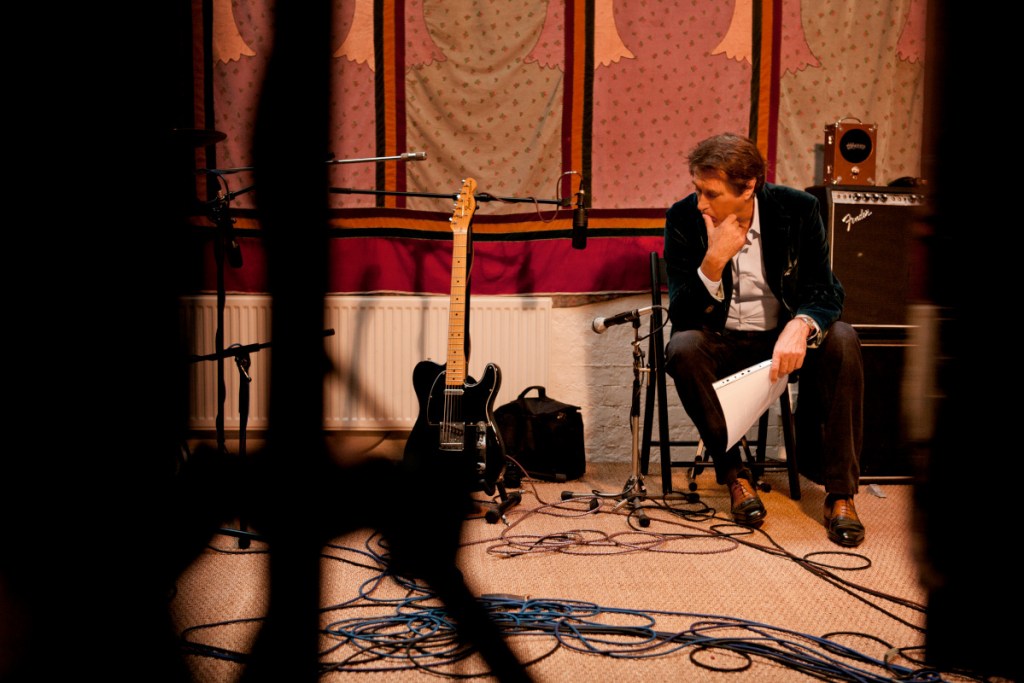
He admits that he didn’t initially think he’d become a musician at all, though. “I went to college to study art—painting,” he says. “That’s what I thought I was going to do…and then music kind of seduced me.”
While still in college, he began joining bands, then co-founded Roxy Music in 1970. That group evolved into a sextet that played a groundbreaking and sophisticated mix of glam rock and avant-garde art rock that has been credited with influencing everything from the punk rock scene to New Wave.
“When I first started writing songs, it was just me and the bass player [Graham Simpson] from Roxy in a room,” Ferry says. “Then, one by one, I met the other members of the band and put together a group to play these songs. I think I was very lucky to meet so many good people. None of us had ever made a record before. The freshness of that was something good, I think.”
Ferry says he became Roxy Music’s lead singer “because I hated my talking voice, and so singing was a way of getting out of that, I guess. Also, I couldn’t play anything, [but] toward the end of my college days, I started teaching myself piano a bit, playing by ear. I still just play by ear.”
Ultimately, Ferry recorded eight albums with Roxy Music, ending with Avalon (1982). By then, he had long established himself as a successful solo artist, having released his debut album in that capacity, These Foolish Things, in 1973.
Ferry made the decision to start a solo career right after Roxy Music finished their second album, For Your Pleasure (1973), which he says “was quite intense; it was quite dark. And I thought I’d like to do something a bit lighter, to show my versatility.”
These Foolish Things was so well-received that Ferry has maintained his solo career ever since. To date, all 16 of his studio albums have charted internationally. And soon, there will be more: he promises that he will release new music next year.
For now, though, Ferry is happy to concentrate on his solo retrospective and the legacy that it chronicles. “Nothing is ever good enough, I always think,” he says, though he says this with a smile. “I’ll say, ‘I wish I’d done more of this or that, or less of that.’ But there’s a lot to like, as well. I just wish I had been able to do more work than I did—but I’ve done quite a lot with all these solo records, and then the Roxy stuff. But I’ve got a lot more to do, so I’m really enthusiastic about everything. That’s a fabulous feeling to have.”
Photos by Neil Kirk


Leave a Reply
Only members can comment. Become a member. Already a member? Log in.