The familiar adage, oft-repeated by musicians who have had hits and those who long for one, says that if anyone knew what exactly constituted a hit single, that formula could be repeated every time. But when you consider some of the concoctions that sounded ridiculous on paper and yet turned out to be pure magic when recorded, it’s clear that hit songs are produced by a combination of talent, inspiration, luck, and some sort of pixie dust that floats around recording studios but only alights on certain musicians at certain times, like it did for Procol Harum when they recorded “A Whiter Shade Of Pale.”
After all, who could have possibly predicted the success of “A Whiter Shade Of Pale,” which went to #1 in the UK in 1967, #5 in the US, and has outlasted so many other flower-power and psychedelic-flavored tracks from that era to be one of the most enduring songs of the 60’s? It was the first single released by a relatively unknown British band, it was driven by a classical organ part derived from Bach, and it featured some of the most inscrutable lyrics of the era.
Yet the moment that Matthew Fisher’s Hammond organ pierces the air, “A Whiter Shade Of Pale” is utterly mesmerizing. Procol Harum’s singer Gary Brooker was responsible for writing the music, although Fisher’s organ part was so prominent that he also eventually received a songwriting credit after a protracted court battle. Keith Reid, who served as the band’s chief lyricist, wrote the words that have confounded generations of fans who still can’t help but singing along.
What is “A Whiter Shade of Pale” Meaning?
In an interview with Uncut magazine, Reid shed a little light on the song’s origin and meaning. “I had the phrase ‘a whiter shade of pale,’ that was the start, and I knew it was a song,” he said. “It’s like a jigsaw where you’ve got one piece, then you make up all the others to fit in. I was trying to conjure a mood as much as tell a straightforward, girl-leaves-boy story. With the ceiling flying away and room humming harder, I wanted to paint an image of a scene.”
The general consensus is that “A Whiter Shade Of Pale” is a snapshot of a drunken sexual escapade gone awry. Yet the song defies a specific interpretation, instead conjuring various shades of melancholy which are embellished by the mournful music and Brooker’s pained delivery. Even when you can’t quite understand their meaning, Reid, who was clearly influenced by Dylan’s surreal story songs from the mid-60’s, writes lines that leave a lasting impact, right from the immortal opener: “We skipped the light fandango.”
Attempts to wrangle these lyrics into linear coherence are thwarted at every turn, in part by red herrings (Reid claimed that the line “As the miller told his tale” has nothing to do with Chaucer) and by the demands of pop radio (Two extra verses were excised to keep the running time low.) Don’t let it bother you. If you spend too much time trying to figure out Procol Harum’s “A Whiter Shade Of Pale,” you might miss out on its majestically-rendered sorrow.
Are you a songwriter? Enter the American Songwriter Lyric Contest!


More Features
-
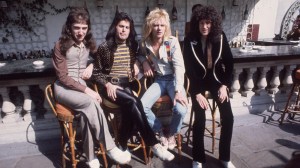
th September 1976: British rock group Queen at Les Ambassadeurs, where they were presented with silver, gold and platinum discs for sales in excess of one million of their hit single 'Bohemian Rhapsody'. The band are, from left to right, John Deacon, Freddie Mercury (Frederick Bulsara, 1946 – 1991), Roger Taylor and Brian May. (Photo by Keystone/Getty Images) -
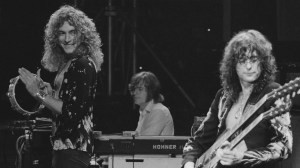
Left to right: Robert Plant, John Paul Jones and Jimmy Page, of British heavy rock group Led Zeppelin, performing at Earl's Court, London, May 1975. The band were initially booked to play three nights at the venue, from 23rd to 25th May, but due to public demand, two more concerts were later added, for 17th and 18th May. Total ticket sales were 85,000. (Photo by Michael Putland/Getty Images) -
Troy Gentry of Montgomery Gentry -
Badfinger performs at Pasadena Civic Auditorium Pasadena, CA 1972; Various Locations; Mark Sullivan 70's Rock Archive (Photo by Mark Sullivan/Contour by Getty Images) -
12th April 1982: Laid back American country singer Don Williams performing in the Country Music Festival at Wembley. (Photo by Hulton Archive/Getty Images) -
INGLEWOOD – FEBRUARY 19: Prince performs live at the Fabulous Forum on February 19, 1985 in Inglewood, California. (Photo by Michael Ochs Archives/Getty Images) -
LOS ANGELES – SEPTEMBER 5: Michael Stipe at the 1991 MTV Video Music Awards at in Los Angeles, California. (Photo by Jeff Kravitz/FilmMagic)