Nobody captured the essence of being miserable, heartbroken, or down on one’s luck quite like the iconic blues and blues rock songwriters of the 20th century. Let’s take a look at just a handful of the most well-written blues rock lyrics of the 20th century, shall we?
“Born Under A Bad Sign” by Albert King (1967)
“If it wasn’t for bad luck, I wouldn’t have no luck at all.”
Videos by American Songwriter
There’s a reason this is one of the most-quoted blues rock lines of all time. It’s just plain good. And who doesn’t love a good soulful blues tune that laments one’s bad luck? It’s the hallmark of the genre and what makes it so good for serving as the soundtrack to your own misery.
“Born Under A Bad Sign” by Albert King, written by Booker T. Jones, has since become a blues standard and has been covered by the likes of Cream.
“Call It Stormy Monday (But Tuesday Is Just As Bad)” by T-Bone Walker (1947)
“They call it stormy Monday, but Tuesday’s just as bad.”
T-Bone Walker really outfitted himself with this iconic line. There’s a reason why this slow-burn West Coast blues track is such a beloved one today. Nothing really captures the vibe of the blues, with all of its heartbreaking imagery about being down on one’s luck, quite like the above line. Today, “Stormy Monday” is a blues standard that has been covered by everyone from Bobby Bland to The Allman Brothers Band to Latimore.
“Jinx Blues (Part 1)” by Son House (1942)
“I said, look a-here, darlin’ / Honey, don’t you try to cry no more / Well, when I leave this time / I’m gonna hang a crêpe on your door.”
Without context, this line might not make much sense. But it’s actually one of the most heartbreaking blues lyrics ever. This gorgeous Delta blues tune from icon Son House is all about a man in the grips of the blues, struggling to please the object of his affection while working a dead-end job. At the end of the song, he tells his girl not to cry anymore, because when he leaves this time, he will “hang a crêpe” on her door. In many cultures, hanging red or black crêpe paper on one’s door signified that whoever lived there was in mourning. Either the narrator is speaking from beyond the grave, or he plans to end it all soon.
Photo by Bill Carrier, courtesy of Concord Music Group
More The List
-
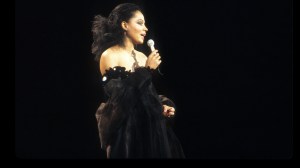
1985 AMERICAN MUSIC AWARDS – Show Coverage – Airdate: January 28, 1985. DIANA ROSS -
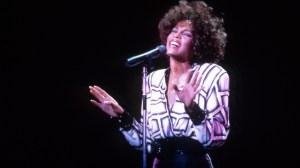
CLARKSTON – JULY 31: American singer and actress, Whitney Houston, performs at the Pine Knob Music Theater during her "Moment of Truth" world tour, on July 31, 1987, in Clarkston, Michigan. (Photo by Ross Marino/Getty Images) -
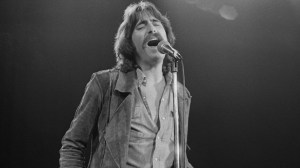
American singer Chuck Negron performing with American rock group Three Dog Night at the Sundown, Edmonton, London, 6th October 1972. (Photo by Michael Putland/Getty Images) -

Blink 182 during MTV New Year's Eve Bash 2000 at MTV Studios in Times Square in New York City, New York, United States. (Photo by KMazur/WireImage) -
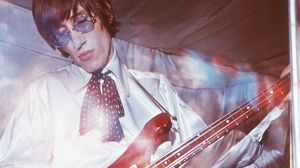
Photo by Adam Ritchie/Redferns -
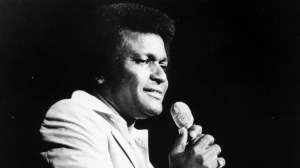
UNSPECIFIED – CIRCA 1970: Photo of Charley Pride Photo by Michael Ochs Archives/Getty Images -

English rock band Procol Harum posed outside the Centre Point office building at St Giles Circus in London in May 1967. Members of the group are, from left, Ray Royer, Bobby Harrison (1939-2022), David Knights, Gary Brooker (1945-2022) and Matthew Fisher. (Photo by Ivan Keeman/Redferns) -
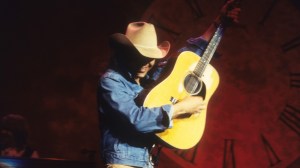
MINNEAPOLIS, MN – JULY 11: Dwight Yoakam performs at Northrup Auditorium at the University of Minnesota in Minneapolis, Minnesota on July 11, 1993. (Photo by Jim Steinfeldt/Michael Ochs Archives/Getty Images)