
For pretty much the entirety of his amazing career, Bob Dylan has kept us on our toes. He has displayed his willingness to do things his own way in numerous ways. As one example, consider his insistence on occasionally choosing odd song titles.
These four songs rank with the very best in Dylan’s catalog. But you’d be forgiven if you scratched your head a bit as to why they have the titles they do.
Videos by American Songwriter
“My Back Pages”
Bob Dylan immediately came across as an old soul. It wasn’t just his voice, which sounded grizzled even in his early 20s. He also had a way of attaining perspective that many people of his generation just couldn’t achieve. Perhaps acknowledging that he’d gone too far in terms of making broad statements on his first few albums, he suggested that he’d come to a point where he understood the gray areas a little bit better on “My Back Pages”. Nowhere in the song, which was released on the 1964 album Another Side Of Bob Dylan, does Dylan mention the title. But the phrase seems like a nod to the fact that he was reassessing his former self within the lyrics.
“It Takes A Lot To Laugh, It Takes A Train To Cry”
Dylan was smack dab in the middle of his peak mid-60s period when he recorded Highway 61 Revisited. This was also his acme when it came to choosing song titles that were way out there. Apparently, those titles were often quite fluid, meaning that he wasn’t putting a ton of thought into them. “It Takes A Lot To Laugh, It Takes A Train To Cry” was initially called “Phantom Engineer”. Somewhere along the line, Dylan made the title switch without even telling the band. (Al Kooper was reportedly surprised when he saw the final track listing and the new title.) In any case, the title here adds a bit of offbeat humor to a song that finds Dylan at his most bluesy and dejected.
“Rainy Day Women #12 & 35”
Here we have the king of all Dylan titles from nowhere. Many people have twisted themselves in knots trying to figure out the significance of the numbers in “Rainy Day Women #12 & 35”. That task is made more difficult by the fact that the song itself seems to have little to do with anything other than dealing with aggravations and getting high. Could it be some reference to groupies? Should you multiply the numbers, which, by the way, gives you 420, a number associated with cannabis? Is there some Biblical significance in there? Your guess is as good as ours. Dylan isn’t going to tell us anytime soon, forever compounding the mystery of one of his biggest hit singles.
“Tempest”
In recent years, Dylan has once again started to give us plenty of titles that don’t seem to have much relation to the songs themselves. “Tempest” sent the Dylanologists scrambling when it was released as the title track to his 2012 album. Many people noted that The Tempest was allegedly the last play written by William Shakespeare. They guessed that Tempest would be Dylan’s last studio album. (Guess again.) The title is an odd one, considering that the song is all about the Titanic disaster, at least as Dylan imagined it. Winds didn’t really play a role in the ship’s downfall, after all. Nonetheless, the song stands out as one of those wild, sneakily moving epics that Dylan has perfected.
Photo by Fiona Adams/Redferns
More The List
-
UNITED KINGDOM – JANUARY 01: Photo of Pete SEEGER; Pete Seeger performing on stage at a Paul Robeson benefit concert (Photo by Brian Shuel/Redferns) -
UNSPECIFIED – CIRCA 1970: Photo of Diana Ross Photo by Michael Ochs Archives/Getty Images -

The British singer Kate Bush poses for a photo shoot. Great Britain, 1980 (Photo by Angelo DeligioMondadori via Getty Images) -
Photo via NBC/Getty Images -
DETROIT, MI – MAY 7: (L-R) Drummer Steven Adler, Duff McKagan, vocals Axl Rose, guitarist Slash and guitarist Izzy Stradlin of the music group Guns N' Roses pose for a portrait on May 7, 1988, at the Detroit State Theater in Detroit, Michigan. (Photo by Ross Marino/Getty Images) -
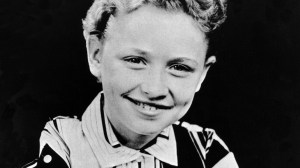
TENNESSEE – CIRCA 1955: Country singer Dolly Parton poses for a portrait in circa 1955 in Tennessee. (Photo by Michael Ochs Archives/Getty Images) -
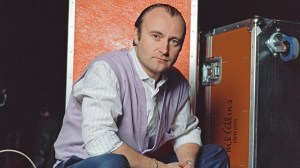
Phil Collins seen here following rehearsals in a London studio for his forthcoming Seriously tour, which begins in Japan. 14th February 1990 (Photo by Steve Woods/Mirrorpix via Getty Images) -
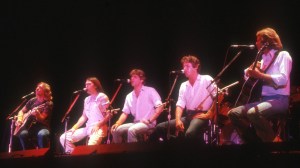
(L-R) Joe Walsh, Timothy B. Schmit, Glenn Frey, Don Henley and Don Felder of the rock band "Eagles" performing onstage in 1980. (Photo by Michael Ochs Archives/Getty Images)