Your cart is currently empty!



Born on This Day in 1905, the Oscar-Winning Singing Cowboy Who Helped Form the Country Music Association and Build the First Hall of Fame Museum
On this day (January 12) in 1905, Tex Ritter was born in Murvaul, Texas. Throughout his career, he worked in radio, television, film, and Broadway. Ritter also had a successful career as a recording artist, notching multiple major hits on the country and pop charts.
Videos by American Songwriter
Ritter fell in love with Western music as a child. Then, at 17, he entered the University of Texas at Austin, where he met some of the most widely respected authorities on cowboy songs–John Lomax, Oscar Fox, and J. Frank Dobie. They helped him further his knowledge of Western music. This helped him land his first weekly radio program on KPRC in Houston. The half-hour show allowed Ritter to share his love of cowboy songs with a large audience.
In the late 1920s, Ritter moved to New York, where he began working on Broadway musicals. He worked on several plays. The most notable, though, is Green Grow the Lilacs, the play that would later be adapted into Oklahoma by Rodgers and Hammerstein. According to the Country Music Hall of Fame, Ritter also worked on numerous radio programs while in the Big Apple.
The next decade saw Ritter moving to the other side of the country to begin a new stage of his career. Gene Autry had found major success in Hollywood as a singing cowboy. As a result, many film studios were looking for their own singing cowboys. The role was perfect for Tex Ritter. He starred in his first film, Song of the Gringo, in 1936.
He appeared in 70 films and was a considerable box office draw. Ritter also worked on dozens of movie soundtracks. The most notable was the 1952 film High Noon. He sang the theme song, “High Noon (Do Not Forsake Me),” which won Best Original Song at the 1953 Academy Awards.
Tex Ritter’s Recording Career
In the 1940s, Tex Ritter began his recording career. He rleeased hist debut single, “I’m Wastin’ My Tears on You” in 1944. It went to No. 1 on the country chart and peaked at No. 11 on the Hot 100. This kicked off a string of hits that included the likes of “You Two-Timed Me One Time Too Often,” “You Will Have to Pay,” and “Have I Told You Lately That I Love You.”
Ritter was more than a successful recording artist. He was also instrumental in the formation of some of the genre’s most important institutions. For instance, he was one of the Country Music Association. He also spearheaded the effort to build the original Country Music Hall of Fame and Museum on Music Row.
Ritter was inducted into the CMHoF in 1964, a decade before his death.
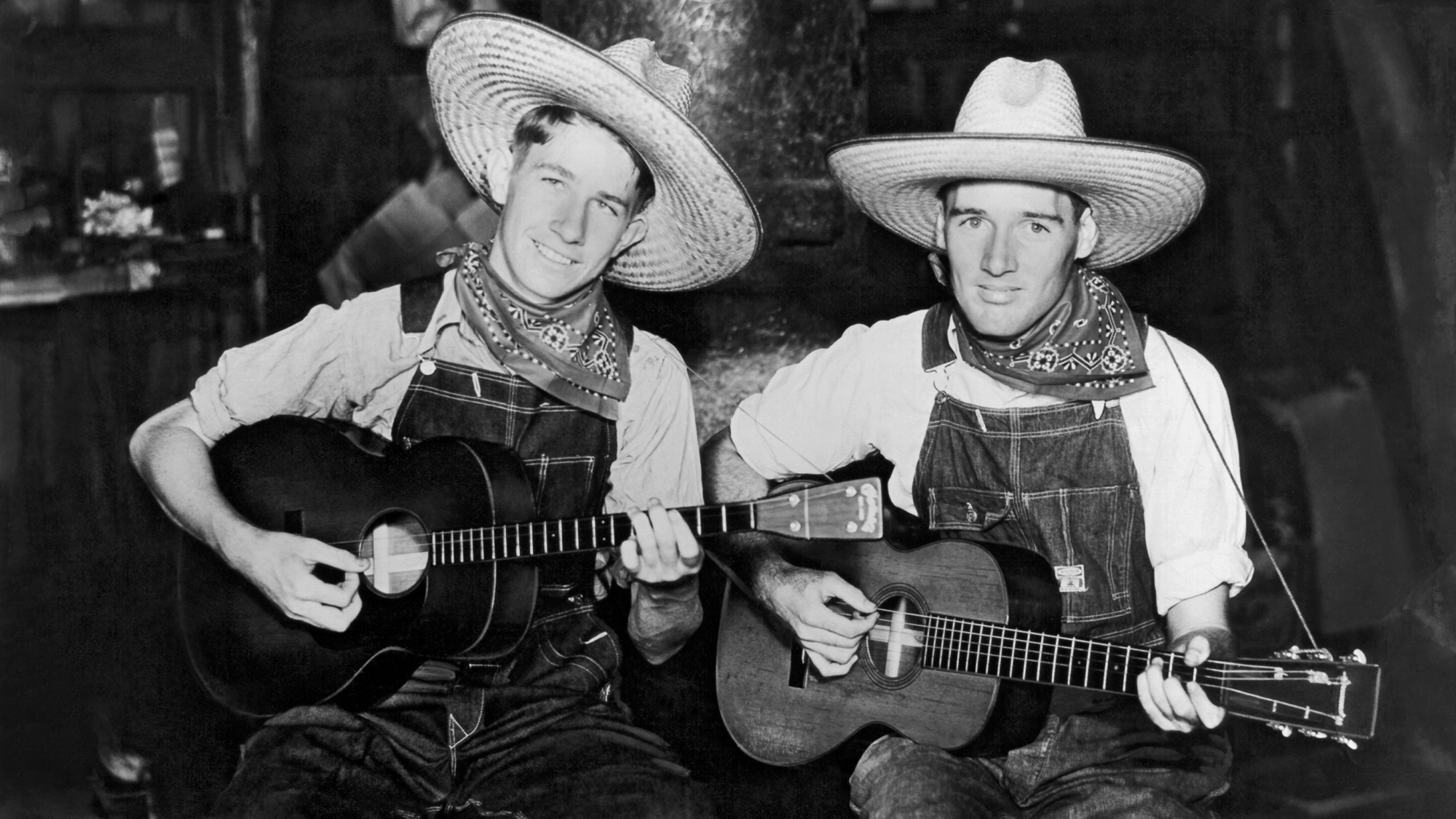
Featured Image by George Konig/Keystone Features/Hulton Archive/Getty Images

Leave a Reply
Only members can comment. Become a member. Already a member? Log in.