The relationship between a record label and a promising artist on its roster is a tenuous one. Cater to the artist too much, and the label risks a creative move that will hamper sales. Don’t cater to the artist enough, and the label risks losing the artist, much like RCA-Nashville had when Willie Nelson left their company for Atlantic Records. Waylon Jennings was also on RCA-Nashville, and the label knew they had to do something so that Jennings wouldn’t follow his friend.
After all, based on record sales alone, it didn’t seem like RCA was the place to be. RCA-Nashville head Jerry Bradley later recalled in Outlaw: Waylon, Willie, Kris, and the Renegades of Nashville, “Waylon was selling, if we were lucky, two hundred and fifty thousand albums. Willie comes out with Red Headed Stranger and took off and sold a million records. Jessi Colter [Jennings’ wife] put out ‘I’m Not Lisa’ on Capitol. That damn thing sold half a million or a million, set our butt on fire. We’re sitting over there, trying to sell two hundred and fifty thousand records, and we’re still struggling.”
Videos by American Songwriter
In an attempt to boost Jennings’ sales numbers, Bradley approached the singer-songwriter about a compilation album with Nelson. Jennings agreed on the condition that Tompall Glaser could also be on the record. Jessi Colter rounded out the four, and collectively, they made Wanted! The Outlaws, released on January 12, 1976.
‘Wanted! The Outlaws’ Stole the Country Music Show by a Landslide
Waylon Jennings, Willie Nelson, Jessi Colter, and Tompall Glaser’s 1976 compilation album, Wanted! The Outlaws, was a massive success. It stayed atop the Billboard Top Country Albums chart for six weeks and even broke into the Top 10 on the Billboard 200. Songs like “Suspicious Minds” and “Good Hearted Woman” became fan favorites and helped RCA climb onto the outlaw country music bandwagon. Listeners were clearly pulling away from the more traditional, conservative country music that their parents listened to in the 1940s and 50s. The longhairs had made their way into the country world, so to speak.
According to Jerry Bradley, there was a great deal of compromise and convincing that had to happen before RCA could release Wanted! The Outlaws. Although Bradley disagreed that Glaser should have been on the album, he later said, “Life’s a compromise, and Waylon’s part of it. You got to meet him halfway if you want to do this job. So, I said, ‘Okay. I’ll do it.’”
Bradley had to make his case for Jennings again regarding the album artwork. Drawing inspiration from a Time Life book about the American West, Bradley mocked up an album cover that prominently featured Jennings’ face. “Waylon said, ‘I really don’t want my picture to be bigger.’ I said, ‘Waylon, your picture has to be bigger. This is about you. I’m trying to get you to sell a million records,’” Bradley said. “He said, ‘Well, hell, do what you want to do.’”
Ultimately, Jennings’ photograph is the same size as the other three. But it’s centered above them, flanked by three bullet holes and the word “reward.” Considering the album sold not only “a million” but millions, we’d say Jennings was right to let Bradley do what he wanted to do.
Photo by Tom Hill/WireImage
-
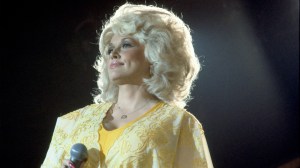
LOS ANGELES – CIRCA 1975: Country singer Dolly Parton performs onstage wearing a yellow dress in circa 1975 in Los Angeles, California. (Photo by Michael Ochs Archives/Getty Images) -
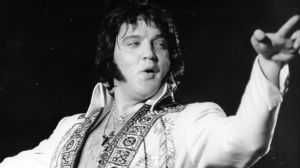
UNSPECIFIED – CIRCA 1977: Elvis Presley in concert circa 1977. (Photo by R.D/Images Press/Getty Images) -
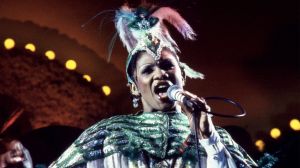
LONDON, ENGLAND – Jamaican-British singer Marcia Barrett, of the German vocal group Boney M., sings during a concert in London, England, December 1, 1978. (Photo by Soxphotos/Getty Images) -

LONDON, ENGLAND – Cliff Richard performs onstage during a concert at Royal Albert Hall on December 08, 2025 in London, England. (Photo by Jo Hale/Redferns) -
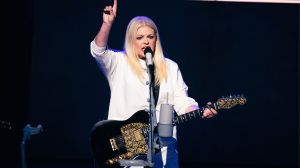
LOS ANGELES, CALIFORNIA – Natalie Maines of The Chicks at The Chicks concert held at Yaamava' Theater on June 12, 2026 in Los Angeles, California. (Photo by Katie Flores/Billboard via Getty Images)