Your cart is currently empty!



“They Were First”: Deep Purple’s Ritchie Blackmore Reveals the Band That Predated His “Smoke On The Water” Riff
165 years after Ludwig Van Beethoven composed what would become one of the most recognizable four notes in music history, Deep Purple guitarist Ritchie Blackmore would use the foundation of Beethoven’s melody to create what would become one of the most recognizable guitar riffs. Blackmore has often joked that he owes Beethoven “a lot of money” for pulling from the Romantic composer’s Fifth Symphony, but there was a more contemporary band involved, too. According to Blackmore in a video published to his YouTube channel, there might never have been a “Smoke On The Water” riff if it weren’t for Nero & the Gladiators.
Videos by American Songwriter
Nero & The Gladiators were a novelty instrumental rock ‘n’ roll band that donned Roman attire and played rocked-out versions of compositions like “In the Hall Of The Mountain King” and “Entry Of The Gladiators”. Blackmore saw the band live at the South Wall Community Center when he was 15, and the performance made a lasting impact on the young musician. After struggling to find a musical world he fit into, Blackmore realized he didn’t have to choose between classical music and more modern rock ‘n’ roll. He could have both.
And if you’re going to pull from music that’s almost two centuries old, why not start with the hits?
How Ritchie Blackmore Combined Worlds in “Smoke On The Water”
Ritchie Blackmore never quite felt like he belonged in any major musician camp. In a February 1991 interview with Guitar World, Blackmore said he found blues “too limiting [and] confining” and classical music “too disciplined.” “I was always playing between the two, stuck in a musical no-man’s land.” He added, “I’m not good enough, technically, to be a classic musician. I lack discipline. When you’re dealing with classical music, you have to be rigid. I’m not a rigid player. I like to improvise.”
Blackmore found a way to do both—follow classical music’s rigidity while also improvising—while writing the iconic riff for “Smoke On The Water”. The twelve-note phrase is one of the most ubiquitous among guitarists and non-guitarists alike. Even if someone can’t readily identify the name of the song, let alone the band that wrote it, they’re likely to at least recognize the tune. And that makes sense, considering Blackmore lifted much of the riff from Beethoven’s Fifth Symphony, with the equally recognizable “dun, dun, dun, DUNNN” introduction.
“I thought [I’d] play [Beethoven’s fifth symphony] backwards, put something to it,” Blackmore later explained, per London, Reign Over Me: How England’s Capital Built Classic Rock. “That’s how I came up with it. It’s an interpretation of inversion. You turn it back, and play it back and forth, it’s actually Beethoven’s Fifth.”
For Blackmore, this was a natural artistic progression to make after watching Nero & the Gladiators. “Some people think that I kind of started that craze, but they were the first,” Blackmore said in his November 2025 video. “I was just overwhelmed. To me, it made much more sense than Chuck Berry playing ‘Sweet Little Sixteen’. All of a sudden, it was, ‘Yeah, this is where I want to go.’”
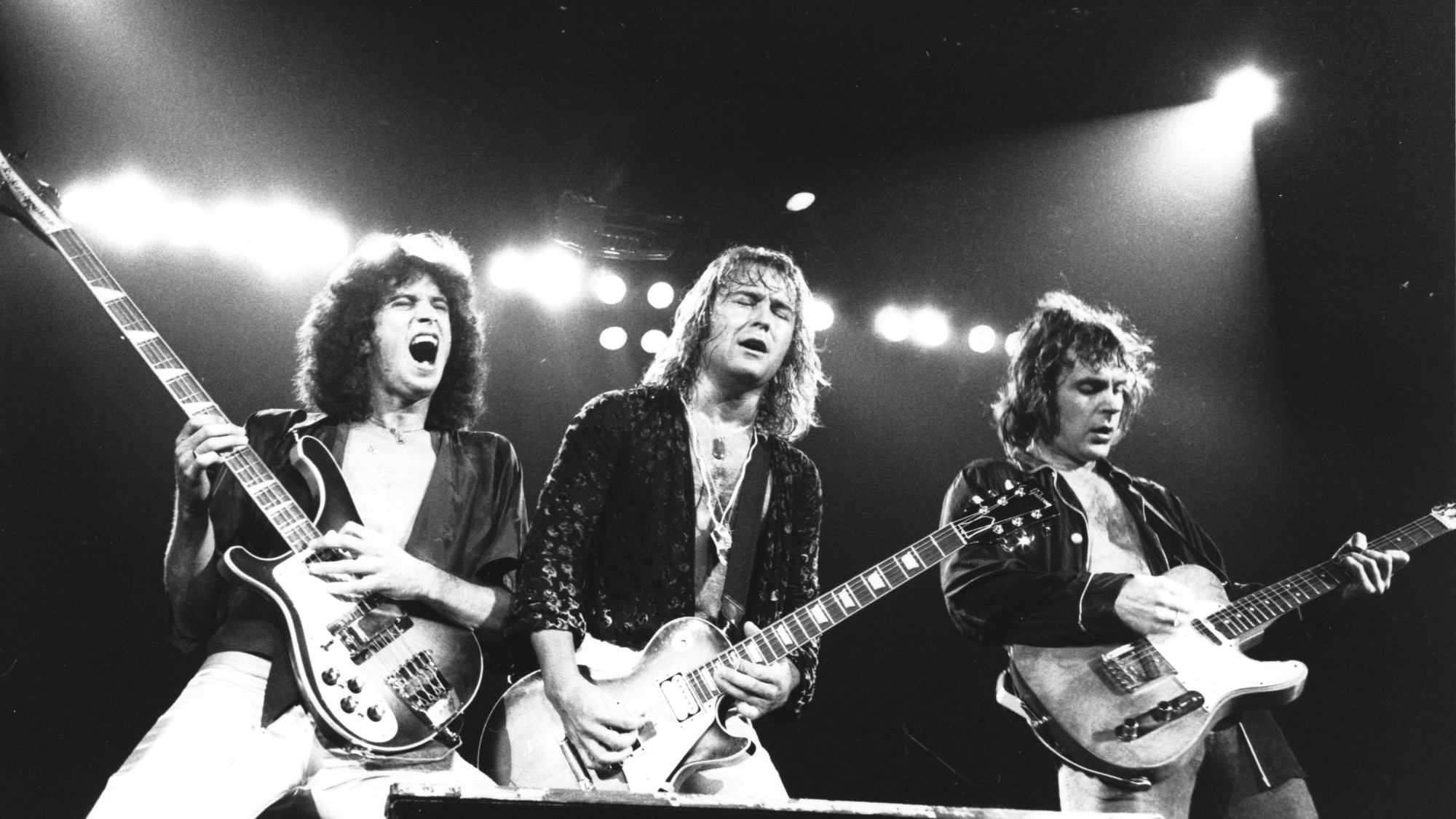
Photo by Koh Hasebe/Shinko Music/Getty Images

Leave a Reply
Only members can comment. Become a member. Already a member? Log in.