
David Bowie had to have been tempted to sustain the character he’d formulated on the 1972 album The Rise and Fall of Ziggy Stardust and the Spiders from Mars on his next release. And perhaps he might have if he’d been able to process the whirlwind going on around him.
Videos by American Songwriter
Instead, his follow-up album Aladdin Sane found him simply reflecting on all that was going on around him as he toured the world and his fame skyrocketed. His natural inclination to change things up ensured that this 1973 album would stand apart from its predecessor.
No Ziggy Redux
David Bowie created the character Ziggy Stardust and wrote his 1972 album through this alien’s perspective. His backing band brought gusto and swagger to Bowie’s compositions, creating a template for glam rock. As he and the band toured the album, he watched this incarnation of himself gain newfound levels of adulation.
It would have been simple for Bowie to ride this wave for as long as possible. But his prolific nature, coupled with an innate unease for repeating himself, led to him writing while he was on tour. Initially, the plans were for Bowie’s next release to be a live album. That changed when it became clear there was more than enough material for a new studio album.
Bowie recorded most of what would become Aladdin Sane in three stints in late 1972 and early 1973, all while his tour continued. There were sessions in London, and also a stopover in New York City. The Spiders once again formed the main instrumental backing, but there were a few additions to the lineup.
The most important of those was keyboardist Mike Garson. Garson came from a jazz background, and Bowie gave him the leeway to play whatever he felt to supplement the sound. With Garson in tow, Aladdin Sane became more lushly melodic than its predecessor.
Bowie stopped short of attempting another concept album with Aladdin Sane. While there was one cover (of The Rolling Stones’ “Let’s Spend the Night Together”) and a few songs he had written years earlier, the new songs he wrote cohered in that they general reflected his chaotic surroundings, especially in the U.S. Perhaps that’s why the album title was briefly A Lad Insane.
Revisiting the Music on Aladdin Sane
You can hear on Aladdin Sane how Bowie was somewhat caught in between riding the sound he had minted on the Ziggy Stardust album, and venturing out into new territory. Bowie was wise in that the opening track (“Watch That Man”) and the lead single (“Jean Genie”) held closest to what he had done on the previous album. In that way, he could ease fans into the more outré efforts on the album.
The title track is the first indication that we’re onto something different, as the melody wavers shakily over an odd two-chord sequence before Garson takes over with an out-there piano solo. It’s a disorienting track, making clear that Bowie was striving for depth over accessibility.
There are fascinating stylistic swings throughout the record. “Drive-In Saturday” and “The Prettiest Star” flirt with doo-wop, even as their lyrics hint at futuristic themes. “Panic in Detroit” adorns a riotous tale with hand percussion to make it swing. “Time” muses on mortality with Brechtian intensity, while closing track “Lady Grinning Soul” sounds like the theme song for a dystopian Bond movie.
Aladdin Sane might not make for as smooth a listen as some of Bowie’s more focused thematic albums. But there’s not a weak track on the record, as he tries on different musical identities as if giving them each a test run. It’s a bumpy ride, but quite thrilling if you’re holding on tight.
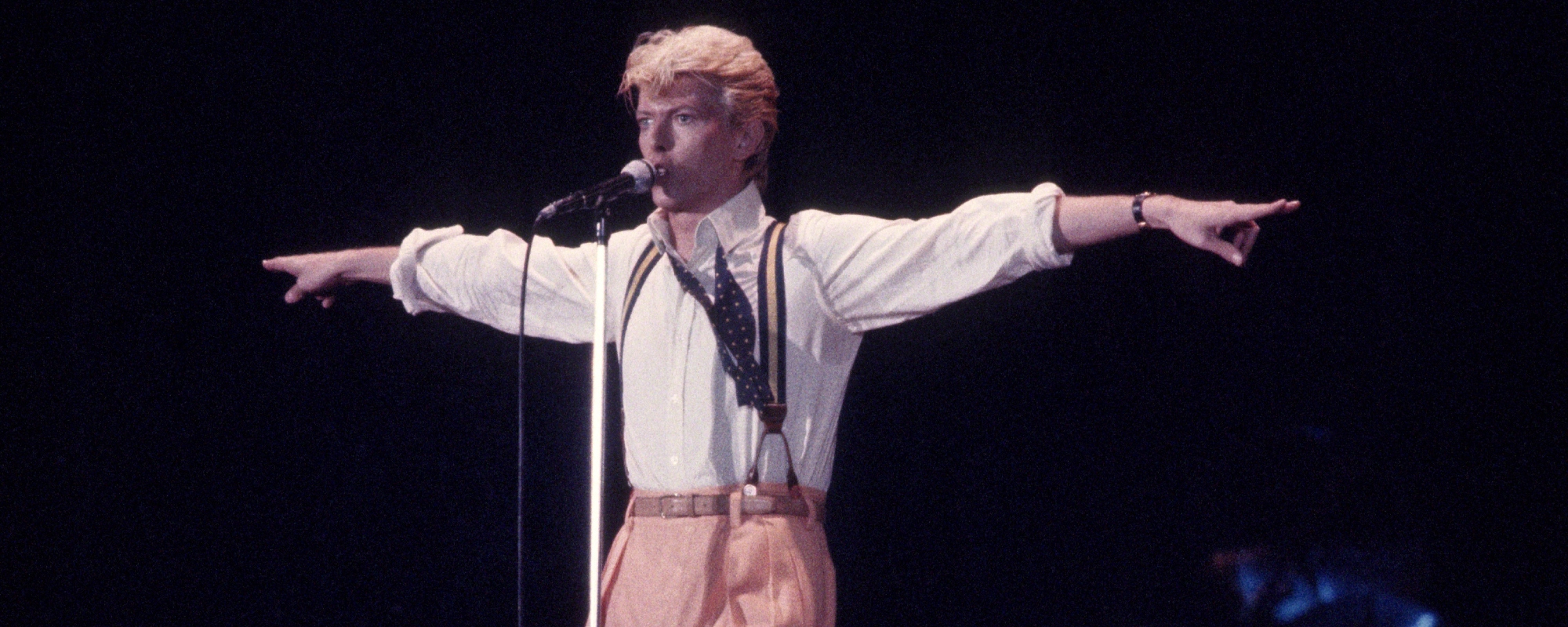
Photo by Steve Morley/Redferns


Leave a Reply
Only members can comment. Become a member. Already a member? Log in.