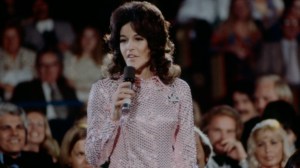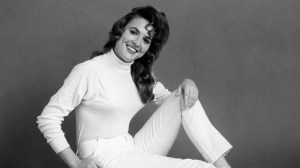
On this day (August 15) in 1925, Rose Maddox was born in Boaz, Montana. Her career began in the late 1930s, in a family band with her brothers. They rose to prominence, pulling their family out of the Depression-era poverty that had been grinding them down for years. Later, after the family band dissolved, she embarked on a solo career that included collaborations with Buck Owens and Bill Monroe.
Maddox was seven years old when the bottom fell out of the cotton market in Alabama, and her family of sharecroppers relocated to Los Angeles, California. She, her parents, and four siblings hitchhiked and hopped trains across the country. When they arrived on the West Coast, they lived in a Hooverville camp called Pipe City, where they slept in large cement drainage pipes.
Videos by American Songwriter
According to the San Diego Troubadour, the family spent their first months in California doing all they could to survive. They begged for handouts, stood in breadlines, and even tried panning for gold in the northern region of the state. At one point, the family was so desperate that they allowed a postman in Toulumne to “adopt” Rose as a companion for his daughter. Feeling betrayed, she acted out until she was reunited with her family.
By this time, her father found work for the family, picking fruit. Eventually, they were able to pool enough money to buy a second-hand car to make following the crop cycles around the state easier. It was Fred Maddox who came up with the idea of starting a band. He saw a band play at a Modesto rodeo and learned that they made $100 for the gig. He knew he’d found their way out of poverty.
The Maddox Brothers and Rose
Fred Rose convinced the owner of Rice’s Furniture in Modesto, California, to sponsor the family band under one condition. They had to have a girl singer in the group, and Fred had to read all of the ads. He assured Mr. Rice that they didn’t just have a girl singer. They had the best girl singer he’d ever heard. At the time, 11-year-old Rose Maddox’s experience as a vocalist went as far as campfire jams and singing along during Roy Rogers matinees.
The sponsorship led to the Maddox Brothers and Rose securing a one-hour morning slot on KTRB. While they weren’t initially the most skilled band in the world, they were a near-instant hit. They honed their skills and fostered their musical chemistry in their daily radio broadcasts. More importantly, they began to form a unique sound. Soon, they were touring in California, following the rodeo circuit and playing in bars.
Their sound has been called hillbilly boogie. Swinging rhythms with Fred Maddox’s slapped bass leading the way. Their style fit well with their abilities, kept performing fun, and made audiences want to dance. Decades later, their output was heavily influential in the creation of rockabilly.
[RELATED: 3 Duets From Country’s Golden Era That Still Give Chills Today]
In 1939, The Maddox Brothers and Rose competed in and won a hillbilly band competition at the Sacramento State Fair, beating 14 other bands. They had been acting like the best hillbilly band in California for years, complete with flashy Western suits. Now, they had proof. More importantly, they had a one-year contract with KFBK in Sacramento. The station was part of the McClatchy Broadcast Network, which owned stations throughout the West. Soon, the Maddox siblings could be heard on many of those stations in multiple states.
Early Recording Career
By 1941, the Maddox Brothers and Rose had pulled their family out of poverty. They had put down roots in Sacramento. Unfortunately, two of the three brothers in the band were drafted during World War II. However, a version of the band pressed on with their younger brother thrust into the lineup, new mandolin in hand.
These years were transformative for Rose. During this time, they played the California club circuit. Now, though, she was leading the band and found that the spotlight suited her.
The war era also came with rejection. She auditioned to join Roy Acuff’s band and Bob Wills’ Texas Playboys lineup, but both turned her down. At the same time, regional acts contacted her, but only wanted to hire her as a bassist.
This period galvanized her. She knew that she wanted to make music and was sure that she could do it with or without her brothers. After the war, she did both.
When brothers Cal, Don, and Fred returned in 1945, they revived the original lineup immediately. They kept Henry on mandolin, which expanded their sound. Their sound was evolving to suit post-war audiences who wanted to dance and cut loose. Amplified instruments were becoming widely available at the time. Now, they were better, faster, and louder than ever.
They signed with 4 Star Records in 1946. This led to more radio appearances with a wider reach. It also meant near-constant touring across the United States. A little more than a decade after they were sleeping in drainage pipes, the Maddox family was driving a fleet of Cadillacs to their homes in Beverly Hills and Hollywood.
They made their only Grand Ole Opry appearance in the summer of 1949. While they didn’t fit in with the Opry crowd, they became regulars on other shows, including the Louisiana Hayride.
Rose Maddox Goes Solo
The Maddox Brothers and Rose dissolved in 1956. By then, Rose had already acquired a solo deal with Columbia Records. Later that year, she had her first hit with “Tall Man.” The song’s success got her invited back to the Grand Ole Opry. Her slightly provocative outfit and stage antics made her a fan favorite. Before long, they invited her to be a member of the cast. It was short-lived, though.
After returning to California, she experimented with different musical styles. This included recording a bluegrass album with Bill Monroe. Eventually, as the 1950s drew to a close, she signed a deal with Capitol Records. There, with producer Ken Nelson, she found a place among the originators of the Bakersfield Sound.
Much like her contemporaries, Maddox found chart success in the early 1960s, launching a string of top-40 hits. Two of those hits–“We’re the Talk of the Town” and “Sweethearts in Heaven”–were duets with Buck Owens.
Her chart success faded by the end of the decade. After her deal with Capitol ended, she focused on touring and recorded for a handful of smaller labels. She released her final album, The Moon Is Rising, in 1996, two years before she died.
While Rose Maddox isn’t a household name today, she blazed a trail for many who are. She showed the world and record labels that a woman could stand in the spotlight in country music just as well as any man. Moreover, her output was highly influential for artists like Dolly Parton and Emmylou Harris. In short, it’s hard to imagine modern country music without the input of the Queen of Hillbilly Swing.
Featured Image by Michael Ochs Archives/Getty Images
-
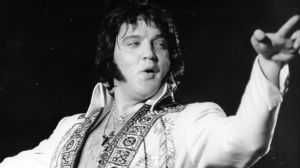
UNSPECIFIED – CIRCA 1977: Elvis Presley in concert circa 1977. (Photo by R.D/Images Press/Getty Images) -
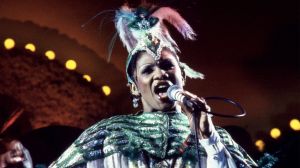
LONDON, ENGLAND – Jamaican-British singer Marcia Barrett, of the German vocal group Boney M., sings during a concert in London, England, December 1, 1978. (Photo by Soxphotos/Getty Images) -
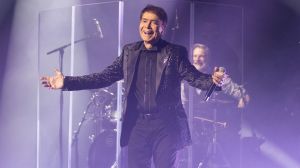
LONDON, ENGLAND – Cliff Richard performs onstage during a concert at Royal Albert Hall on December 08, 2025 in London, England. (Photo by Jo Hale/Redferns) -

LOS ANGELES, CALIFORNIA – Natalie Maines of The Chicks at The Chicks concert held at Yaamava' Theater on June 12, 2026 in Los Angeles, California. (Photo by Katie Flores/Billboard via Getty Images)