On this day (September 3) in 1925, Hank Thompson was born in Waco, Texas. He served in the United States Navy during World War II, attended Princeton University, and almost became an electrical engineer before his career took off in the late 1940s. He notched dozens of hits, influenced countless young artists, and continued to draw crowds of devoted fans into the 21st century.
Thompson’s interest in music began early. As a child, he was an accomplished harmonica player, winning several competitions. Then, he discovered the music and movies of Gene Autry. His desire to follow in the singing cowboy’s footsteps led him to pick up the guitar. By the time he graduated from high school, he had a regular show on a local radio station.
Videos by American Songwriter
According to the Country Music Hall of Fame, Thompson didn’t begin pursuing a music career after finishing high school. Instead, he joined the United States Navy during World War II. He was stationed in San Diego, California, where he worked as a trained radioman. Additionally, Thompson’s superiors allowed him to play at local clubs. After his ship went out to sea, he played for his shipmates and was broadcast over a network of military radio stations in the South Pacific. He also studied electrical engineering at Southern Methodist University, the University of Texas, and Princeton University.
Hank Thompson’s Recording Career
Thompson almost became an electrical engineer by trade. Then, he scored a regional hit with “Whoa Sailor” in 1946, and he decided to pursue music. He recorded a handful of singles for Blue Bonnet Records in Texas. None of them were national hits. However, they were strong enough to catch Tex Ritter’s attention. Ritter helped the up-and-comer ink a deal with Capitol Records.
He released “Humpty Dumpty Heart” as his first single with the label in 1948. It peaked at No. 2 on the Billboard country chart. Later that year, he scored another top 10 hit with “Green Light.” Both songs are among the many hits that Thompson wrote.
While Thompson’s career experienced some lulls as tastes changed over the years, he continued to notch hits for decades. His final top 10 hit was “Who Left the Door to Heaven Open,” which reached No. 10 in 1974.
One of Thompson’s most noteworthy hits was “The Wild Side of Life.” It topped the country chart for several weeks. More importantly, it inspired the answer song “It Wasn’t God Who Made Honky Tonk Angels.” Kitty Wells recorded the song and became the first woman to reach No. 1 on the country chart.
Thompson Was an Innovator
Hank Thompson’s music served as an anchor that inspired generations of country traditionalists. His influence can be heard in the music of artists like Dwight Yoakam and George Strait. However, he was also an innovator. For instance, he was one of the first country stars to perform in the glitzy showrooms of Las Vegas. In 1960, he and his band recorded At the Golden Nugget, one of the genre’s first live albums.
Thompson’s electrical engineering skills played a part in his concerts as well. He built state-of-the-art light and sound systems. Moreover, he was the first country artist to tour with his own sound and lighting setup.
Hank Thompson continued performing and recording until a month before he died. He released the final album of his lifetime, Seven Decades, in 2000. His last performance was on October 8, 2007. It was a hometown show on his Sunset Tour. Before the next stop, he was hospitalized and diagnosed with lung cancer. As a result, he canceled his remaining tour dates, retired, and went into hospice care. He died on November 6, 2007.
Featured Image by David Redfern/Redferns
-
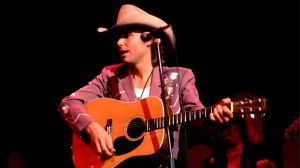
CHICAGO, ILLINOIS – American Country musician Dwight Yoakam performs onstage at the Chicago Theater, Chicago, Illinois, August 5, 1988. (Photo by Paul Natkin/Getty Images) -
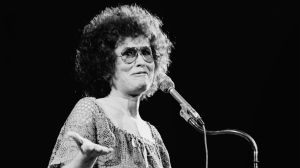
American lyricist, singer-songwriter and poet Dory Previn (1925 – 2012), circa 1975. (Photo by Gus Stewart/Getty Images) -

CLARKSTON, MICHIGAN – Shelby Lynne performs at Pine Knob Music Theatre on August 15, 2025 in Clarkston, Michigan. (Photo by Scott Legato/Getty Images) -
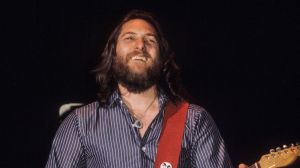
CONCORD, CA – JULY 31: Steve Cropper performs with the Blues Brothers at Concord Pavilion on July 31, 1980 in Concord, California. (Photo by Ed Perlstein/Redferns/Getty Images) -
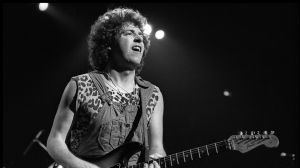
Steve Lukather of Toto performs live on stage at 'Muziekcentrum Vredenburg', Utrecht, Netherlands, 26th September 1982. (Photo by Rob Verhorst/Redferns)