Your cart is currently empty!



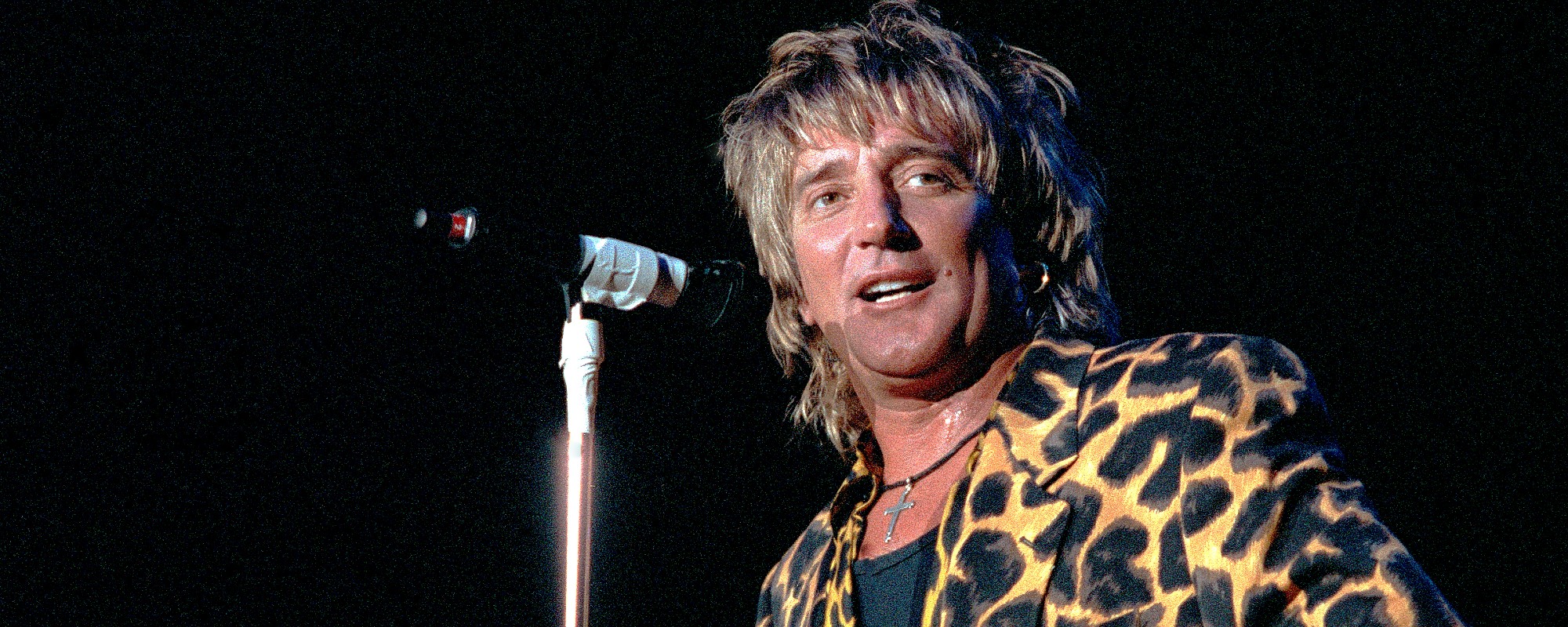
How a Bronx Kid, Peter Wolf, with a Love for Art Became One of Rock’s Most Enduring Frontmen
Some people exude such innate charisma that others seem inexorably drawn to them—and Peter Wolf certainly seems to have that particular gift, as evidenced by his remarkable memoir, Waiting on the Moon: Artists, Poets, Drifters, Grifters, and Goddesses (out March 11 via Little, Brown and Company).
Videos by American Songwriter
Long before he became acclaimed as the frontman for the J. Geils Band, and then with his own successful solo career, Wolf was having memorable moments with Marilyn Monroe, Eleanor Roosevelt, Bob Dylan, and David Lynch. As his own fame grew, he continued meeting many luminaries from the worlds of film (Alfred Hitchcock, Roman Polanski, Peter Sellers, and Faye Dunaway, who became his wife), literature (Tennessee Williams, Robert Lowell), art (Andy Warhol)—and, of course, music (Muddy Waters, John Lee Hooker, Van Morrison, Aretha Franklin, Merle Haggard, the Rolling Stones, and John Lennon).

Wolf’s often hilarious descriptions of his adventures with these people, and many others, make Waiting on the Moon a riveting read. Through it all, though, the most compelling story is his own, but he is modest about this. “The book is a fan’s notes to the people I admired, and [who] had such a great impact on me, so I tried not to make the book about me, but about them,” he says, calling from his Boston home.
Wolf’s fans will be happy to hear that this is not entirely true: he does reveal a lot about his own life, starting with his childhood in the Bronx with his bohemian family. His father, in particular, had a huge influence on him, especially when it came to appreciating music.
“He was so artistic,” Wolf says of his father. “Really, his true calling was to be a painter or a singer, but in the era he grew up in, The (Great) Depression, he felt that his job was to try to put food on the table. But he always was able to surround himself with these unusual characters. And so, as a young kid, I grew up meeting all sorts of painters and aspiring musicians and actors.”
His father would often bring him to New York’s nonconformist Greenwich Village—where, one day, he overheard a not-yet-famous Bob Dylan rehearsing some songs in the back room of a folk music center. “He was behind the curtain; I didn’t see him,” Wolf says. “I just heard this voice, and it had such an impact on me.” He would go on to have several unforgettable encounters with Dylan.
Wolf, with some school friends, put together a doo-wop group that lasted long enough to put on one performance at a talent contest in the Bronx. At that time, however, Wolf was more focused on fine art, and he dreamed of becoming a painter. So, after graduating from New York City’s High School of Music & Art, he enrolled at the School of the Museum of Fine Arts at Tufts University in Boston, where his artistic talent had earned him a scholarship.

But it wasn’t long before Wolf began undergoing a pivotal transformation. “I was in art school, and rock and roll was becoming so exciting,” he says. “Music became such an allure that we, as a sort of expressive outlet, put together a band of art students.” They called themselves The Hallucinations.
“It was more like a punk band because we weren’t the greatest of players, but we had a tremendous amount of dedication and energy,” Wolf says. “We weren’t really too concerned, at first, with the technical aspects, though we kept trying to be better and better.
“I did it out of passion because I just loved rock and roll so much, so I just did it almost as a fantasy,” he continues. “I couldn’t quite believe I would be getting together with these guys, and we’d form a band. It was just so exciting.”
But Wolf’s ever-growing urge to play music ended up causing him immense distress: “I had great anxieties and great mental anguish that almost caused me a complete breakdown because here I was as a kid spending all my energies wanting to be a fine artist. Then along comes this music, and it was consuming me and taking me over passionately in such a way that I was neglecting my muse of painting, and it was causing a great dilemma. So I ended up seeking out medical guidance about it because it was getting really turbulent to me, this situation.”
His doctor advised him to take a one-year sabbatical, in which he should follow his musical ambitions. If it didn’t work out, then he could return to school and recommence his original plan to pursue an art career.
Wolf heeded this guidance. After that, “I never looked back once I delved into music,” he says. “It was that very simple advice that, to me, was so obvious, but I couldn’t figure it out as a solution. That doctor actually, in a way, might have even saved my life [because] I was so desperate at that point.”
In 1967, Wolf joined the J. Geils Band, with whom he would go on to record 10 albums. The last two that he made with them, Love Stinks (1980) and Freeze Frame (1981), became massively successful in multiple countries. In the U.S., the band had significant hits with “Love Stinks,” “Freeze Frame,” “Centerfold,” and “Angel in Blue.” In all, 10 of the band’s songs made the Billboard Top 40 list.
“With the Geils band, we were [playing] at a time where the landscape was so different,” Wolf says “FM radio was so vibrant, and then the whole landscape changed again when MTV came along, [and] the reception of the video was almost more important than the actual music itself. So that was a whole new challenge.”
Wolf parted ways with the J. Geils Band in 1983 and launched a solo career. He was immediately successful with his 1984 debut album, Lights Out, which earned him significant airplay for the title track. Since then, he has released seven more solo albums, with another on the way later this year (release date and title TBA).
Though Wolf is committed to his solo career, he continues to value collaborative songwriting. He says he realized this was his preferred method as soon as he started writing with the other members of The Hallucinations: “Once I got into a group, and you’re all working together on a project, the discipline of the collaborative nature became so important to me, and I realized how I did so much better working in a collaborative nature than alone—because alone if I’m working on a song, I might get frustrated or blocked or just procrastinate.”
As a result, this has been Wolf’s approach to songwriting ever since. “For me, that’s where I’m most comfortable because I tend to second guess myself,” he says. “When you’re there with somebody, you can find out right away if you’re right or wrong about it.”

Wolf’s encounters and friendships with other artists, especially when he describes how he has effectively dealt with some who have reputations for being rather temperamental, make for some of the more interesting stories in his book.
“I think it comes from the psychological aspect of knowing when to back off and how to be helpful to someone, and maybe they get a sense that you’re being respectful to their different moods,” Wolf says of those types of situations. “I accepted it was just part of what they had to go through as creative artists, and so I was respectful of that, and maybe they understood that.”
Waiting on the Moon also reveals how some songwriting experiences can be downright joyous. This was especially the case when Wolf co-wrote the song “Lights Out” with Don Covay, a singer-songwriter who had previously worked with Little Richard, Gladys Knight & the Pips, Etta James, and Otis Redding, among others. “It was fun—I was working with someone I admired,” Wolf says of Covay.
These days, Wolf continues to seek songwriting collaborators who will help bring out the best in him. “Then together, as we pool our sensibilities, I feel it is my finest work,” he says. In particular, he praises the tracks he’s co-written during the past two decades with Angelo Petraglia. “He and I have written some of my favorite songs in my solo period,” Wolf says, listing “Growing Pain,” “Long Line,” and “Tragedy” (a duet with Shelby Lynne) as particularly fine examples of their output.
“To be a prolific songwriter, my sense from the people I’ve met [is that] it’s almost like a dream—and why you had this dream is sort of a mystery, but you’ve had it, and it’s profound,” Wolf says. “And I think for many of the songwriters I admire, it’s sort of like that: it comes from a place where they’re not even aware of it. They all have something that I call this dream state connection, where they connected to something that was beyond their control. I think that’s the great mystery of songwriting.”How a Bronx Kid with a Love for Art Became One of Rock’s Most Enduring Frontmen


Leave a Reply
Only members can comment. Become a member. Already a member? Log in.