
Merle Haggard is one of the most ubiquitous names in country music, thanks to classic cuts like “Okie from Muskogee” and “The Fightin’ Side of Me”. His professional trajectory was remarkable. He overcame a difficult childhood and multiple prison stints to become one of the leading figures of the Bakersfield sound, the West Coast’s version of country music that blended honky tonk and rock.
Over his decades-long career, Haggard collected an impressive number of accolades, including a Kennedy Center Honor, a Grammy Lifetime Achievement Award, a place in the Country Music and Oklahoma Music Halls of Fame, and much more. Indeed, the man who was once a San Quentin inmate watching Johnny Cash perform would one day join the ranks of country music royalty alongside the Man in Black.
Videos by American Songwriter
However, there was more to Haggard than his voice, guitar, and his ability to tell a story in three verses or less. In a 2010 interview with Donald Gibson, Haggard revealed that he wrote “a lot of poetry” not set to music, despite it never seeing the light of day. He mused that it would “probably come to the surface when I’m gone.” That devastating loss to the musical community wasn’t far behind. Haggard died in 2016. But at the time of this writing in 2026, the prose Haggard wrote is still unreleased.
Merle Haggard Stole a Journal on the Road to Use for His Poetry
That a songwriter like Merle Haggard would steal one of his first journals to use for poetry is unsurprising, given the singer-songwriter’s rough-and-tumble background. Haggard was no stranger to the criminal way of life in his early years. He was eventually able to abandon this lifestyle when his musical career finally took off. While speaking to Donald Gibson in 2010, Haggard said he wasn’t sure where his stolen “little old book” ended up. He did, however, describe a couple of the stories that he scribbled onto its pages all those years ago.
“I remember writing something about catching a big bass,” Haggard explained. “It was all about this fight between this bass fisherman at night. He had this big bass on. And he fooled him with a live waterdog. He had him hooked deep in his throat, and with one minor lunge, he was gone, and pulled him about half out of the boat.”
“Then there was a thing that I was involved in writing. This really poetic—I guess poetic’s the right word—called The Four Dogs. It was where I impersonated an Irishman. I said, ‘Hi, lassies and laddies, I’m the man in the hill with four dogs. And recently in from the old country with different speech, and we make customs and all. Makes me appear strange when they see me on the mountainside with four dogs.’”
Haggard collaborated on the metaphorical piece with songwriter Tommy Collins. The nine-minute allegory featured four dogs named Love, Hell, Hope, and Faith. “Faith is blind, and he doesn’t use much hope,” Haggard said. “Finally, Love goes away, and Hell is the only thing that’ll stick around. That’s kind of chilling. Hell stuck around.”
Photo by ABC Photo Archives/Disney General Entertainment Content via Getty Images
More Features
-
Photo by Gijsbert Hanekroot/Redferns -
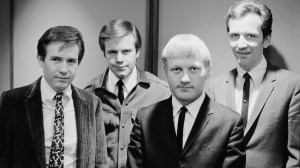
American rock & roll band the Bobby Fuller Four, circa 1966. From left to right, they are singer Bobby Fuller, bass player Randy Fuller, guitarist Jim Reese and drummer Dalton Powell. (Photo by Don Paulsen/Michael Ochs Archives/Getty Images) -

LOS ANGELES, CALIFORNIA – JUNE 14: Ringo Starr performs onstage with his All Starr Band at The Greek Theatre on June 14, 2026 in Los Angeles, California. (Photo by Kevin Winter/Getty Images) -

Faith Hill on 11/2/00 in Chicago, Il. (Photo by Paul Natkin/WireImage) -
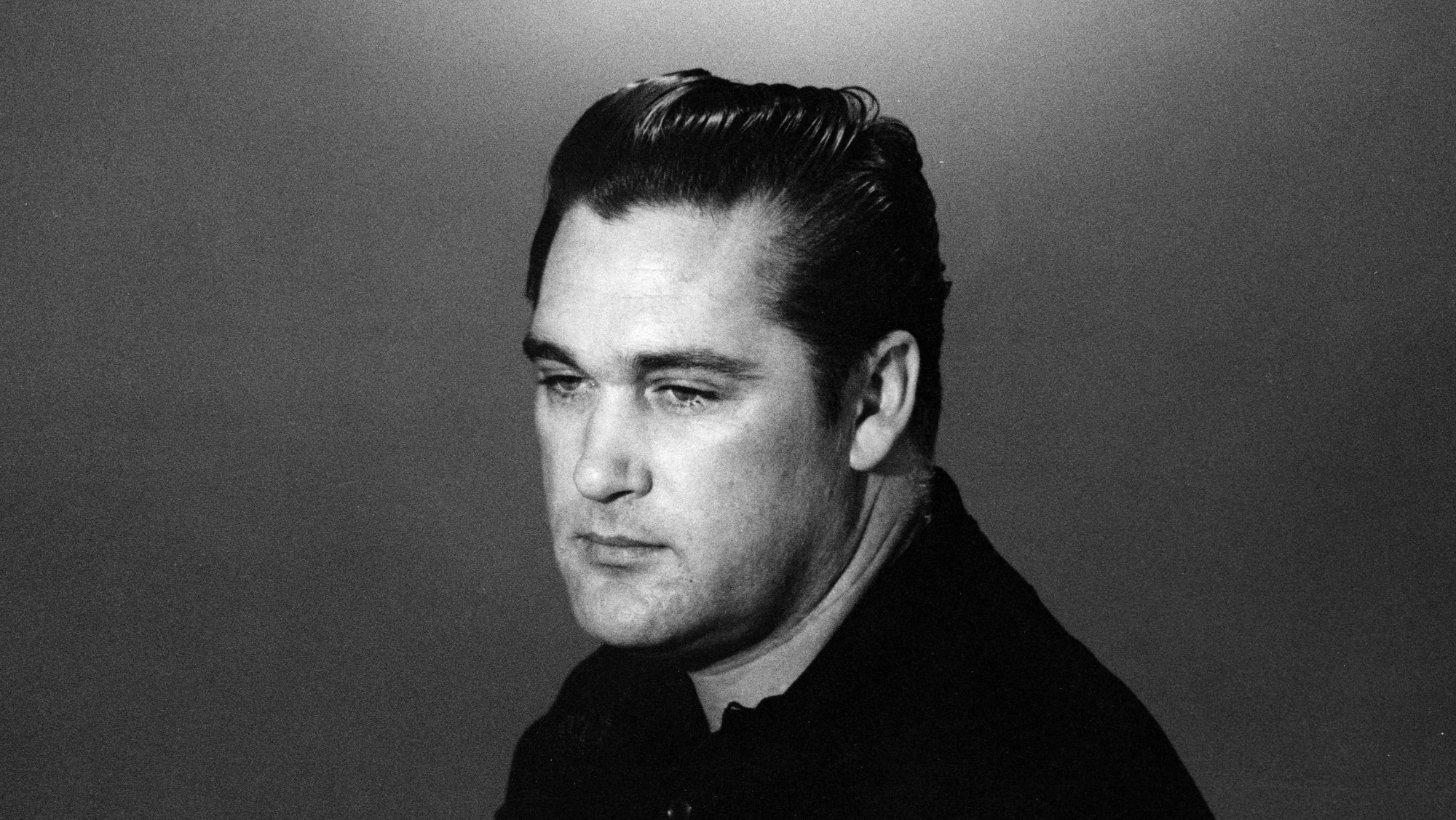
Charlie Rich, who released several hit songs featuring Pete Drake on steel