The British invasion of the 1960s was more than just a wave of United Kingdom musicians getting more exposure in the United States. These musicians were not only dominating American airwaves. They were doing it by playing American music, and The Rolling Stones were certainly no exception to this trend—right down to how they chose their name.
The British blues rockers famously named themselves The Rolling Stones after a Muddy Waters song. They were on the phone with a venue that needed a name for their ensemble, a Muddy Waters record was nearby, and the rest is history. But the Stones continued to embody artists like Waters in their earliest singles and albums, adopting their musical stylings and covering songs they first made famous in the American blues circuits.
Videos by American Songwriter
This period of rock ‘n’ roll history has become so ubiquitous and picked over in the decades that followed that it seems rather ordinary now. But in a 2026 interview with BBC Radio 2, Rolling Stones vocalist Mick Jagger brought up an interesting point that shines a whole new light on this particular musical era.
Mick Jagger Poses an Interesting Reversal of the British Blues Wave
The Rolling Stones clearly made no secret of their admiration and reverence for American blues musicians. It was their sheer star power (and indeed, racism) that caused the white musicians to be most closely associated with songs that Black musicians had already written, recorded, and made popular. All that’s to say, The Rolling Stones had great respect for these players and didn’t feign originality in that sense. Moreover, Mick Jagger could see what the situation might look like in reverse.
“It must have been really weird if you’re a blues man in Chicago in those days,” Jagger said. “They had never seen English people. They had never met an English person. [Specifically,] English people that looked scruffy, you know, because the look wasn’t scruffy then. Then, what were they doing? They were playing our music, you know. It’s a bit like they were coming to the Highlands and playing Scottish folk music. I mean, it’s as absurd as that, in a way, in cultural exchange.”
“So, they were a bit bemused,” he continued. “But I mean…people like Muddy must have seen that we really, genuinely loved it and really knew something about it. Muddy was a very generous person. I think he was generous to everyone, but he was very generous to us and encouraged us, said nice things. It was a two-way street.”
The Stones frontman mentioned that other performers, like Chuck Berry, weren’t so forthcoming with their friendship, though he did eventually come around to the British players. But, Jagger added, “He was difficult to get along with anybody. Some people are just like that.”
Photo by Fairchild Archive/Penske Media via Getty Images
More Features
-

ara Evans performs "Suds In The Bucket" during 39th Annual Academy of Country Music Awards – Show at Mandalay Bay Resort and Casino in Las Vegas, Nevada, United States. (Photo by M. Caulfield/WireImage for Bragman Nyman Cafarelli) -
Photo by David Warner Ellis/Redferns -
UNSPECIFIED – CIRCA 1970: Photo of Biff Rose Photo by Michael Ochs Archives/Getty Images -
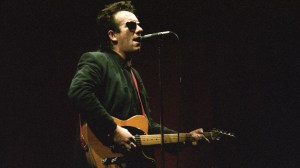
MINNEAPOLIS, MN – AUGUST 29: Elvis Costello performs at the Orpheum Theatre in Minneapolis, Minnesota on August 29, 1984. (Photo by Jim Steinfeldt/Michael Ochs Archives/Getty Images) -

Photo by Jason Kempin/Getty Images for Country Music Hall of Fame and Museum -

UNITED KINGDOM – JANUARY 01: WEMBLEY ARENA Photo of Johnny DUNCAN and Janie FRICKE, w/Johnny Duncan (Photo by David Redfern/Redferns)